The Indonesian HNW population is mostly populated by men. Although this gender imbalance is less pronounced than in the Asia-Pacific region, it is still higher than in many other Southeast Asian countries, such as Singapore, Myanmar, Vietnam, and Thailand. Considering this high gender disparity, wealth advisors should carefully examine whether their current engagement strategies further fuel this imbalance and could alienate future clients.
Indonesia wealth management market analyzes the investing preferences and portfolio allocation of Indonesia’s HNW individuals. It profiles HNW investors in terms of their demographics, examines the allocation of HNW investors’ portfolios, analyzes their propensity to invest offshore, and explores their product and service demand.
Market Dynamics in the Indonesia Wealth Management Market
- Earned income is a major source of wealth for HNWs, and Indonesia is home to many highly paid executives.
- The Indonesian government runs the National Entrepreneurship Development program, with a target of increasing the entrepreneurship ratio by 2024.
- In Indonesia, inherited income represents a small share of the HNW wealth. However, with the current aging HNW cohort in the country, this is expected to increase.
- The basic materials sector – the largest contributor to HNW wealth in Indonesia – was significantly affected by the crisis in 2021.
- Financial services are Indonesia’s second largest source of HNW wealth.
- To foster female participation in the field of entrepreneurship, several programs have been initiated that support women in establishing their businesses.
- In December 2020, the WeEmpowerAsia program was initiated by UN Women in Indonesia, an organization that works for gender equality and female empowerment.
Key Investment Preferences for HNW Investors in the Indonesia Wealth Management Market
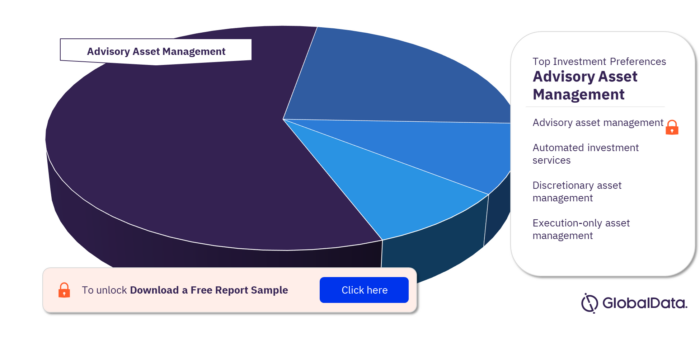
The key investment preferences for HNW investors in the Indonesia wealth management market are advisory asset management, automated investment services, discretionary asset management, and execution-only asset management. While advisory mandates lead in terms of HNW AUM allocated, current demand is distributed relatively equally across different types of mandates, except for automated investment services, which are expected to attract a substantial increase in demand over the next year.
Indonesia Wealth Management Market, by Investment Preferences
For more investment preference insights, download a free sample
Key Reasons for Expatriation for HNW Investors in the Indonesia Wealth Management Market
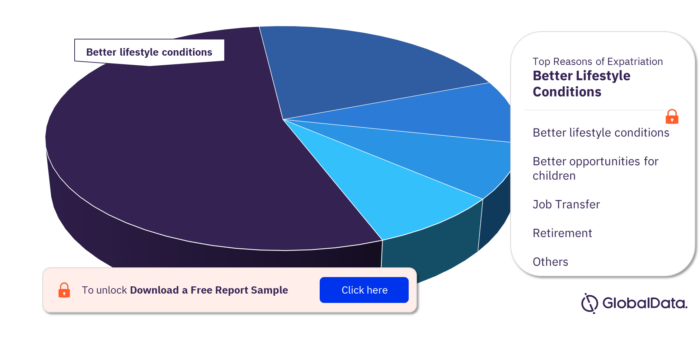
The key reasons of expatriation for HNW investors in the Indonesia wealth management market are job transfer, retirement, business start-up, tax efficiencies, better opportunities for children, better lifestyle conditions, and political/economic instability. Better lifestyle conditions is one of the major drivers of expatriation.
Indonesia Wealth Management Market, by Reasons of Expatriation
For more reasons of expatriation insights, download a free sample
Major Asset Classes of Wealth Allocation Preferences for HNW Investors in the Indonesia Wealth Management Market
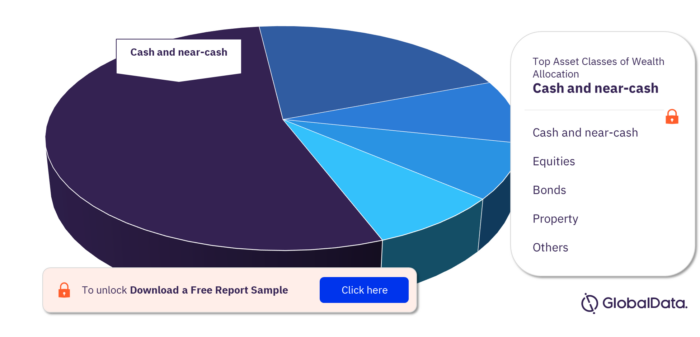
Equities, cash and near-cash, bonds, property, alternatives and commodities are the major asset classes of wealth allocation for HNW investors in the Indonesia wealth management market. Cash and near-cash constitute the largest share, followed by property.
Indonesia Wealth Management Market, by Major Asset Allocation Preferences
For more asset classes of wealth allocation insights, download a free sample
Major Asset Classes of Offshore Investment Preferences for HNW Investors in The Indonesia Wealth Management Market
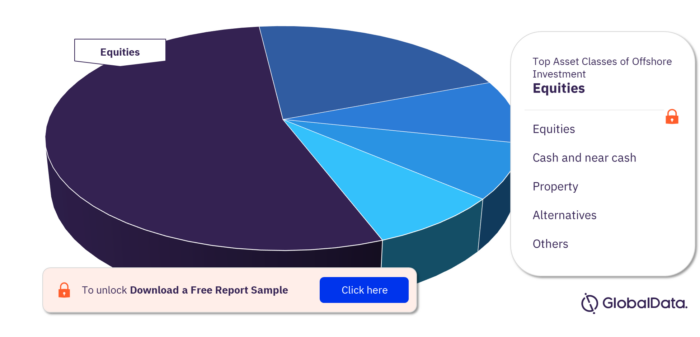
The major asset classes of offshore investment for HNW investors in the Indonesia wealth management market include equity, cash and near-cash products, bonds, property, alternatives, and commodities. The average Indonesian HNW offshore portfolio is heavily exposed to alternatives and equity investments, which together constitute over half of all offshore assets.
Indonesia Wealth Management Market, by Major Asset Classes of Offshore Investment
For more asset classes of wealth allocation insights, download a free sample
Market report scope
| Key investment preferences | Advisory Asset Management, Automated Investment Services, Discretionary Asset Management, and Execution-Only Asset Management. |
| Key reasons for expatriation | Job Transfer, Retirement, Business Start-Up, Tax Efficiencies, Better Opportunities For Children, Better Lifestyle Conditions, and Political/Economic Instability |
| Major asset classes of wealth allocation | Equities, cash and near cash, bonds, property, alternatives, and commodities |
| Major asset classes of offshore investment | Equity, cash and near-cash, bonds, property, alternatives, and commodities |
Scope
- Expats represent an attractive target market thanks to their more complex service requirements.
- Robo-advice accounts for a share of the Indonesian HNW portfolio. The market for robo-advisory services is growing rapidly in the HNW space in Indonesia.
- Cash and near cash investments, property and bonds dominate the Indonesian HNW asset portfolio.
- The average Indonesian HNW investor offshores a significant percent of their wealth abroad. While this proportion is expected to increase over the next 12 months, the rise is expected to be less pronounced than in the wider region, indicating that many HNW investors are confident about the country’s economic recovery.
Reasons to buy
- Develop and enhance your client targeting strategies using our data on HNW profiles and sources of wealth.
- Enhance your marketing strategies and capture new clients using insights from our data on HNW investors’ asset management style preferences.
- Tailor your investment product portfolio to match the current and future demand for different asset classes among HNW individuals.
- Develop your service proposition to match the demand expressed by Indonesian HNW investors and react proactively to forecast changes in demand.
Key Stakeholders
Table of Contents
Graphs
List of Figures
Figure 1: Indonesian HNW investors are typically male, and are older than their Asia Pacific peers 10
Figure 2: Business interests are the leading generator of Indonesian HNW wealth 11
Figure 3: A higher proportion of Indonesian HNW individuals are presidents or commissioners compared to the wider region 12
Figure 4: Property and real estate is the main way HNW investors accumulate their wealth 13
Figure 5: The proportion of HNW expats in Indonesia is lower than elsewhere in the region 14
Figure 6: South Koreans account for over half of Indonesian HNW expats 15
Figure 7: Indonesian HNW clients use four or more wealth managers on average, but place over half of their investments with their main wealth manager 17
Figure 8: Lack of time and expertise drive demand for professional wealth management among HNW Indonesians 18
Figure 9: Allocations in execution-only mandates are above the regional average, but most Indonesian investments are not professionally managed 19
Figure 10: An expectation of higher returns is driving demand for discretionary asset management 21
Figure 11: Execution-only HNW clients are driven to self-direct by a range of factors 22
Figure 12: Local wealth managers currently experience limited demand for automated advice 24
Figure 13: Over half of Indonesian wealth managers expect to see an increase in advisory asset management demand 25
Figure 14: Current Indonesian HNW asset allocation differs from the wider region, as do expectations around future demand 27
Figure 15: Approaching two thirds of Indonesia’s HNW equity portfolio is held in funds 28
Figure 16: HNW demand for equities is expected to increase by the majority of local wealth managers 29
Figure 17: Indonesian HNW bond holdings skew towards direct allocation 30
Figure 18: Nearly all local wealth managers expect bond demand to increase 31
Figure 19: Indonesian HNW investors hold just over a third of investments in cash and near-cash products, which is notably higher than the regional average 32
Figure 20: Indonesian HNW investors are expected to shift their allocation away from cash deposits 33
Figure 21: Indonesian HNW investors hold less than 4% of their wealth in property investments 34
Figure 22: The perception of safety is the key driver of property investments 35
Figure 23: Indonesian HNW investment in alternatives is mostly in private equity 36
Figure 24: Demand for alternatives is expected to rise in the future 37
Figure 25: A tiny proportion of Indonesian HNW investments are held in commodities, aligned with the regional average 38
Figure 26: Demand for commodity investments will increase as investors seek inflation protection 39
Figure 27: Demand for planning services is relatively limited in Indonesia 41
Figure 28: Demand for pension and tax planning services is strongly expected to increase 42