Smart Hospitals Thematic Report Overview
Smart hospitals are hospitals that use innovative technology to improve the quality of patient care, while also reducing costs. Some examples of intelligent treatments include artificial intelligence (AI), robotics, 3D printing, augmented reality (AR), and virtual reality (VR). Smart hospitals are integrating digital and physical assets in a way that ties clinical and business workflows, enabling seamless integration across technology to aid in healthcare delivery.
Smart hospitals allow healthcare providers to spend more time focusing on patient care by helping to complete or simplify routine tasks and also allow them to focus on their patients by using AI and robotics to monitor patterns or automate time-consuming tasks. Smart hospitals use data and technology to enhance tasks such as tracking hospital bed occupancy, checking patient vitals, and analyzing scan results. They rely on data-driven insights such as machine learning (ML) and AI-powered medical devices to help healthcare facilities optimize their resources.
The Smart Hospitals report is a thematic brief, which identifies companies that are most likely to succeed in a world filled with disruptive threats. The report covers the smart hospitals’ theme and predicts how each theme will evolve and identify the leading and disrupting companies.
| Report Pages | 40 |
| Key Trends | Technology, Macroeconomic, and Regulatory Trends |
| Key Value Chain | Device layer, Technology layer, Data layer, Service layer, and Connectivity layer |
| Leading Private Companies | Biotronik, Eccrine Systems, Monteris Medical |
| Leading Public Companies | Abbott Laboratories, Boston Scientific, Dexcom, General Electric |
Smart Hospitals – Key Trends
The main trends shaping the smart hospitals’ theme are classified into the following categories: technology trends, macroeconomic trends, and regulatory trends.
- Technology trends: The increasing use of 3D printing, artificial intelligence (AI), big data, blockchain, cloud, cybersecurity, IoT, and virtual and augmented reality (AR/VR) among others are the key technology trends impacting the smart hospitals’ theme.
- Macroeconomic trends: The key macroeconomic trends explained in the report are the impact of COVID-19, the aging population, ESG, patient consumerism, and supply chain among others.
- Regulatory trends: Policies related to reimbursement, software as a medical device, and the Health Insurance Portability and Accountability Act of 1996 (HIPAA) are some of the regulatory trends impacting the mobile health theme.
For more smart hospitals theme trend analysis, download a free sample report
Smart Hospitals – Industry Analysis
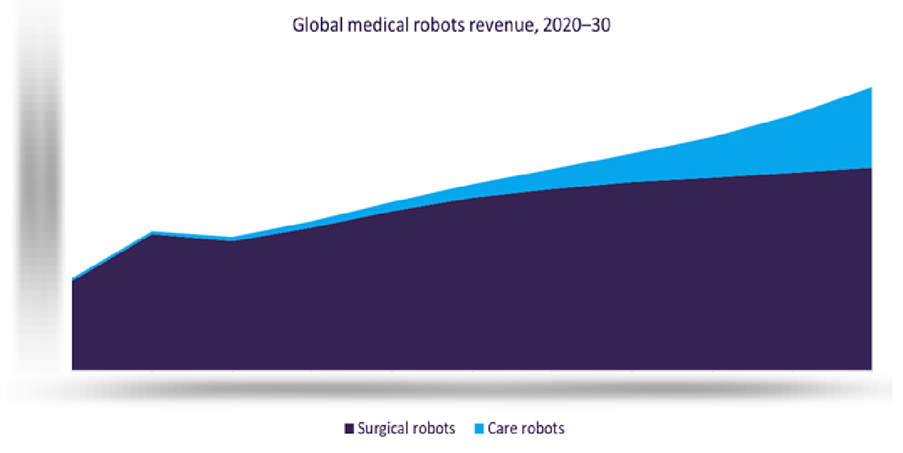
The medical robot market, which is an important aspect of smart hospitals, will grow at a CAGR of more than 11%. Robotics is still a new area emerging in the medical field, each aspect of robotics will face unique challenges and expectations for success as they continue their development over the next decade.
Additionally, remote patient monitoring will be driven by multiple factors, including the need for payers and providers to decrease costs and improve operational efficiency, the increasing ease of use of home-based remote patient monitoring devices, the rising need for improved healthcare in rural areas, the growing aging population requiring additional healthcare support, and the high growth of chronic diseases.
The smart hospitals thematic report also covers:
- Mergers and acquisitions
- Venture financing
- Patent trends
- Company filing trends
- Social media trends
- Use cases
- Timeline
For more insights on the smart hospitals market size, download a free sample
Smart Hospitals – Value Chain Analysis
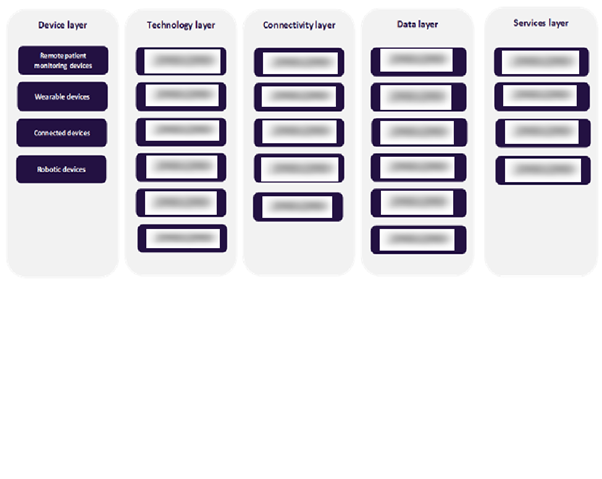
The smart hospitals value chain consists of five different layers and begins with the device layer, technology layer, connectivity layer, data layer, and services layer. which includes remote patient monitoring devices, wearable devices, connected devices, and robotic devices. The device layer includes remote patient monitoring devices, wearable devices, connected devices, and robotic devices.
Wearable Devices: Wearable devices are devices that can be worn on the body, either as an accessory (like a watch) or in clothing. Wearable devices that are used specifically for medical purposes are growing in popularity, especially those that can be used in conjunction with mobile health apps. Companies such as Apple and Garmin are leaders in this market, as they were some of the first to make wearable devices with fitness trackers and other health-related features.
Smart Hospitals Value Chain Analysis
For more insights into the smart hospitals value chain analysis, download a free sample report
Smart Hospitals – Competitive Landscape
Leading Public Companies
Some of the leading listed players associated with this theme are:
- Abbott Laboratories
- Boston Scientific
- Dexcom
Leading Private Companies
Some interesting private companies associated with this theme are:
- Biotronik
- Eccrine Systems
- Monteris Medical
To know more about the leading public and private companies in the smart hospitals theme, download a free report sample
Medical Devices – Sector Scorecard
Our thematic screen ranks companies based on overall leadership in the 10 themes that matter most to their industry, generating a leading indicator of future performance.
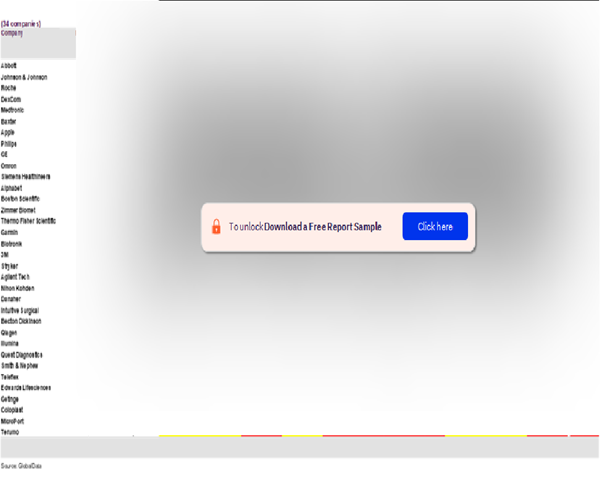
To know more about smart hospitals theme sector scorecard, download a free report sample
Reasons to buy
- GlobalData’s thematic research ecosystem is a single, integrated global research platform that provides an easy-to-use framework for tracking all themes across all companies in all sectors. It has a proven track record of identifying the important themes early, enabling companies to make the right investments ahead of the competition, and securing that all-important competitive advantage.
- Develop and design your corporate strategies through an in-house expert analysis of smart hospitals by understanding the primary ways in which this theme is impacting the healthcare industry.
- Stay up to date on the industry’s major players and where they sit in the value chain.
- Identify emerging industry trends to gain a competitive advantage.