Artificial Intelligence (AI) in Sport Thematic Report Overview
The sports industry’s adoption of AI will focus on computer vision (CV) and machine learning (ML). Successful applications of ML have helped the decision-makers at sports companies, broadcasters, and leagues find underlying trends in vast datasets. This analysis informs their strategy, on and off the pitch. A greater breadth of data is available so ML models can gain deeper insight into tactics and strategy. CV is mainly used in training, officiating, performance analysis, and injury prevention. Many teams using this technology have reported a decline in lost days due to injury despite many sports, like soccer, straining players’ health with a high volume of matches.
The ‘Artificial Intelligence (AI) in Sport’ thematic intelligence report gives you an in-depth insight into how the AI theme can impact the sports industry. It further entails a deep-dive analysis of the industry including the AI value chain as well as market values for the current and forecast period. The report gives an insight into the market players and the competitive landscape within the theme.
| Report Pages | 34 |
| Regions Covered | Global |
| Value Chain | · Hardware
· Data Management · Foundational AI · Advanced AI Capabilities · Delivery |
| Leading AI Adopters | · Deutsche Fußball Liga (DFL)
· Formula 1 (F1) · National Basketball Association (NBA) |
| Specialist AI Vendors | · AI.io
· Hawk-Eye Innovations · Stats Perform |
| Enquire & Decide | Discover the perfect solution for your business needs. Enquire now and let us help you make an informed decision before making a purchase. |
AI Value Chain Analysis
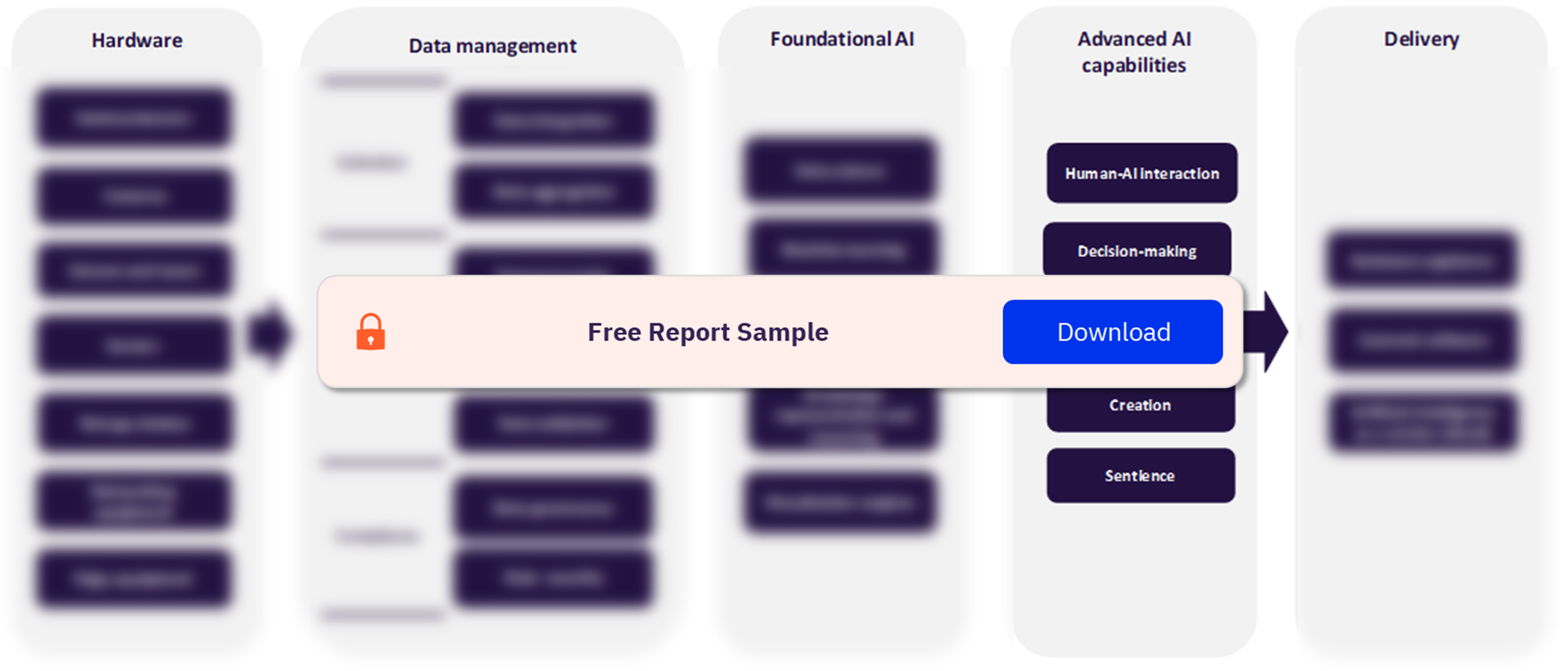
The AI value chain is split into five segments: hardware, data management, foundational AI, advanced AI capabilities, and delivery.
Advanced AI capabilities: AI is any machine-based system that perceives its environment, pursues goals, adapts to feedback or change, provides information or takes action, and even has self-awareness and sentience. There are five categories of advanced AI capabilities; namely human-AI interaction, decision-making, motion, creation, and sentience.
AI Value Chain Analysis
Buy the Full Report for More Insights into the AI Value Chain
Download a Free Report Sample
AI in Sport – Competitive Landscape
The key companies that will make their mark within the AI in sport theme are as follows:
Leading AI Adopters in Sport: A few of the leading sports organizations currently deploying AI are Deutsche Fußball Liga (DFL), Formula 1 (F1), and the National Basketball Association (NBA), among others.
Specialist AI Vendors in Sport: A few of the specialist AI vendors in the sports sector are AI.io, Hawk-Eye Innovations, and Stats Perform, among others.
Key Companies in AI Theme

Buy the Full Report to Know More about the Sport Companies in the AI Theme
Download a Free Report Sample
Sport Federations Sector Scorecard
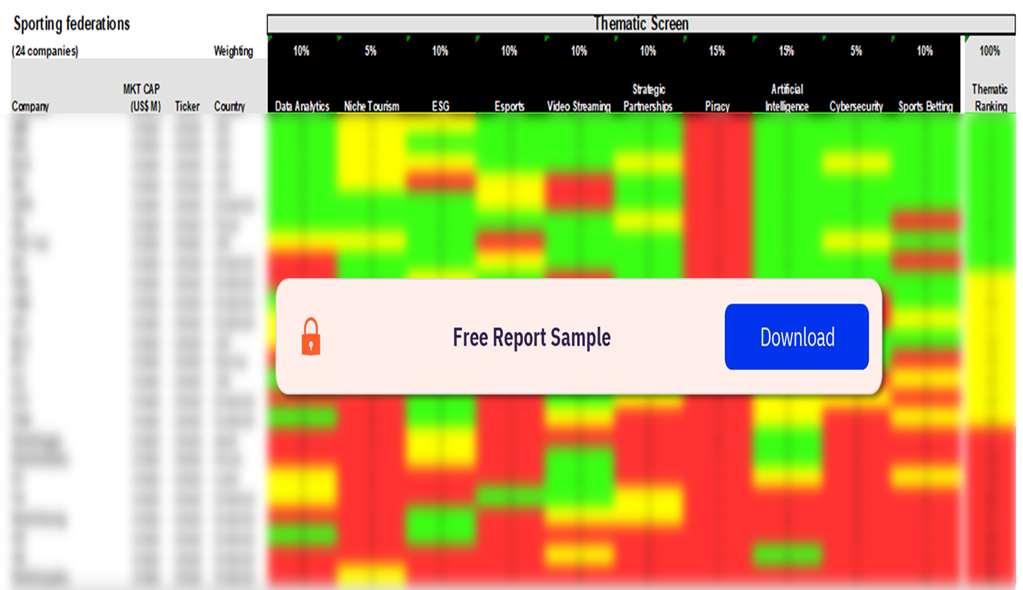
At GlobalData, we use a scorecard approach to predict tomorrow’s leading companies within each sector. Our sector scorecard has three screens: a thematic screen, a valuation screen, and a risk screen.
- The thematic screen ranks companies based on overall leadership in the 10 themes that matter most to their industry, generating a leading indicator of future performance.
Sport Federations Sector Scorecard – Thematic Screen
Buy the Full Report to Know More about the Sector Scorecards in the Sport Theme
Download a Free Report Sample
Scope of Report
- The “Artificial Intelligence in Sport” thematic intelligence report gives you an in-depth insight into the impact of AI in sport, including key players, challenges, and market size and growth forecasts.
- The report elucidates the growing importance of AI in the sports sector along with the progress made by the leading companies to integrate it. These detailed analyses are critical in developing effective business plans to gain a competitive edge.
Key Highlights
- The sports industry is typically slow to adopt new technologies. Sport is different from most industries as technology will not change how the sector operates, though it may change how sport is consumed. However, in other industries, AI could engender wholesale changes in operations. Sports companies, teams, and leagues generally wait to see successful, profitable adoption of a new technology before investing heavily themselves.
- The main application of AI in sports has been using machine learning models to analyze large datasets, which can help inform strategy on and off the pitch. More recently, machine learning has provided in-depth statistics for sports broadcasters, synthesizing large datasets. Computer vision is another subset of AI. Historically, it has been successful in the sports industry. Generative AI has not had a similar impact on the sports industry yet. However, developments are increasingly likely around betting and generating media content.
- Increased AI adoption could help prevent injuries and protect players’ well-being. Player safety is crucial for sports clubs. An injury to a star player could hamstring a club’s commercial strategy, damage a club’s bottom line, and harm the career and earnings of the player. AI can help tackle this through injury prevention.
- AI in the sports industry can benefit sponsors and those seeking a sponsor. Now there is a greater depth of data available, sports companies can tailor their sponsorship requirements accordingly. For instance, AI could analyze the demographics and interests of an audience and feed the insights to a prospective sponsor. This will help it decide whether a sponsorship opportunity is suitable.
Reasons to Buy
This report:
- Discusses the challenges the sports industry faces and how AI can be used to help address them.
- Evaluates the impact of AI in the sports sector, including various use cases and case studies.
- Benchmarks leading AI vendors and leading sports companies based on their adoption of AI.