Traumatic brain injury happens when an external mechanical force causes brain damage. Traumatic brain injury usually results from a violent blow or jolt to the head or body. Symptoms include headache, dizziness, nausea or vomiting, mood changes, fatigue or drowsiness, difficulty sleeping, and memory or concentration problems. Risk factor includes age. Certain types of traumatic brain injury increase the risk of developing Alzheimer’s disease and coordination problems.
The traumatic brain injury drugs in development market research report provides an overview of the traumatic brain injury pipeline landscape. The report provides comprehensive information on the therapeutics under development for traumatic brain injury, complete with analysis by stage of development, drug target, mechanism of action (MoA), route of administration (RoA), and molecule type. The report also covers the descriptive pharmacological action of the therapeutics, its complete research and development history, and the latest news and press releases. Additionally, the report provides an overview of key players involved in therapeutic development for traumatic brain injury and features dormant and discontinued projects.
What are the targets of the traumatic brain injury pipeline drugs market?
Some of the targets of the traumatic brain injury pipeline drugs market are Cannabinoid Receptor 1, Amyloid Beta A4 Protein, Cannabinoid Receptor 2, Glutamate Ionotropic Receptor NMDA Type Subunit, 5-Hydroxytryptamine Receptor 1A, 5-Hydroxytryptamine Receptor 2A, Microtubule Associated Protein Tau, Neuronal Acetylcholine Receptor Subunit Alpha 7, Apoptosis Associated Speck Like Protein Containing A CARD, and BDNF/NT 3 Growth Factors Receptor.
Traumatic brain injury pipeline drugs market, by targets
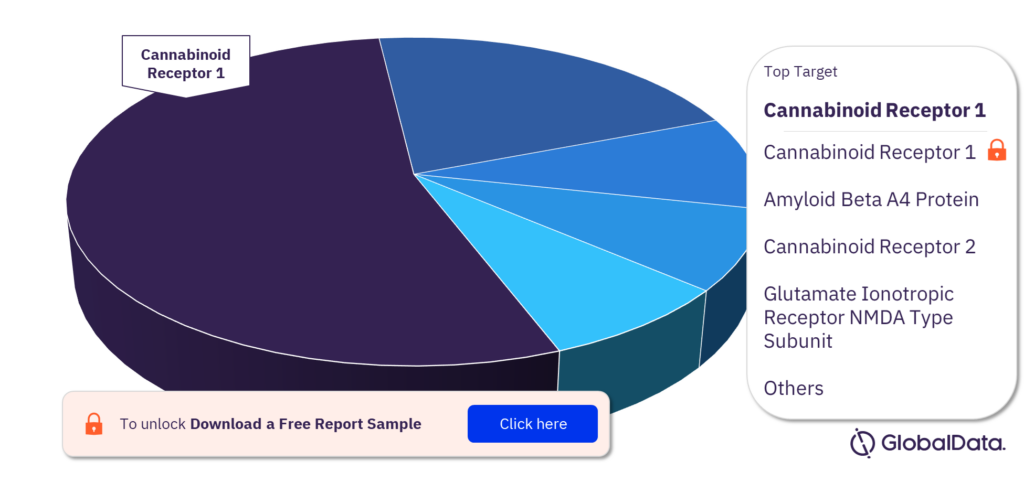
For more target insights, download a free report sample
What are the mechanisms of action of the traumatic brain injury pipeline drugs market?
Some of the mechanisms of action of the traumatic brain injury pipeline drugs market are Cannabinoid Receptor 1 Agonist, Amyloid Beta A4 Protein Inhibitor, Cannabinoid Receptor 2 Agonist, 5-Hydroxytryptamine Receptor 1A Agonist, 5-Hydroxytryptamine Receptor 2A Agonist, Glutamate Ionotropic Receptor NMDA Type Subunit Antagonist, Microtubule Associated Protein Tau Inhibitor, Neuronal Acetylcholine Receptor Subunit Alpha 7 Agonist, Apoptosis Associated Speck Like Protein Containing A CARD Inhibitor, and BDNF/NT 3 Growth Factors Receptor Agonist.
Traumatic brain injury pipeline drugs market, by mechanisms of action
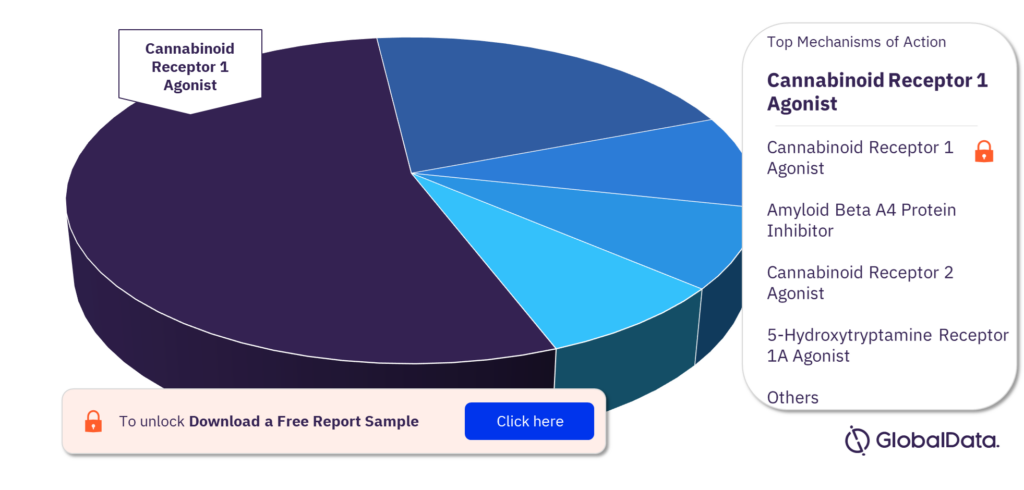
For more mechanisms of action insights, download a free report sample
What are the routes of administration in the traumatic brain injury pipeline drugs market?
The routes of administration in the traumatic brain injury pipeline drugs market are intravenous, oral, subcutaneous, nasal, parenteral, intravenous bolus, topical, intracerebral, intrathecal, and sublingual.
Traumatic brain injury pipeline drugs market, by routes of administration
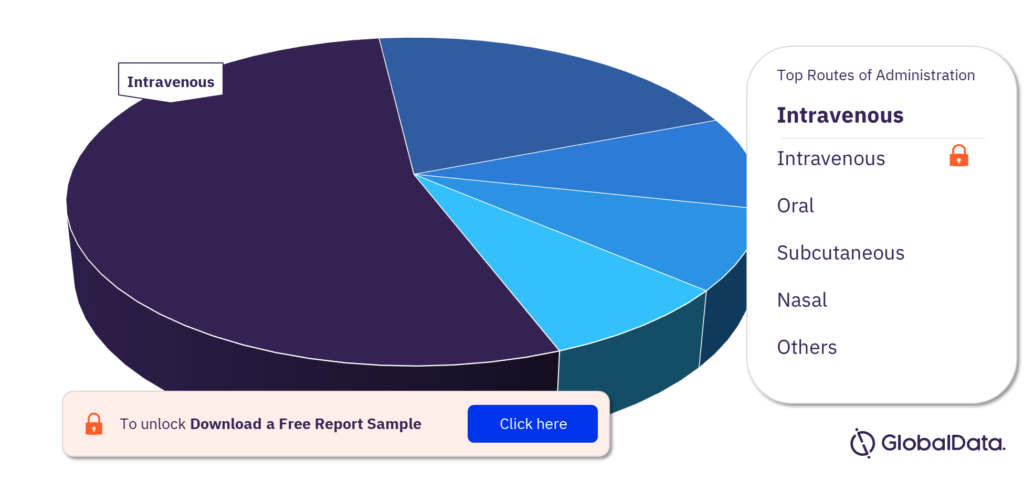
For more routes of administration insights, download a free report sample
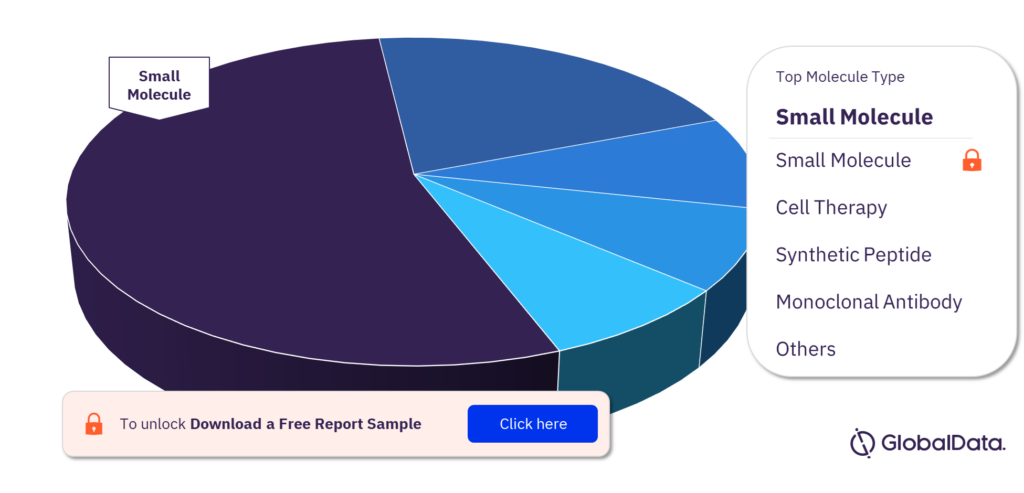
What are the molecule types in the traumatic brain injury pipeline drugs market?
The molecule types in the traumatic brain injury pipeline drugs market are small molecule, cell therapy, synthetic peptide, monoclonal antibody, protein, peptide, recombinant protein, biologic, fusion protein, and gene therapy.
Traumatic brain injury pipeline drugs market, by molecule types
For more molecule type insights, download a free report sample
Which are the key companies in the traumatic brain injury pipeline drugs market?
Some of the key companies in the traumatic brain injury pipeline drugs market are Neuronasal LLC, Nyrada Inc, Astrocyte Pharmaceuticals Inc, Athersys Inc, Biogen Inc, Cellvation Inc, Expesicor Inc, Hillhurst Biopharmaceuticals Inc, ImmunoChem Therapeutics LLC, and Mercaptor Discoveries Inc.
Traumatic brain injury pipeline drugs market, by key companies

To know more about key companies, download a free report sample
Market report scope
| Targets | Cannabinoid Receptor 1, Amyloid Beta A4 Protein, Cannabinoid Receptor 2, Glutamate Ionotropic Receptor NMDA Type Subunit, 5-Hydroxytryptamine Receptor 1A, 5-Hydroxytryptamine Receptor 2A, Microtubule Associated Protein Tau, Neuronal Acetylcholine Receptor Subunit Alpha 7, Apoptosis Associated Speck Like Protein Containing A CARD, and BDNF/NT 3 Growth Factors Receptor |
| Mechanisms of Action | Cannabinoid Receptor 1 Agonist, Amyloid Beta A4 Protein Inhibitor, Cannabinoid Receptor 2 Agonist, 5-Hydroxytryptamine Receptor 1A Agonist, 5-Hydroxytryptamine Receptor 2A Agonist, Glutamate Ionotropic Receptor NMDA Type Subunit Antagonist, Microtubule Associated Protein Tau Inhibitor, Neuronal Acetylcholine Receptor Subunit Alpha 7 Agonist, Apoptosis Associated Speck Like Protein Containing A CARD Inhibitor, and BDNF/NT 3 Growth Factors Receptor Agonist |
| Routes of Administration | Intravenous, Oral, Subcutaneous, Nasal, Parenteral, Intravenous Bolus, Topical, Intracerebral, Intrathecal, and Sublingual |
| Molecule Types | Small Molecule, Cell Therapy, Synthetic Peptide, Monoclonal Antibody, Protein, Peptide, Recombinant Protein, Biologic, Fusion Protein, and Gene Therapy |
| Key Companies | Neuronasal LLC, Nyrada Inc, Astrocyte Pharmaceuticals Inc, Athersys Inc, Biogen Inc, Cellvation Inc, Expesicor Inc, Hillhurst Biopharmaceuticals Inc, ImmunoChem Therapeutics LLC, and Mercaptor Discoveries Inc |
This report provides:
- A snapshot of the global therapeutic landscape of Traumatic brain injury (Central Nervous System).
- Reviews of pipeline therapeutics for Traumatic brain injury (Central Nervous System) by companies and universities/research institutes based on information derived from company and industry-specific sources.
- Pipeline products based on several stages of development ranging from pre-registration to discovery and undisclosed stages.
- Descriptive drug profiles for the pipeline products which comprise, product description, descriptive licensing and collaboration details, R&D brief, MoA & other developmental activities.
- Key companies involved in Traumatic brain injury (Central Nervous System) therapeutics and enlists all their major and minor projects.
- Evaluation of Traumatic brain injury (Central Nervous System) therapeutics based on mechanism of action (MoA), drug target, route of administration (RoA), and molecule type.
- All the dormant and discontinued pipeline projects.
- Reviews of the latest news related to pipeline therapeutics for Traumatic brain injury (Central Nervous System).
Reasons to buy
- Procure strategically important competitor information, analysis, and insights to formulate effective R&D strategies.
- Recognize emerging players with potentially strong product portfolio and create effective counterstrategies to gain competitive advantage.
- Find and recognize significant and varied types of therapeutics under development for Traumatic brain injury (Central Nervous System).
- Classify potential new clients or partners in the target demographic.
- Develop tactical initiatives by understanding the focus areas of leading companies.
- Plan mergers and acquisitions meritoriously by identifying key players and their most promising pipeline therapeutics.
- Formulate corrective measures for pipeline projects by understanding Traumatic brain injury (Central Nervous System) pipeline depth and focus of Indication therapeutics.
- Develop and design in-licensing and out-licensing strategies by identifying prospective partners with the most attractive projects to enhance and expand business potential and scope.
- Adjust the therapeutic portfolio by recognizing discontinued projects and understanding from the know-how what drove them from the pipeline.
Key Stakeholders
Table of Contents
Tables
List of Tables
Number of Products under Development for Traumatic Brain Injury, 2022
Number of Products under Development by Companies, 2022
Number of Products under Development by Companies, 2022 (Contd..1)
Number of Products under Development by Companies, 2022 (Contd..2)
Number of Products under Development by Companies, 2022 (Contd..3)
Number of Products under Development by Companies, 2022 (Contd..4)
Number of Products under Development by Companies, 2022 (Contd..5)
Number of Products under Development by Companies, 2022 (Contd..6)
Number of Products under Development by Universities/Institutes, 2022
Products under Development by Companies, 2022
Products under Development by Companies, 2022 (Contd..1)
Products under Development by Companies, 2022 (Contd..2)
Products under Development by Companies, 2022 (Contd..3)
Products under Development by Companies, 2022 (Contd..4)
Products under Development by Companies, 2022 (Contd..5)
Products under Development by Companies, 2022 (Contd..6)
Products under Development by Companies, 2022 (Contd..7)
Products under Development by Universities/Institutes, 2022
Number of Products by Stage and Target, 2022
Number of Products by Stage and Target, 2022 (Contd..1)
Number of Products by Stage and Target, 2022 (Contd..2)
Number of Products by Stage and Target, 2022 (Contd..3)
Number of Products by Stage and Mechanism of Action, 2022
Number of Products by Stage and Mechanism of Action, 2022 (Contd..1)
Number of Products by Stage and Mechanism of Action, 2022 (Contd..2)
Number of Products by Stage and Mechanism of Action, 2022 (Contd..3)
Number of Products by Stage and Route of Administration, 2022
Number of Products by Stage and Molecule Type, 2022
Traumatic Brain Injury – Pipeline by Abliva AB, 2022
Traumatic Brain Injury – Pipeline by AegisCN LLC, 2022
Traumatic Brain Injury – Pipeline by AivoCode LLP, 2022
Traumatic Brain Injury – Pipeline by AlphaCognition Inc, 2022
Traumatic Brain Injury – Pipeline by ALSP Inc, 2022
Traumatic Brain Injury – Pipeline by AlzeCure Pharma AB, 2022
Traumatic Brain Injury – Pipeline by American CryoStem Corp, 2022
Traumatic Brain Injury – Pipeline by Amgen Inc, 2022
Traumatic Brain Injury – Pipeline by Anagin Inc, 2022
Traumatic Brain Injury – Pipeline by Angion Biomedica Corp, 2022
Traumatic Brain Injury – Pipeline by Anida Pharma Inc, 2022
Traumatic Brain Injury – Pipeline by Annovis Bio Inc, 2022
Traumatic Brain Injury – Pipeline by AntiRadical Therapeutics LLC, 2022
Traumatic Brain Injury – Pipeline by Aptinyx Inc, 2022
Traumatic Brain Injury – Pipeline by Astrocyte Pharmaceuticals Inc, 2022
Traumatic Brain Injury – Pipeline by Astrogen Ltd, 2022
Traumatic Brain Injury – Pipeline by Athersys Inc, 2022
Traumatic Brain Injury – Pipeline by Avanir Pharmaceuticals Inc, 2022
Traumatic Brain Injury – Pipeline by B Cell Solutions Inc, 2022
Traumatic Brain Injury – Pipeline by Bessor Pharma LLC, 2022
Traumatic Brain Injury – Pipeline by Beyond Barriers Therapeutics Inc, 2022
Traumatic Brain Injury – Pipeline by Biogen Inc, 2022
Traumatic Brain Injury – Pipeline by BioIncept LLC, 2022
Traumatic Brain Injury – Pipeline by Bioquark Inc, 2022
Traumatic Brain Injury – Pipeline by Biosplice Therapeutics Inc, 2022
Traumatic Brain Injury – Pipeline by Brain-Gen LLC, 2022
Traumatic Brain Injury – Pipeline by Braxia Scientific Corp, 2022
Traumatic Brain Injury – Pipeline by CalciMedica Inc, 2022
Traumatic Brain Injury – Pipeline by Calico Life Sciences LLC, 2022
Traumatic Brain Injury – Pipeline by CavoGene LifeSciences, 2022
Traumatic Brain Injury – Pipeline by CellCure, 2022
Traumatic Brain Injury – Pipeline by Cellvation Inc, 2022
Traumatic Brain Injury – Pipeline by CereSpir Inc, 2022
Traumatic Brain Injury – Pipeline by Chimerix Inc, 2022
Traumatic Brain Injury – Pipeline by Chrysalis BioTherapeutics Inc, 2022
Traumatic Brain Injury – Pipeline by Claritas Pharmaceuticals Inc, 2022
Traumatic Brain Injury – Pipeline by Cognosci Inc, 2022
Traumatic Brain Injury – Pipeline by Complement Pharma BV, 2022
Traumatic Brain Injury – Pipeline by Covis Pharmaceuticals Inc, 2022
Traumatic Brain Injury – Pipeline by Deha Pharmaceutical LLC, 2022
Traumatic Brain Injury – Pipeline by Eagle Pharmaceuticals Inc, 2022
Traumatic Brain Injury – Pipeline by Eisai Co Ltd, 2022
Traumatic Brain Injury – Pipeline by Emerald Organic Products Inc, 2022
Traumatic Brain Injury – Pipeline by Epigen Biosciences Inc, 2022
Traumatic Brain Injury – Pipeline by Expesicor Inc, 2022
Traumatic Brain Injury – Pipeline by Fortuna Fix Inc, 2022
Traumatic Brain Injury – Pipeline by GABA Therapeutics Inc, 2022
Traumatic Brain Injury – Pipeline by GNT Pharma Co Ltd, 2022
Traumatic Brain Injury – Pipeline by Gryphon Therapeutics Inc, 2022
Traumatic Brain Injury – Pipeline by Hemarina SA, 2022
Traumatic Brain Injury – Pipeline by Hibernaid Inc, 2022
Traumatic Brain Injury – Pipeline by Hillhurst Biopharmaceuticals Inc, 2022
Traumatic Brain Injury – Pipeline by Hope Biosciences LLC, 2022
Traumatic Brain Injury – Pipeline by Hopstem Biotechnology LLC, 2022
Traumatic Brain Injury – Pipeline by Hoverink Biotechnologies Inc, 2022
Traumatic Brain Injury – Pipeline by ImmunoChem Therapeutics LLC, 2022
Traumatic Brain Injury – Pipeline by Inflammatory Response Research Inc, 2022
Traumatic Brain Injury – Pipeline by International Stem Cell Corp, 2022
Traumatic Brain Injury – Pipeline by Ischemix Inc, 2022
Traumatic Brain Injury – Pipeline by JT Pharmaceuticals Inc, 2022
Traumatic Brain Injury – Pipeline by Jupiter Neurosciences Inc, 2022
Traumatic Brain Injury – Pipeline by Levolta Pharmaceuticals Inc, 2022
Traumatic Brain Injury – Pipeline by M et P Pharma AG, 2022
Traumatic Brain Injury – Pipeline by Mapreg SAS, 2022
Traumatic Brain Injury – Pipeline by Mercaptor Discoveries Inc, 2022
Traumatic Brain Injury – Pipeline by NervGen Pharma Corp, 2022
Traumatic Brain Injury – Pipeline by NeuExcell Therapeutics Inc, 2022
Traumatic Brain Injury – Pipeline by NeurAegis Inc, 2022
Traumatic Brain Injury – Pipeline by Neuren Pharmaceuticals Ltd, 2022
Traumatic Brain Injury – Pipeline by NeurExo Sciences LLC, 2022
Traumatic Brain Injury – Pipeline by Neurodon LLC, 2022
Traumatic Brain Injury – Pipeline by Neuronasal LLC, 2022
Traumatic Brain Injury – Pipeline by NeuroNascent Inc, 2022
Traumatic Brain Injury – Pipeline by Neuropathix Inc, 2022
Traumatic Brain Injury – Pipeline by Neuroplast BV, 2022
Traumatic Brain Injury – Pipeline by NeuroTheranostics Inc, 2022
Traumatic Brain Injury – Pipeline by NeuroTrauma Sciences LLC, 2022
Traumatic Brain Injury – Pipeline by New World Laboratories Inc, 2022
Traumatic Brain Injury – Pipeline by NoNO Inc, 2022
Traumatic Brain Injury – Pipeline by Noveome Biotherapeutics Inc, 2022
Traumatic Brain Injury – Pipeline by NuvOx Pharma LLC, 2022
Traumatic Brain Injury – Pipeline by Nyrada Inc, 2022
Traumatic Brain Injury – Pipeline by Odyssey Health Inc, 2022
Traumatic Brain Injury – Pipeline by OncoSynergy Inc, 2022
Traumatic Brain Injury – Pipeline by Orpheris Inc, 2022
Traumatic Brain Injury – Pipeline by Oxeia Biopharmaceuticals Inc, 2022
Traumatic Brain Injury – Pipeline by Palisade Bio, Inc, 2022
Traumatic Brain Injury – Pipeline by Peptron Inc, 2022
Traumatic Brain Injury – Pipeline by Personalized Stem Cells Inc, 2022
Traumatic Brain Injury – Pipeline by PharmaTher Holdings Ltd, 2022
Traumatic Brain Injury – Pipeline by PharmatrophiX Inc, 2022
Traumatic Brain Injury – Pipeline by Pinteon Therapeutics Inc, 2022
Traumatic Brain Injury – Pipeline by Praetego Inc, 2022
Traumatic Brain Injury – Pipeline by ProNeurogen Inc, 2022
Traumatic Brain Injury – Pipeline by ProThera Biologics Inc, 2022
Traumatic Brain Injury – Pipeline by Protheragen Inc, 2022
Traumatic Brain Injury – Pipeline by PurMinds NeuroPharma Inc, 2022
Traumatic Brain Injury – Pipeline by Qrons Inc, 2022
Traumatic Brain Injury – Pipeline by RegeneRx Biopharmaceuticals Inc, 2022
Traumatic Brain Injury – Pipeline by Resolys Bio Inc, 2022
Traumatic Brain Injury – Pipeline by Revalesio Corp, 2022
Traumatic Brain Injury – Pipeline by Revive Therapeutics Ltd, 2022
Traumatic Brain Injury – Pipeline by RHNanopharmacuticals LLC, 2022
Traumatic Brain Injury – Pipeline by Rubicon Biotechnology Inc, 2022
Traumatic Brain Injury – Pipeline by Samus Therapeutics Inc, 2022
Traumatic Brain Injury – Pipeline by SanBio Co Ltd, 2022
Traumatic Brain Injury – Pipeline by SciSparc Ltd, 2022
Traumatic Brain Injury – Pipeline by Shinkei Therapeutics LLC, 2022
Traumatic Brain Injury – Pipeline by Silver Creek Pharmaceuticals Inc, 2022
Traumatic Brain Injury – Pipeline by SL Bigen Co Ltd, 2022
Traumatic Brain Injury – Pipeline by Spinogenix Inc, 2022
Traumatic Brain Injury – Pipeline by STATegics Inc, 2022
Traumatic Brain Injury – Pipeline by Stemedica Cell Technologies Inc, 2022
Traumatic Brain Injury – Pipeline by Swedish Orphan Biovitrum AB, 2022
Traumatic Brain Injury – Pipeline by Synaptogenix Inc, 2022
Traumatic Brain Injury – Pipeline by Takeda Pharmaceutical Co Ltd, 2022
Traumatic Brain Injury – Pipeline by Tetra Therapeutics, 2022
Traumatic Brain Injury – Pipeline by Thera Neuropharma Inc, 2022
Traumatic Brain Injury – Pipeline by Therapeutic Solutions International Inc, 2022
Traumatic Brain Injury – Pipeline by Theratome Bio Inc, 2022
Traumatic Brain Injury – Pipeline by TikoMed AB, 2022
Traumatic Brain Injury – Pipeline by Trigemina Inc, 2022
Traumatic Brain Injury – Pipeline by vasopharm GmbH, 2022
Traumatic Brain Injury – Pipeline by Ventus Therapeutics Inc, 2022
Traumatic Brain Injury – Pipeline by VG Life Sciences Inc, 2022
Traumatic Brain Injury – Pipeline by Virogenomics BioDevelopment Inc, 2022
Traumatic Brain Injury – Pipeline by Vitro Diagnostics Inc, 2022
Traumatic Brain Injury – Pipeline by Vivazome Therapeutics Pty Ltd, 2022
Traumatic Brain Injury – Pipeline by Wesana Health, 2022
Traumatic Brain Injury – Pipeline by Xonovo Inc, 2022
Traumatic Brain Injury – Pipeline by ZyVersa Therapeutics Inc, 2022
Traumatic Brain Injury – Dormant Projects, 2022
Traumatic Brain Injury – Dormant Projects, 2022 (Contd..1)
Traumatic Brain Injury – Dormant Projects, 2022 (Contd..2)
Traumatic Brain Injury – Dormant Projects, 2022 (Contd..3)
Traumatic Brain Injury – Dormant Projects, 2022 (Contd..4)
Traumatic Brain Injury – Dormant Projects, 2022 (Contd..5)
Traumatic Brain Injury – Discontinued Products, 2022
Graphs
List of Figures
Number of Products under Development for Traumatic Brain Injury, 2022
Number of Products under Development by Companies, 2022
Number of Products under Development by Universities/Institutes, 2022
Number of Products by Top 10 Targets, 2022
Number of Products by Stage and Top 10 Targets, 2022
Number of Products by Top 10 Mechanism of Actions, 2022
Number of Products by Stage and Top 10 Mechanism of Actions, 2022
Number of Products by Top 10 Routes of Administration, 2022
Number of Products by Stage and Top 10 Routes of Administration, 2022
Number of Products by Top 10 Molecule Types, 2022
Number of Products by Stage and Top 10 Molecule Types, 2022