Digital Lifestyles in the Foodservice Industry Report Overview
Digital lifestyles have become a part of consumers’ daily routine, creating demand for digitized systems that can provide instant gratification and a propensity to multitask. Digital tools such as social media have proven to be a way for leaders in the industry to stand out. However, players should look further into digital connectivity trends such as robotics and AI. As consumers are increasingly spending time online, it is important for the foodservice providers to experiment with progressive platforms. Augmented reality (AR) and virtual reality (VR) technology can also be used to gamify promotions and encourage consumers to visit restaurant outlets.
The Digital Lifestyles in the Foodservice Industry research report explains how digital tools such as social media prove to be an advantage for leaders in the industry to stand out.
Digital Lifestyles Trends in the Foodservice Industry
The definition of ‘convenience’ is changing, thereby creating new value paths in the foodservice sector. Growing digitalization has compelled foodservice providers to focus on connecting the digital world to dining. The key technologies influencing the digital lifestyle trend in the foodservice industry are Artificial Intelligence (AI), social media, robotics, and delivery takeaway.
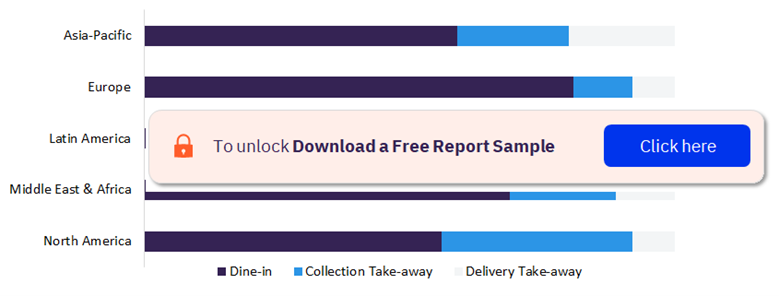
Delivery Takeaway: It is a key aspect of digital lifestyles, especially for younger consumers such as Generation Z and Millennials. Since consumers are spending more time at home, there is an increase in takeaway orders. It is therefore important for foodservice providers to provide online systems for orders through food aggregators such as Uber Eats. The demand for delivery takeaway in the Asia-Pacific region is especially high. Likewise, Latin America is expected to witness the highest growth for delivery takeaway during 2021–26. Therefore, it is important for the foodservice providers to implement online delivery channels in the rapidly growing regions if they wish to stand out in a competitive market.
Social Media: As online audiences continue to grow, social media is becoming an increasingly important platform to engage with target consumer groups. Hence, to align with social media trends and help brands stand out, foodservice providers should invest in technologies such as AI, robotics, and online food delivery. This might appeal to consumers who are influenced by digitally ‘smart’ services. Brands such as Wendy’s are going the extra mile to gamify experiences through progressive social platforms such as the Metaverse to create another level of engagement.
Robotics: Robotics (e.g. robot delivery) is being employed by many leading brands in the foodservice industry to cut costs and waiting times in the supply chain and enhance culinary experiences. Many leading foodservice providers such as Yum! Brands and Domino’s are piloting robotics, especially in the last-mile supply chain. Suppliers of autonomous vehicles, such as Nuro, are currently building on marketing opportunities and communication spaces on their fleets.
Artificial Intelligence: AI technology is a vital to boost supply chain efficiency. Automated processes are especially helpful to brands with a low number of staff and predictive AI tools help managers keep track of operation activity. Many leading brands such as Darden have used artificial intelligence to manage consumer behavior online and offline. This is mainly driven by predictive and automated systems.
OSP value size of dine-in vs takeaway in foodservice by region, 2022 (%)
For more insights into the digital lifestyle trends in the foodservice industry, download a free report sample
Digital Lifestyles in the Foodservice Industry Report Overview
| Key Technologies | Artificial Intelligence, Social Media, Robotics, and Delivery Takeaway |
Key Highlights
- As more consumers spend more time online, it is important for foodservice providers to experiment with progressive platforms such as the Metaverse.
- Players should look further into future digitally connected tools such as 3D printing and robot delivery.
- AR/VR technology can be used to gamify promotions and encourage consumers to visit restaurant outlets.
Reasons to buy
- Understand the challenges and opportunities for foodservice brands in order to tap into the food waste trend.
- Gain insight into how competitors are responding to this trend.
- Access valuable strategic take-outs to help direct future decision-making and inform new product and service development.