Accessing in-depth insights and analysis from the ‘Reutilization and Conversion of Oil and Gas Infrastructure’ report can help you:
- Identify the main technical aspects involved in oil and gas infrastructure retrofitting for CCS, CO2 transport, hydrogen transport, and renewable fuels and biofuels production.
- Identify the most important companies involved in upstream and downstream infrastructure retrofitting.
- Demonstrate the savings that can be achieved by pipeline retrofitting for CO2 and hydrogen transport.
How is the ‘Reutilization and Conversion of Oil and Gas Infrastructure‘ report different from other reports in the market?
- Gain insights on the advantages and disadvantages of upstream, midstream, and downstream infrastructure retrofitting of each energy transition technology.
- Access in-depth details of CCS projects, Europe’s pipeline length distribution, and upcoming crude converted/co-processing refineries.
- Explore key case studies of pipeline retrofitting for CO2 and hydrogen transport.
We recommend this valuable source of information to anyone involved in:
- Oil & Gas Companies/Start-ups with interest in O&G Sector
- Contractors/Engineers
- Equipment/Materials Suppliers
- Service providers/Technology Suppliers
- Upstream, Midstream & Downstream Producers
- C-suite Executives/Business Strategists or BD Team Leads of O&G and Energy Transition Companies
- Investment Banks/Consultants
To get a snapshot of the reutilization and conversion of oil and gas infrastructure report, download a free report sample
Oil And Gas Infrastructure Reutilization and Conversion Trend Report Overview
In an accelerated energy transition environment, it is important to evaluate the potential reuse of either abandoned or operating oil and gas infrastructure, which can ultimately lead to huge savings on the CCS chain, hydrogen cost, and renewable fuels. Retrofitting oil and gas infrastructure has the potential to save millions of dollars and accelerate the transition to clean energy. Depleted oil fields can be repurposed for long-term CO2 storage by adapting them to the production well allocation, like Enhanced Oil Recovery (EOR) projects.
Reutilization and conversion of oil and gas infrastructure market research report provides a brief about the reasons to retrofit existing oil and gas infrastructure, description of the typical cycle of CCS for CO2 geological storage.
| Key Pipeline Lengths for Hydrogen Transport in Europe | Gas Pipeline, Hydrogen Pipeline, NGL Pipeline, Oil Pipeline, and Product Pipeline |
| Key Companies Incurring on Geological Storage | Equinor, ExxonMobil, Summit Carbon Solutions, Oxy, drax, Stanos, Prairie State, Enchant Energy, and Calpine |
| Key Companies to Produce Renewable Diesel and Sustainable Aviation Fuel | Marathon, HF Sinclair, Pertamina, Preem, Eni, Imperial, PBF, Phillips 66, North Atlantic, and TotalEnergies. |
Upstream Infrastructure: Carbon Capture and Storage
Factors to consider when re-using/adapting upstream infrastructure for carbon capture and storage (CCS):
- Infrastructure close to mainland CO2 sources would be more attractive.
- Smaller infrastructure might be advantageous at early development.
- Formation depths above 2,500 ft would be advantageous to keep CO2 in the dense phase.
Carbon Capture and Storage – Top Companies Incurring on Geological Storage
The major companies incurring on geological storage are Equinor, ExxonMobil, Summit Carbon Solutions, Oxy, drax, Stanos, Prairie State, Enchant Energy, and Calpine.
Midstream Infrastructure: Pipeline Reuse for CO2 and Hydrogen Transport
Pipeline retrofitting for Hydrogen transport in Europe: Gas pipeline, hydrogen pipeline, NGL pipeline, oil pipeline, and product pipeline are the major segments within the pipeline length distribution in Europe. Gas pipeline accounted for the highest share, followed by Hydrogen pipeline and NGL pipeline.
Pipeline Retrofitting for Hydrogen Transport in Europe, by Pipeline Length (%)
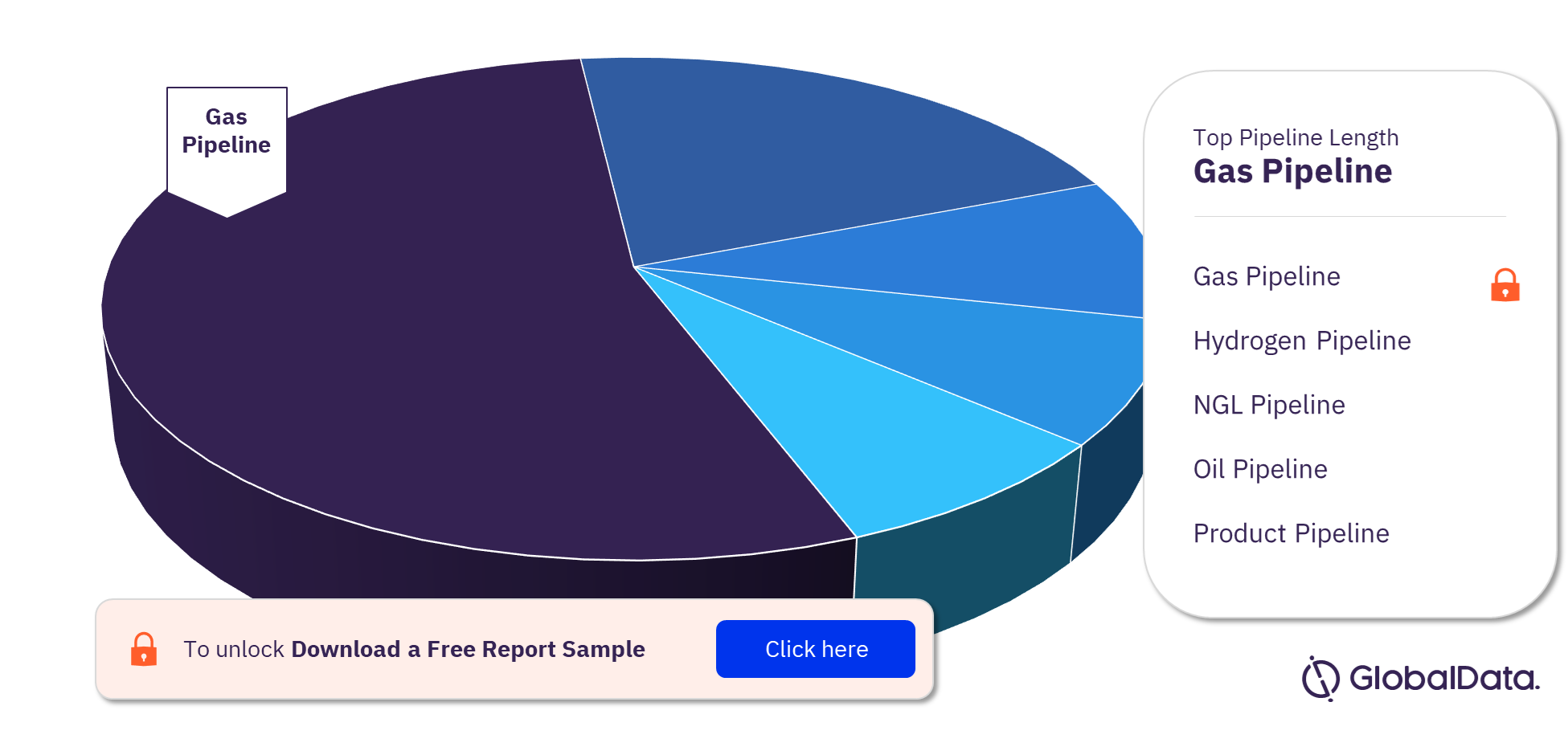
For more insights on the pipeline length for hydrogen transport in Europe, download a free report sample
Pipeline retrofitting for CO2 transport in Europe: Offshore and onshore are the major segments in the pipeline length distribution in Europe. Within the offshore segment a significant percentage of re-usability of CO2 can be seen, unlike the onshore segment.
Downstream Infrastructure: Crude Refinery Conversion/Co- processing
Major Oil and Gas companies has been retrofitting existing refineries mainly to produce renewable diesel and Sustainable Aviation Fuel are Marathon, HF Sinclair, Pertamina, Preem, Eni, Imperial, PBF, Phillips 66, North Atlantic, and TotalEnergies.
Crude Refineries Converted and Co-Processing: Active and Upcoming Projects: Some of the major upcoming active and projects are Martinez Renewable placed in the United States, Musi Renewable placed in Indonesia, Chalmette Renewable placed in the United States, and Strathcona Renewable placed in Canada, among others. The most important refinery retrofitting projected will be placed in North America.
Scope of Report
The report provides-
- Brief about the reasons to retrofit existing oil and gas infrastructure.
- Description of the typical cycle of CCS for CO2 geological storage.
- What to consider when retrofitting wells, fields, pipeline and equipment for CO2 geological storage/enhanced oil recovery.
- List of advantages and disadvantages, from an environmental and social/economic point of view, of upstream infrastructure retrofitting for CCS.
- Description of the requirements for pipeline retrofitting for CO2 and hydrogen transport.
- Descriptions of the technical aspects and requirements of transporting CO2 and Hydrogen in hydrocarbon pipelines.
- Description of equipment adjustments and requirements to consider when retrofitting midstream infrastructure.
- List of advantages and disadvantages, from an environmental and social/economic point of view, of pipeline retrofitting for CO2 and hydrogen transport.
- Renewable fuels and biofuels production cycle.
- Companies involved in converting their crude refineries to process/co-process renewable fuels and biofuels.
- List of the most important upcoming crude conversion/co-processing projects.
- Comparison between converted/co-processing refineries vs standalone renewable fuels refineries.
- List of advantages and disadvantages, from an environmental and social/economic point of view, of downstream infrastructure retrofitting.
Key Stakeholders
Table of Contents
Tables
Limitations depending on the Hydrogen production method 12
Pipeline retrofitting for Hydrogen transport: case studies 13
Pipeline retrofitting for CO2 transport: case studies 14
Crude refineries converted and co-processing: active and upcoming projects 15
Graphs
CCS projects outlook by purpose 7
Map of EOR/Geological Storage CCS operating projects by 2030 7
Top Companies Capture Capacity for EOR and Geological Storage – Outlook 2030 8
Pipeline length distribution in Europe 12
Hydrogen transport case studies cost comparison: reuse vs new build 13
Pipeline length in Europe 16
Pipeline projects count in Europe – Outlook 2030 16
CO2 transport case studies cost comparison: reuse vs new build 17
Top Companies retrofitting crude oil refineries capacity 21
Countries with the most converted/coprocessing capacity up to 2030 22
Retrofitting vs Standalone Refineries – Capacity Outlook 23
Retrofitting vs Standalone Refineries – Investment Outlook 23