Likelihood of Approval and Phase Transition Success Rate Model – Ensartinib Hydrochloride in Non-Small Cell Lung Cancer
Powered by 
Unlock hidden opportunities in the LoA industry

Empower your strategies with our Likelihood of Approval and Phase Transition Success Rate Model – Ensartinib Hydrochloride in Non-Small Cell Lung Cancer report and make more profitable business decisions.
This report provides you with the data that allows you to track and predict the specific likelihood of approval (LOA) and phase transition success rate (PTSR) of a drug using GlobalData’s proprietary machine learning algorithms developed using over 10 years of historical data.
Ensartinib Hydrochloride in Non-Small Cell Lung Cancer Drug Details:
Ensartinib hydrochloride (Bemena, Ensacove) is an anti-neoplastic agent. It is formulated as capsules for oral route of administration. Bemena is indicated for the treatment of locally advanced or metastatic non-small cell lung cancer (NSCLC) patients with anaplastic lymphoma kinase (ALK) positive who have progressed after crizotinib treatment or are intolerant to crizotinib. Bemena is indicated for the first-line treatment of anaplastic lymphoma kinase (ALK)-positive locally advanced or metastatic non-small cell lung cancer (NSCLC).Ensartinib (X-396) is under development for the treatment of non-small-cell lung cancer, melanoma, recurrent or refractory pediatric solid tumors including central nervous system tumors, non-Hodgkin lymphomas, Langerhans cell histiocytosis (LCH), sarcomas, diffuse intrinsic pontine glioma, and neuroblastoma. It is administered orally. X-396 is a small molecule inhibitor of ALK tyrosine kinase receptor. It was also under development for breast cancer, head and neck cancer, colorectal cancer, leptomeningeal disease and small-cell lung cancer.
Report Coverage
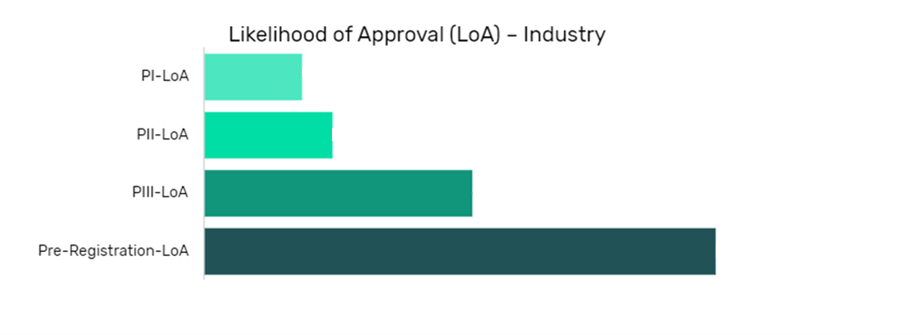
The data is segmented by drug name per indication and shows the current likelihood of approval for the drug compared to the indication benchmark and the industry benchmark.
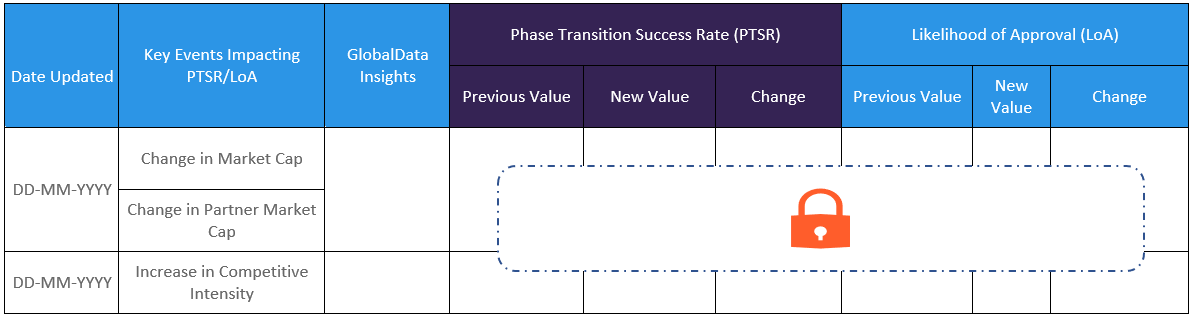
The Likelihood of Approval data is updated regularly based on events that take place which impact the clinical development process and regulatory considerations. GlobalData’s proprietary machine learning models consider these events in real time, to produce quantitative changes to the LOA and PTSR along with qualitative reasoning why the likelihood of approval has changed.
| Quick View – LOA Data | |||||
| Report Segments |
|
||||
| Drug Name |
|
||||
| Administration Pathway |
|
||||
| Therapeutic Areas | |||||
| Key Manufacturers |
|
||||
| Drug Development Status |
|
||||
Reasons to Buy
- Precise Likelihood of Approval and Phase Transition Success Rates: Our machine learning and proprietary models provide accurate predictions, helping you gauge the potential success of a drug in the regulatory process.
- Competitive Strategy Planning: Access information on LOA and PTSR for competitors’ drugs, allowing you to plan your clinical development, commercialisation and marketing strategies
- Event-driven Updates: Track event-driven changes in LOA and PTSR benchmarked against indication LOA/PTSR. Get the latest insights to adapt your strategies promptly!
- Well-informed Investment Decisions: This data helps you navigate the dynamic landscape of drug development and regulatory considerations.
Scope
- Drug Details: Drug name, Drug type, Intervention type
- Administration Pathway
- Therapeutic Areas
- Key Manufacturers
- Drug Development Status
This is an on-demand report that will be delivered upon request. The report will be delivered within 2 business days of the purchase, excluding weekends and holidays. Certain sections of the report may be removed or altered based on data availability and relevance.
Get in touch to find out about multi-purchase discounts
reportstore@globaldata.com
Tel +44 20 7947 2745


Related reports
View more Pharmaceuticals reports