
Augmented Reality in Aerospace and Defense Thematic Report Overview
Augmented reality (AR) is a technology that allows the user to see the real world overlaid with digital data. In defense, AR is currently used in manufacturing and engineering. Inherent advantages of remote assistance and instruction are also encouraging military medics to adopt AR. In addition, AR is becoming a crucial part of military training, as simulated assets can be overlaid into the real world.
AR has battlefield applications for pilots and soldiers, enhancing situational awareness (SA). A key driver in the widespread adoption of this technology is Microsoft’s AR headset, the HoloLens, which can be modified with specialized software to adapt to different scenarios. Major defense contractors are also active in developing AR. For instance, Elbit Systems has created several AR products for battlefield applications and training initiatives.
The ‘Augmented Reality In Aerospace and Defense’ thematic report provides insights into the AR theme and the impact it will have on the aerospace and defense sector. It provides a comprehensive analysis of the industry, including real-life case studies that showcase how the defense industry has responded to the impact of this theme on its operations. The report also gives an insight into the market players and the competitive landscape within the AR theme.
| Key Value Chain Components | • Semiconductors
• Components • Devices • Platforms • Applications & Content |
| Leading Augmented Reality Adopters in Defense | • Boeing
• General Dynamics • Hanwha Systems • Honeywell • Huntington Ingalls Industries |
| Leading Augmented Reality Vendors | • Alibaba
• Alphabet • Amazon • Apple • ByteDance |
| Specialist Augmented Reality Vendors in Defense | • Airbus
• Augmenti • BAE Systems • Dassault Aviation • Elbit Systems |
| Enquire & Decide | Discover the perfect solution for your business needs. Enquire now and let us help you make an informed decision before making a purchase. |
Augmented Reality Value Chain Analysis
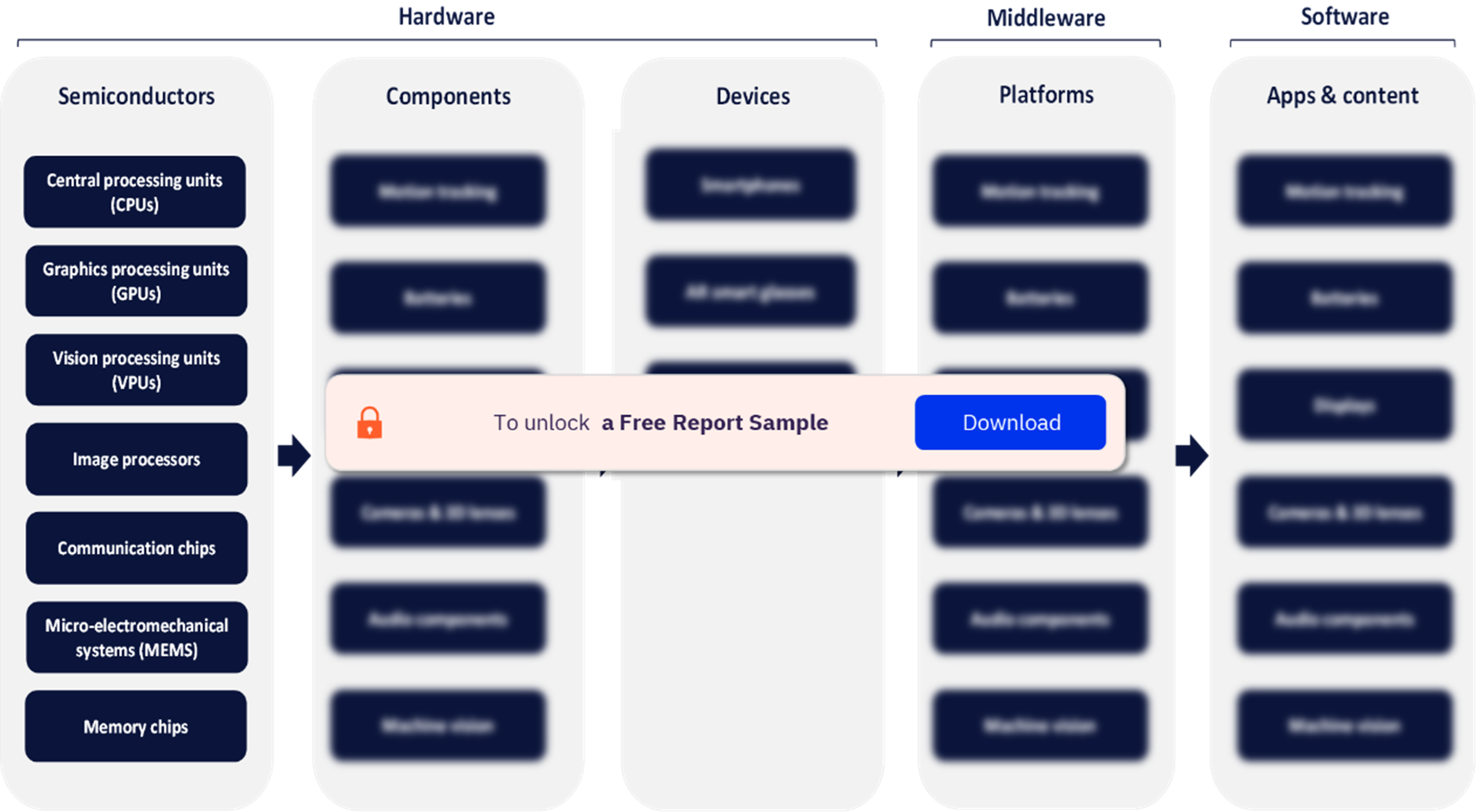
The augmented reality value chain is split into five segments including semiconductors, components, devices, platforms, and applications and content.
Semiconductors: Semiconductors are one of the key battlegrounds in AR today. Although no new AR-specific silicon has arrived on the market following the launch of the XR2 5G, chipmakers are striving to improve their existing capabilities to suit the evolving requirements of AR, mostly around screen resolution, frame rates, processing speed, and connectivity.
Augmented Reality Value Chain
Buy the Full Report for Augmented Reality Value Chain Insights, Download a Free Sample Report
Augmented Reality in Aerospace and Defense – Competitive Landscape
This thematic report highlights the companies making their mark within the augmented reality theme.
Leading augmented reality adopters in defense: Boeing, General Dynamics, Hanwha Systems, Honeywell, and Huntington Ingalls Industries among others are a few defense companies currently deploying AR.
Leading augmented reality vendors: Alibaba, Alphabet, Amazon, ByteDance, Magic Leap, Meta, and Microsoft among others are a few augmented reality vendors making their within the AR theme.
Specialist augmented reality vendors in defense: Airbus, Augmenti, BAE Systems, Dassault Aviation, and Elbit Systems are a few of the specialist AR vendors in the defense sector.
Buy the Full Report for More Insights on the Company-Wise Analysis of Augmented Reality in the Aerospace and Defense Sector, Download a Free Sample
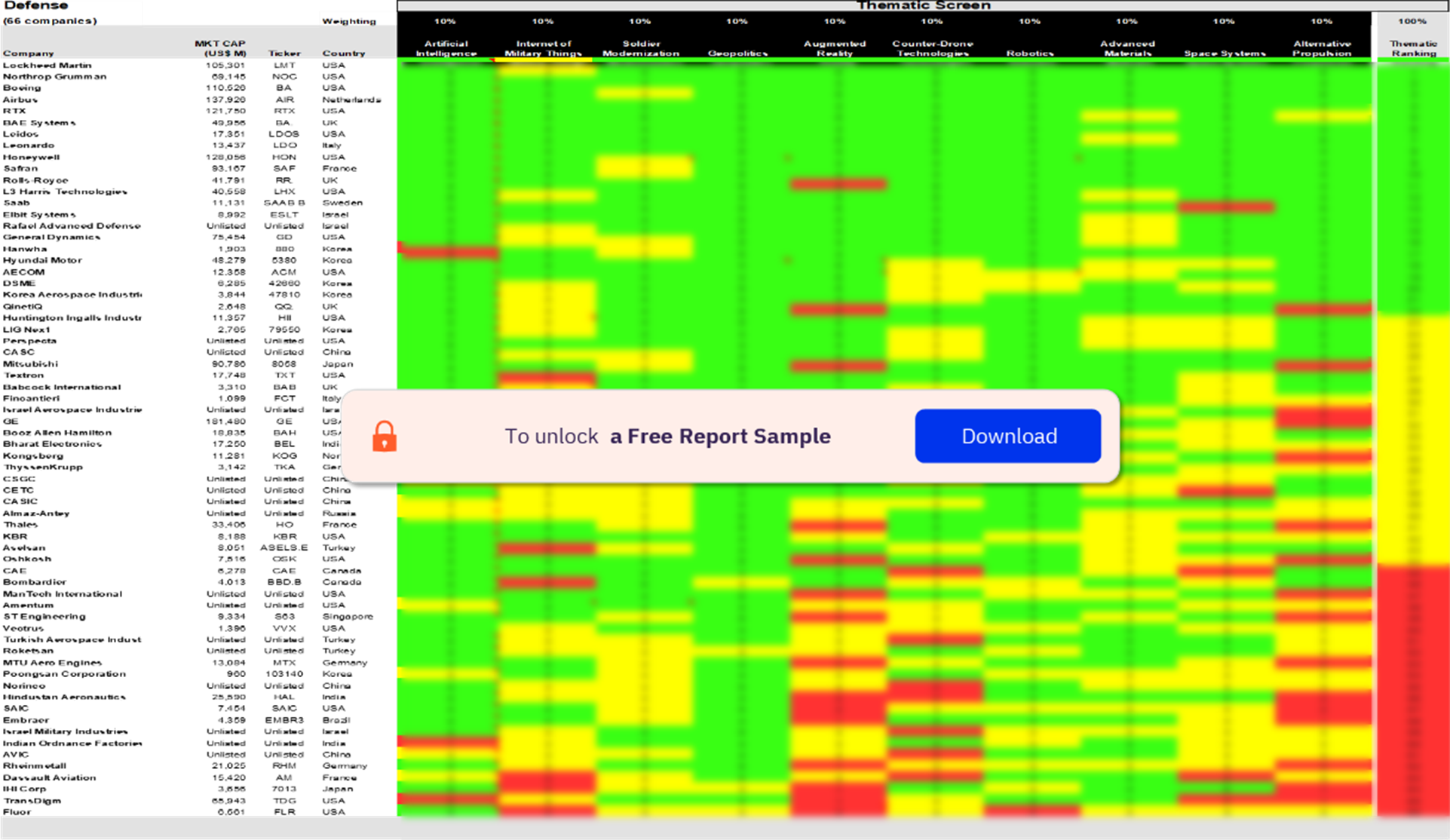
Defense Sector Scorecard
The defense sector scorecard comprises of thematic screen, valuation screen, and risk screen. The thematic screen ranks companies based on overall leadership in the 10 themes that matter most to their industry, generating a leading indicator of future performance.
Defense Sector Scorecard Analysis
Buy the Full Report for More Insights on the Scorecard Analysis of Augmented Reality in the Aerospace and Defense Sector, Download a Free Sample
Scope of Report
• The key defense challenges that forces and defense sector suppliers face are covered.
• The investment opportunities for armed forces, suppliers, and institutional investors, across the whole augmented reality technology value chain are covered.
• Highlights from the range different augmented reality related research and development programs currently being undertaken by various military organizations and defense companies.
Key Highlights
• Studies of emerging technological trends and their broader impact on the defense market.
• Analysis of the various augmented reality programs and projects currently under development, as well as the diverse range of applications and use cases for this technology in both the civil and military domains.
Reasons to buy
- Determine potential investment companies based on trend analysis and market projections.
- Gaining an understanding of the market challenges and opportunities surrounding the augmented reality in aerospace and defense theme.
- Understanding how spending on augmented reality and related segments will fit into the overall market and which spending areas are being prioritized.
Key Stakeholders
Table of Contents
Tables
Key players in augmented reality
AR-related social media mentions in the defense sector
Thematic investment matrix
Red 6’s ATARS AR training mission
The US Army’s IVAS 1.2
BAE Systems’ Project Odyssey
AR will become a $100 billion market by 2030
Enterprise AR will continue to be more lucrative than the consumer market by 2030
AR software will dominate the market over the forecast period
The AR software market will generate $82 billion in revenue by 2030
The AR hardware market will be worth $18 billion by 2030
AR headsets will lead the AR hardware market
AR-related patents in defense grew between 2003 and 2022, but declined in 2023
Aerospace is the leading sector for AR-related patents, while the US dominates the publication counts
Safran had the most mentions of AR in company filings
AR-related active jobs in the ADS sector peaked in July 2023
The augmented reality value chain
AR value chain – Semiconductors
AR value chain – Components
AR value chain – Devices
AR value chain – Platforms
AR value chain – Platforms – AI
AR value chain – Apps and content
Sector scorecard – Companies
Sector scorecard – Thematic
Sector scorecard – Valuation
Sector scorecard – Risk
Graphs
Defense challenges
M&A Deals
Leading augmented reality adopters in defense
Leading augmented reality vendors
Specialist augmented reality vendors in defense
Glossary
Further reading







