
Atrial Fibrillation Market Report Overview
In the 8MM, there were 14,457,906 total prevalent cases of Atrial Fibrillation in 2022. The cases are expected to achieve an AGR of more than 2% during the period 2022-2032. Atrial fibrillation (AF) is characterized by an irregular and often very rapid heart rhythm, or arrhythmia, that can lead to blood clots in the heart. This increases the risk of stroke, heart failure, and other cardiac complications. In AF patients, the normal beating in the upper chambers of the heart or the atria is irregular, and blood doesn’t flow as well as it should from the atria to the lower chambers of the heart or the ventricles.
Atrial Fibrillation Market Outlook, 2022-2032 (Total Prevalent Cases)
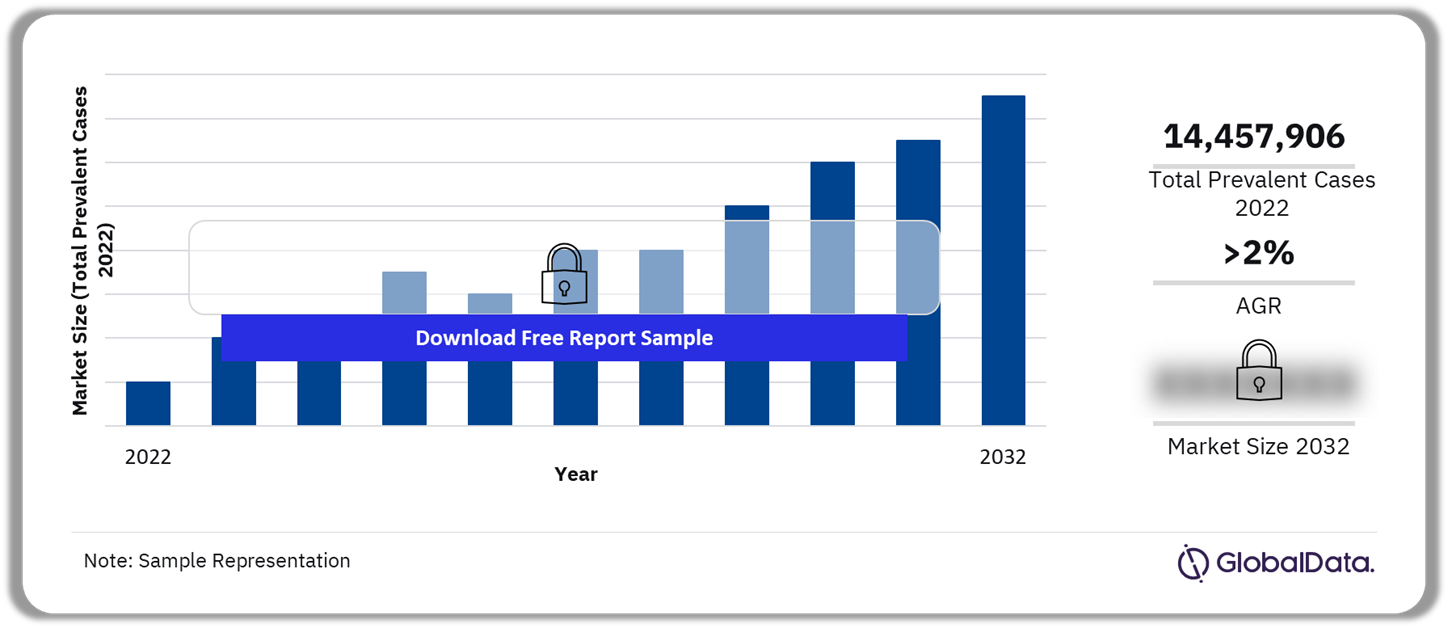
Buy the Full Report for More Insights into the AF Market Forecast, Download a Free Report Sample
The Atrial Fibrillation market research report provides an overview of the risk factors, comorbidities, and global and historical epidemiological trends for AF in the 8MM namely the US, France, Germany, Italy, Spain, UK, Japan, and Canada. The AF market report also includes a 10-year epidemiology forecast for the total prevalent cases and diagnosed prevalent cases of AF.
| Market Size (2022) | 14,457,906 Cases |
| AGR (2022 – 2032) | >2% |
| Forecast Period | 2022 – 2032 |
| Key Countries | · The US
· France · Germany · Italy · Spain · The UK · Japan · Canada |
| Key Age Segments | · 40-49 years
· 50-59 years · 60-69 years · 70-79 years · 80 years and older |
| Key Sex Segments | · Men
· Women |
| Enquire & Decide | Discover the perfect solution for your business needs. Enquire now and let us help you make an informed decision before making a purchase. |
Atrial Fibrillation Market Segmentation by Country
The key countries across the 8 MM are the US, France, Germany, Italy, Spain, the UK, Japan, and Canada. Of the 8MM, the US will have the highest number of diagnosed prevalent cases of AF while Canada will have the lowest number in 2032.
Atrial Fibrillation Market Analysis by Country, 2022 (%)
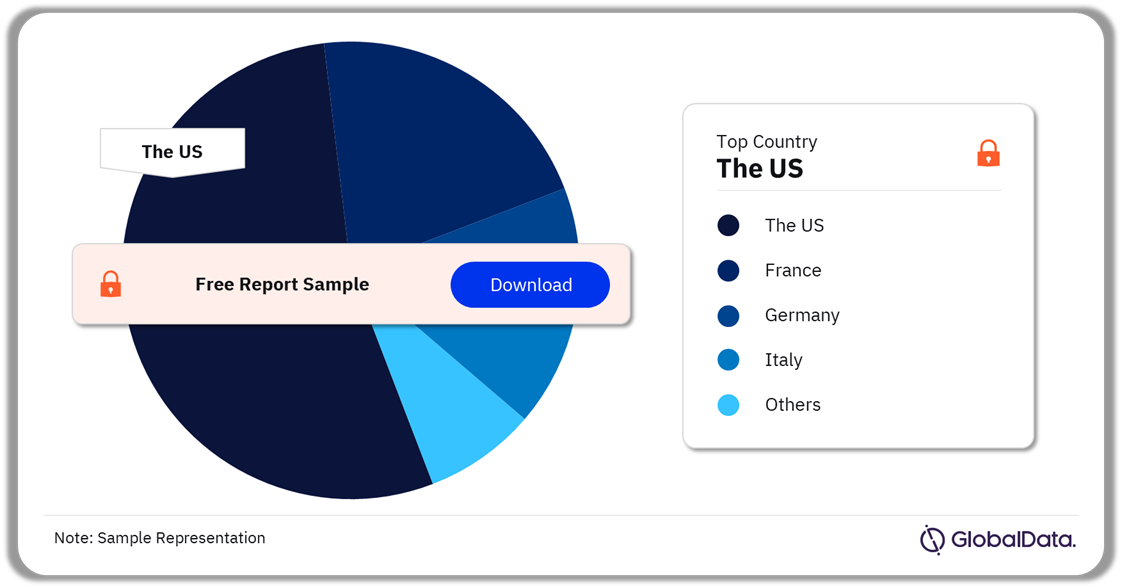
Buy the Full Report for More Country Insights into the Atrial Fibrillation market, Download a Free Report Sample
Atrial Fibrillation Market Segmentation by Age
Based on age, the Atrial Fibrillation market can be segmented into 40-49 years, 50-59 years, 60-69 years, 70-79 years, and 80 years and older. In 2022, for the 8MM combined, adults ages 80 years and above contributed the highest proportion of the diagnosed prevalent cases of AF, followed by the age group 70–79 years.
In the 5EU, Japan, and Canada, the peak diagnosed prevalent cases occurred in ages 80 years and above, while in the US, the peak diagnosed prevalent cases occurred in ages 70–79 years. This difference may be driven by the underlying population trends in the countries.
Atrial Fibrillation Market Analysis by Age, 2022 (%)
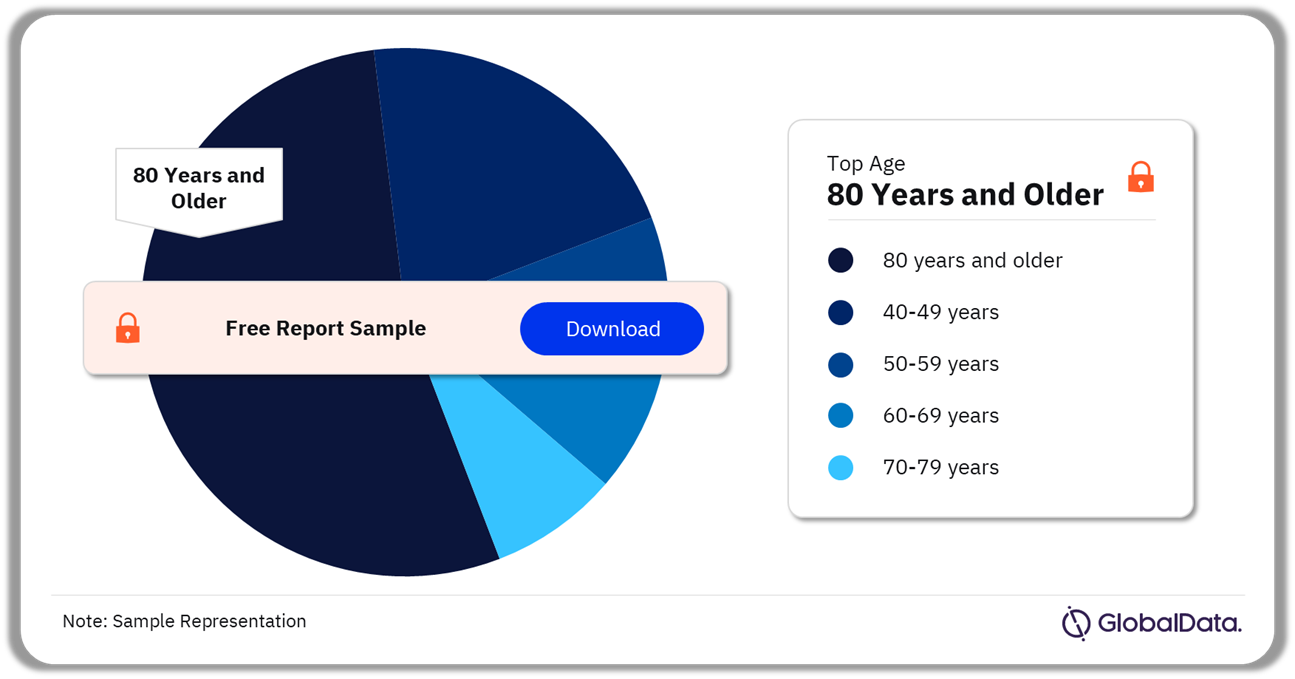
Buy the Full Report for More Age Insights into the Atrial Fibrillation market, Download a Free Report Sample
Atrial Fibrillation Market Segmentation by Sex
Based on sex, the Atrial Fibrillation market can be segmented into men and women. In 2022, the number of diagnosed prevalent cases of AF was higher in men than in women in the 8MM combined. The UK had the largest difference between the diagnosed prevalent cases of AF between men and women while Spain had the smallest variation in number between the two sexes.
Atrial Fibrillation Market Analysis by Sex, 2022 (%)
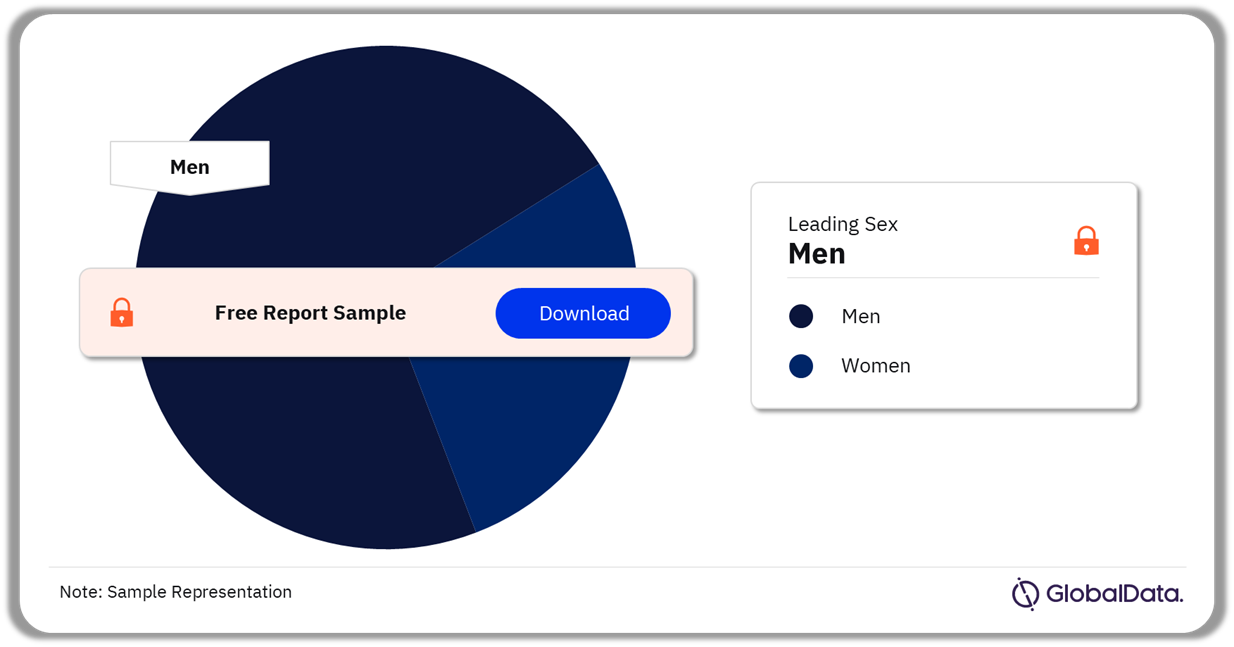
Buy the Full Report for More Sex Insights into the Atrial Fibrillation market, Download a Free Report Sample
Segments Covered in the Report
Atrial Fibrillation Market Country Outlook (Diagnosed Prevalent Cases, 2022-2032)
- The US
- France
- Germany
- Italy
- Spain
- The UK
- Japan
- Canada
Atrial Fibrillation Market Age Outlook (Diagnosed Prevalent Cases, 2022-2032)
- 40-49 years
- 50-59 years
- 60-69 years
- 70-79 years
- 80 years and older
Atrial Fibrillation Market Sex Outlook (Diagnosed Prevalent Cases, 2022-2032)
- Men
- Women
Scope of Report
The report includes the diagnosed prevalent cases of AF by temporal pattern of arrhythmia and by stroke risk score based on CHADS2 score, and CHA2DS2‐VASc score by sex.
Reasons to buy
The Atrial Fibrillation epidemiology series will allow you to:
- Develop business strategies by understanding the trends shaping and driving the global atrial fibrillation market.
- Quantify patient populations in the global atrial fibrillation market to improve product design, pricing, and launch plans.
- Organize sales and marketing efforts by identifying the age groups that present the best opportunities for atrial fibrillation therapeutics in each of the markets covered.
Table of Contents
Tables
Table 1: Summary of newly added data types
Table 2: Summary of updated data types
Table 3: Risk factors and comorbidities for AF
Graphs
Figure 1: 8MM, total prevalent cases of AF, both sexes, N, ages ≥40 years, 2022 and 2032
Figure 2: 8MM, diagnosed prevalent cases of AF, both sexes, N, ages ≥40 years, 2022 and 2032
Figure 3: 8MM, diagnosed prevalence of AF (%), men and women, ages ≥40 years, 2022
Figure 4: 8MM, sources used and not used to forecast the diagnosed prevalent cases of AF
Figure 5: 8MM, sources used to forecast the diagnosed prevalent cases of AF by temporal pattern of arrhythmia
Figure 6: 8MM, sources used to forecast the diagnosed prevalent cases of AF by CHADS2 stroke risk score
Figure 7: 8MM, sources used to forecast the diagnosed prevalent cases of AF by CHA2DS2 – VASc score in men
Figure 8: 8MM, sources used to forecast the diagnosed prevalent cases of AF by CHA2DS2 – VASc score in women
Figure 9: 8MM, sources used to forecast the diagnosed prevalent cases of AF with/without moderate-to-severe mitral stenosis and/or an artificial (mechanical) heart valve
Figure 10: 8MM, sources used to forecast the diagnosed prevalent cases of AF with CKD
Figure 11: 8MM, sources used to forecast the diagnosed prevalent cases of AF with major bleeding risk by HAS‐BLED score
Figure 12: 8MM, sources used to forecast the diagnosed prevalent cases of AF admitted to the ED
Figure 13: 8MM, sources used to forecast the diagnosis rate of AF
Figure 14: 8MM, total prevalent cases of AF, N, both sexes, ages ≥40 years, 2022
Figure 15: 8MM, diagnosed prevalent cases of AF, N, both sexes, ages ≥40 years, 2022
Figure 16: 8MM, diagnosed prevalent cases of AF by age, N, both sexes, 2022
Figure 17: 8MM, diagnosed prevalent cases of AF by sex, N, ages ≥40 years, 2022
Figure 18: 8MM, diagnosed prevalent cases of AF by temporal pattern of arrhythmia, N, both sexes, ages ≥40 years, 2022
Figure 19: 8MM, diagnosed prevalent cases of AF by CHADS2 stroke risk score, N, both sexes, ages ≥40 years, 2022
Figure 20: 8MM, diagnosed prevalent cases of AF by CHA2DS2 – VASc stroke risk score in men, N, men, ages ≥40 years, 2022
Figure 21: 8MM, diagnosed prevalent cases of AF by CHA2DS2 – VASc stroke risk score in women, N, women, ages ≥40 years, 2022
Figure 22: 8MM, diagnosed prevalent cases of AF with and without moderate-to-severe mitral stenosis and/or an artificial (mechanical) heart valve, N, both sexes, ≥40 years, 2022
Figure 23: 8MM, diagnosed prevalent cases of AF with CKD by stage, N, both sexes, ages ≥40 years, 2022
Figure 24: 8MM, diagnosed prevalent cases of AF by HAS‐BLED score, N, both sexes, ages ≥40 years, 2022
Figure 25: 8MM, diagnosed prevalent cases of AF admitted to ED, N, both sexes, ages ≥40 years, 2022







