
Bank Branch Transformation Thematic Intelligence Report Overview
Bank branches are perceived to be a relic of the past that may not adopt to technological advancements such as automation and digitization. Even though the figures undeniably point towards a continuous drop in the net number of branches in most countries, the fact that banks have carried on opening new branches and invested considerable sums in rethinking their physical channels portrays that branches will continue to be part of high street landscapes in the foreseeable future.
Moreover, while some aspects of branch transformation have been in response to lower profit margins and the COVID-19 pandemic, other aspects represent strategic efforts by banks to expand their client base and deepen and upgrade their customer relationships.
The bank branch transformations thematic intelligence report helps to understand key technology, macroeconomic and regulatory trends characterizing the transformation of branch banking. The report also helps to access the latest consumer survey data on preferences regarding branch banking.
Bank Branch Transformation Trends
The main trends shaping branch transformation are technology trends, macroeconomic trends, and regulatory trends.
Technology Trends: The main technology trends shaping branch transformation are the increasing use of face recognition technology, e-signatures, beacon technology, Banking as a service (BaaS) and the metaverse.
Macroeconomic Trends: The main macroeconomic trends shaping branch transformation are remote work, competition from digital challengers, the decline in cash, and rising interest rates.
Regulatory Trends: The main regulatory trends shaping branch transformation are environmental, social, and governance (ESG) concerns, financial inclusion, cash usage, and banking licensing among others.
For more insights into the key trends shaping bank branch transformation theme, download a free report sample
Bank Branch Transformation – Industry Analysis
A common trend globally is the relatively rapid decrease in the number of branches over the past decade or so. For instance, in the US, the number of branches/100,000 decreased from 36 in 2010 to 31 in 2019. In the UK, the drop has been considerably more drastic. This decrease in the number of branches worldwide cannot be attributed to one exclusive factor but rather to a mixture of reasons, including cost pressures due to a decrease in retail banking profits, acquisitions and consolidation within the sector, and digitization.
For daily and weekly transactions, customers prefer to use mobile and online channels over physical branches. However, branches are the most likely channel to be used every month, along with online channels. This likely indicates that more complex transactions that do not require regular trips to the branch are being done through physical channels.
The bank branch transformation in the sports industry analysis also covers:
- Timeline
Bank Branch Transformation - Value Chain Analysis
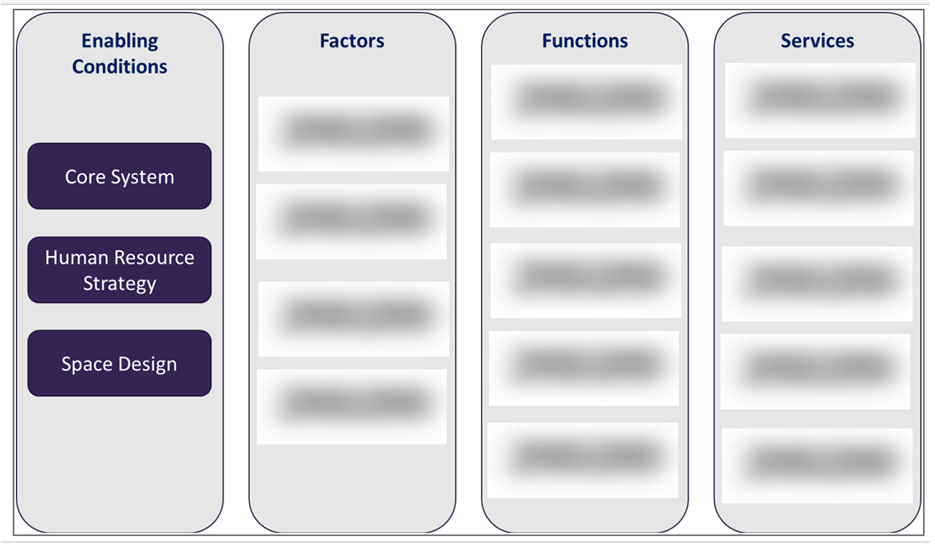
GlobalData’s bank branch transformation value chain consists of enabling conditions, factors, functions, and services.
Enabling Conditions: The key layers of enabling conditions are the core system, human resource strategy, and space design. Core systems of different channels need to be well-integrated to allow for a smooth omnichannel experience for the customer.
Bank Branch Transformations Value Chain Analysis
For more insights into the bank branch transformation’s value chains, download a free report sample
Leading Companies Associated with the Bank Branch Transformation Theme
Some of the leading listed companies associated with the bank branch transformation theme are Banca Carige, Capital One, CaixaBank, Citibank, and DBS among others.
To know more about the leading companies associated with the bank branch transformation theme, download a free report sample
Bank Branch Transformations Market Overview
| Report Pages | 24 |
| Regions Covered | Global |
| Key Trends | Technology Trends, Macroeconomic Trends, and Regulatory Trends |
| Value Chains | Enabling Conditions, Factors, Functions, and Services |
| Leading Companies | Banca Carige, Capital One, CaixaBank, Citibank, and DBS |
Scope of Report
- Even though only around 15% of customers never go to branches, customers who rarely use branch services constitute the largest group.
- Clear and simple-to-understand financial products, easy access to branches, and helpful and knowledgeable bank representatives are all relatively important factors that at least 10% of customers consider in choosing their primary bank.
- In 2020, as a response to COVID-19, DBS embarked on a plan to transform a third of its branches over the span of a 18 months.
Reasons to buy
- Understand key technology, macroeconomic and regulatory trends characterizing the transformation of branch banking.
- Access the latest consumer survey data on preferences regarding branch banking.
- Identify the key innovations being made by banks that will change the way branch banking is conducted in the near future.
- Access firm-level insight on leading players within the branch transformation theme.








