Likelihood of Approval and Phase Transition Success Rate Model – Bemarituzumab in Cervical Cancer
Powered by 
Unlock hidden opportunities in the LoA industry
Empower your strategies with our Likelihood of Approval and Phase Transition Success Rate Model – Bemarituzumab in Cervical Cancer report and make more profitable business decisions.
This report provides you with the data that allows you to track and predict the specific likelihood of approval (LOA) and phase transition success rate (PTSR) of a drug using GlobalData’s proprietary machine learning algorithms developed using over 10 years of historical data.
Bemarituzumab in Cervical Cancer Drug Details:
Bemarituzumab [FPA-144] is under development for the treatment of solid tumors such as gastric cancer, gastroesophageal cancer, transitional cell carcinoma, lymphoma, head and neck squamous cell carcinoma, lung adenocarcinoma, fallopian tube cancer, peritoneal cancer, esophageal squamous cell carcinoma, triple-negative breast cancer, pancreatic ductal adenocarcinoma, intrahepatic cholangiocarcinoma, colorectal adenocarcinoma, ovarian epithelial cell carcinoma, endometrial adenocarcinoma and cervical carcinoma. The drug candidate is administered through intravenous route. It is a humanized monoclonal antibody directed against a splice form of fibroblast growth factor receptor 2 (FGFR2). It is a targeted immunotherapy for FGFR2b-overexpressing tumors and designed to recruit tumor-killing NK cells into the tumor microenvironment. The drug candidate is developed based on Potelligent CHOK1SV technology. Potelligent CHOK1SV, combines the advantages of GS Gene Expression System with the glyco-engineered technology.It was also under development for the treatment of breast cancer, bladder cancer and squamous non-small cell lung cancer.
Report Coverage
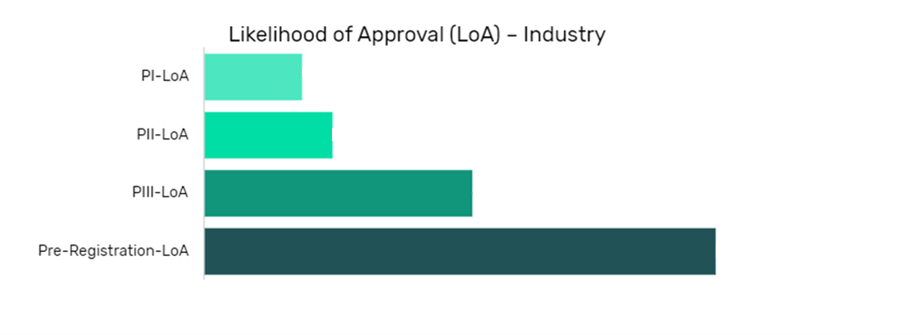
The data is segmented by drug name per indication and shows the current likelihood of approval for the drug compared to the indication benchmark and the industry benchmark.
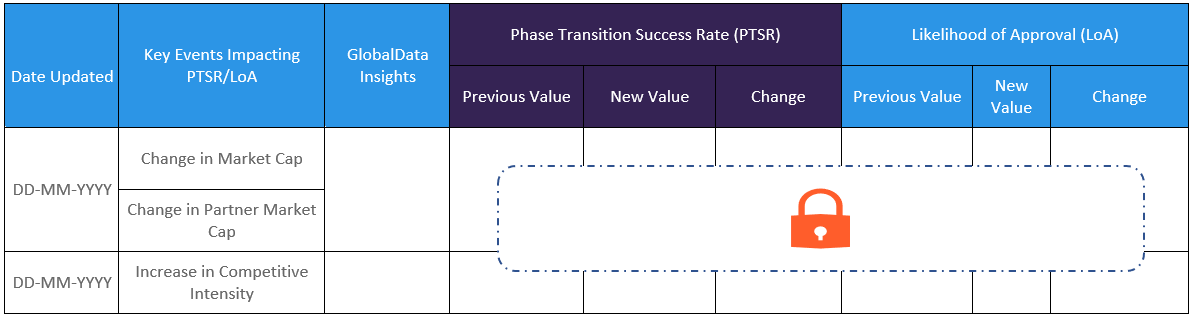
The Likelihood of Approval data is updated regularly based on events that take place which impact the clinical development process and regulatory considerations. GlobalData’s proprietary machine learning models consider these events in real time, to produce quantitative changes to the LOA and PTSR along with qualitative reasoning why the likelihood of approval has changed.
| Quick View – LOA Data | |||||
| Report Segments |
|
||||
| Drug Name |
|
||||
| Administration Pathway |
|
||||
| Therapeutic Areas | |||||
| Key Manufacturers |
|
||||
| Drug Development Status |
|
||||
Reasons to Buy
- Precise Likelihood of Approval and Phase Transition Success Rates: Our machine learning and proprietary models provide accurate predictions, helping you gauge the potential success of a drug in the regulatory process.
- Competitive Strategy Planning: Access information on LOA and PTSR for competitors’ drugs, allowing you to plan your clinical development, commercialisation and marketing strategies
- Event-driven Updates: Track event-driven changes in LOA and PTSR benchmarked against indication LOA/PTSR. Get the latest insights to adapt your strategies promptly!
- Well-informed Investment Decisions: This data helps you navigate the dynamic landscape of drug development and regulatory considerations.
Scope
- Drug Details: Drug name, Drug type, Intervention type
- Administration Pathway
- Therapeutic Areas
- Key Manufacturers
- Drug Development Status
This is an on-demand report that will be delivered upon request. The report will be delivered within 2 business days of the purchase, excluding weekends and holidays. Certain sections of the report may be removed or altered based on data availability and relevance.
Get in touch to find out about multi-purchase discounts
reportstore@globaldata.com
Tel +44 20 7947 2745
Sample Report
Likelihood of Approval and Phase Transition Success Rate Model – Bemarituzumab in Cervical Cancer was curated by the best experts in the industry and we are confident about its unique quality. However, we want you to make the most beneficial decision for your business, so we offer free sample pages to help you:
- Assess the relevance of the report
- Evaluate the quality of the report
- Justify the cost
Download your copy of the sample report and make an informed decision about whether the full report will provide you with the insights and information you need.







Related reports
View more Pharmaceuticals reports