Big Data in Consumer Goods Thematic Report Overview
Big data has become a powerful tool across the fast-moving consumer goods (FMCG) sector as the industry seeks to expand, particularly in mature markets where growth is challenging but data is prolific, as well as emerging markets where digitalization is rapid and understanding and evolving consumer base is key to market access. Big data offers operational efficiencies, particularly in supply chains and manufacturing, quality assurance, and product tracking.
The Big Data in Consumer Goods thematic intelligence report assesses how big data, combined with other emerging technologies, can be used across the consumer goods value chain. It provides an overview of the current landscape, as well as key players, while also highlighting opportunities for the use of big data in the future. The report provides an industry-specific analysis based on GlobalData databases and surveys.
Big Data in Consumer Goods – Key Trends
The main trends shaping the big data theme are classified into four categories: technology trends, macroeconomic trends, regulatory trends, and consumer trends.
- Technology trends: Some of the key technology trends impacting the theme are edge computing, quantum computing, AI, 3D sensors, real-time analytics, and adoption of
- Macroeconomic trends: The key macroeconomic trends explained in the report are M&A and geopolitics.
- Regulatory trends: General Data Protection Regulation (GDPR) and data localization are a part of the regulatory trends impacting the big data theme.
- Consumer trends: Huge consumer insights, real-time data analysis, evolving online and delivery models, traditional retailers, proliferating consumer touchpoints, the consumer journey, product development, brand-consumer relationship building, customer support and feedback, customization, and personalization trends, post-COVID understanding, and consumer resistance to data mining are some of the consumer trends impacting big data.
Robotics in Foodservice – Industry Analysis
The big data industry is expected to achieve a CAGR of more than 14% between 2020 and 2025. Big data, when effectively utilized, offers FMCG players in product and brand management, as well as NPD, the opportunity to reduce operational inefficiencies. They can visualize value from a wide range of behavioral and transactional sources and develop a better understanding of causality in consumer attitudes, behaviors, and product performance. This leads to greater relevance to consumer needs and responsiveness.
The Big Data in consumer goods industry analysis also covers:
- Key FMCG industry issues in big data and micro-targeting
- Mergers and acquisitions
- Timeline
Market Opportunity Forecast ($M), Consumer Goods 2020-25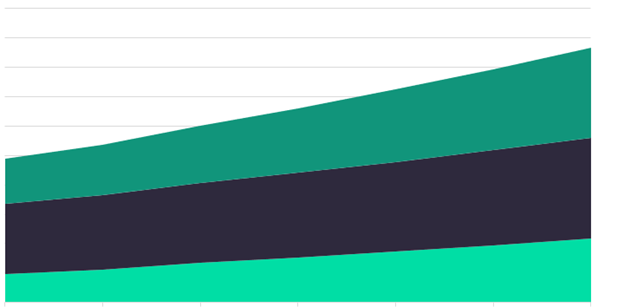
For more insights into the big data in consumer goods industry forecast, download a free report sample
Big Data in Consumer Goods - Value Chain Analysis
The Big Data value chain consists of five segments: big data generation, big data management, big data product development, and big data consumption.
Big Data Generation: Big data is produced by digital activity of all sorts such as call records, emails, sensor activity, payments, social media posts, photos, videos and much more. It is also produced by machines, both hardware, and software, in the form of M2M exchanges of data, particularly important in the IoT era, where devices talk to each other without any form of human prompting.
Big Data Value Chain Analysis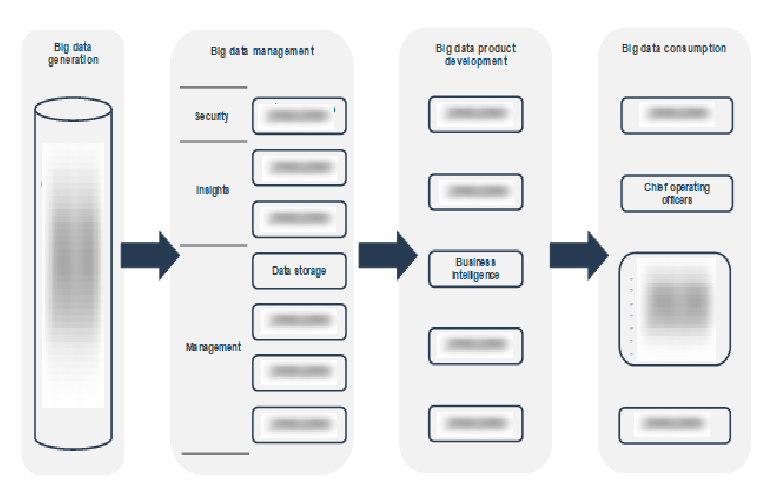
For more insights into the big data value chain, download a free report sample
Leading Public Companies
Some of the leading listed players associated with this theme:
- Alphabet
- Alteryx
- Amazon.com
Leading Private Companies
Some of the interesting private companies associated with this theme:
- Cloudera
- SiSense
- SAS Institute
To know more about the public and private companies, download a free report sample
Consumer Goods Sector Scorecard
At GlobalData, we use a scorecard approach to predict tomorrow’s leading companies within each sector. Our consumer goods sector scorecard has three screens: a thematic screen, a valuation screen, and a risk screen.
- The thematic screen ranks companies based on overall leadership in the 10 themes that matter most to their industry, generating a leading indicator of future performance.
- The valuation screen ranks our universe of companies within a sector based on selected valuation metrics.
- The risk screen ranks companies within a particular sector based on overall investment risk.
Consumer Goods Sector Scorecard – Thematic Screen
To know more about the consumer sector scorecards, download a free report sample
Big Data in Consumer Goods Market Report Overview
| Report Pages | 37 |
| Regions Covered | Global |
| CAGR (2020-2025) | >14% |
| Value Chains | Big Data Generation, Big Data Management, Big Data Product Development, and Big Data Consumption |
| Leading Public Companies | Alphabet, Alteryx, and Amazon.com |
| Leading Private Companies | Cloudera, SiSense, and SAS Institute |
Segments Covered in the Report
Big Data in Consumer Goods Value Chain Outlook
- Big Data Generation
- Big Data Management
- Big Data Product Development
- Big Data Consumption
Scope of Report
Big data has become a major topic within the fast-moving consumer goods (FMCG) context as the industry seeks to leverage growth opportunities, particularly in mature markets where growth is challenging but data is prolific, as well as emerging markets where digitalization is rapid and understanding an evolving consumer base is key to market access.
Big data offers operational efficiencies, particularly in supply chains and manufacturing, quality assurance, and product tracking. It also allows for the tracking of the evolution of consumer trends across geographies and demographics in real-time, as opposed to traditional means of periodic survey research.
Micro-targeting is a consequential benefit of the analysis of big data. Beyond the operational benefits of big data analysis, the vast resources built up through consumer interactions and their detailed digital footprints create a growing capacity to learn specific nuances and individual preferences and patterns of behavior. This enables brands to meet the demand for true personalized products and services more effectively than would have been possible even a few years ago.
Reasons to buy
- Understand the Big Data theme in the FMCG marketplace.
- Highlight key trends within the theme’s present and future evolution, from building supply chain transparency to understanding individual consumers’ motivations and preferences.
- Identify key players/competitors actively engaging with the theme and track their performance against it.
- Learn valuable lessons on the advantages and pitfalls of harnessing big data technologies to enhance the FMCG offering.