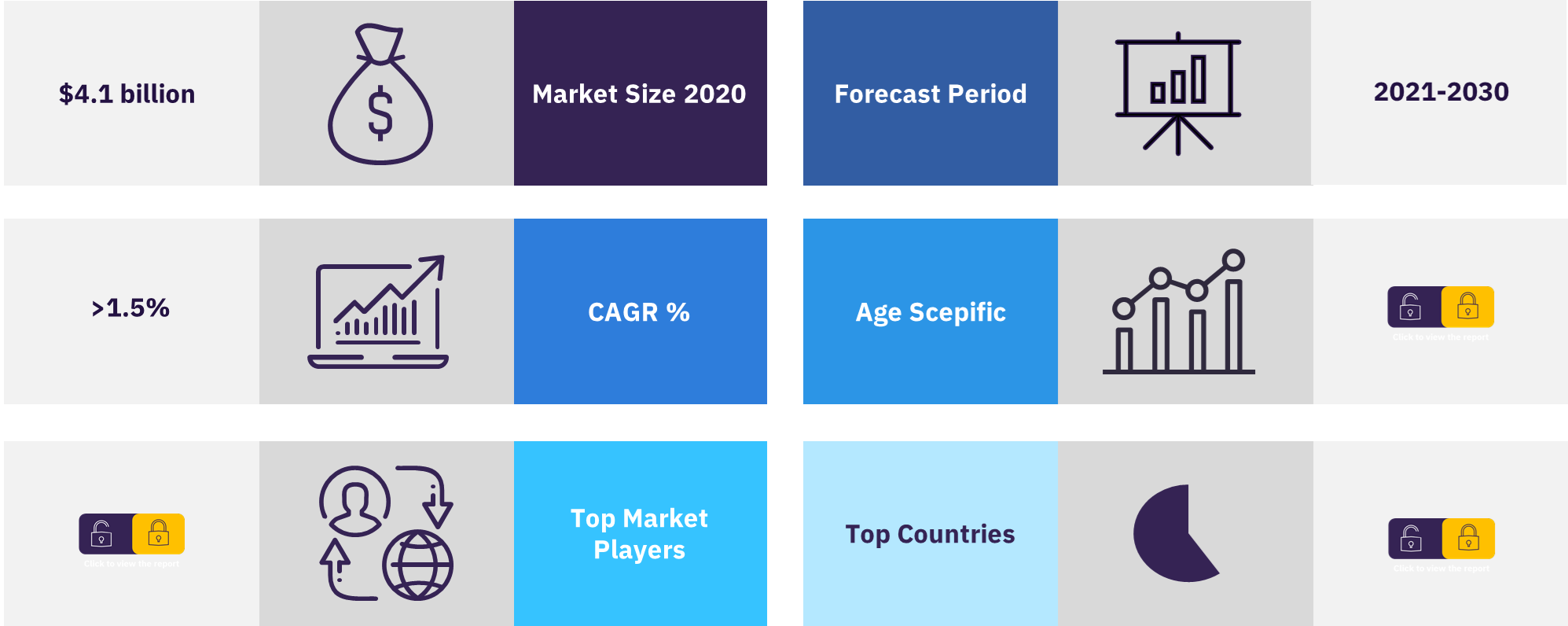
GlobalData estimated that drug sales for bipolar disorder in 2020 was valued at $4.1 billion across the eight major markets (8MM) – the US, the five major European markets (5EU) (France, Germany, Italy, Spain, and the UK), Japan, and Canada. It is anticipated that the bipolar disorder market will grow at a compound annual growth rate (CAGR) of more than 1.5% during the forecast period of 2021-2030.
The US market makes up the majority of total global sales, contributing to more than 80% due to the large bipolar disorder prevalent population, combined with the high price of medication in the country. Sumitomo Dainippon Pharma, along with its subsidiary Sunovion Pharmaceuticals, is one of the leading players in the bipolar disorder market and is expected to remain so during the forecast period.
Overview of the bipolar disorder drug market
For more insights on the report, download a free report sample
What are the market dynamics in the bipolar disorder drug market?
The major drivers of growth in the bipolar disorder market during the forecast period will include the following, seven new pipeline products will launch throughout the 8MM, and they will have significantly higher costs of therapy when compared with the cost of the most commonly used bipolar disorder treatments that have high generic availability. In the 8MM, the number of 12-month total prevalent cases of bipolar disorder is expected to increase during the forecast period.
The major barriers to growth in the bipolar disorder market during the forecast period will include the following, continued generic erosion is expected to further increase with the patent expiries of several key products, including Sumitomo Dainippon Pharma/ Sunovion Pharmaceuticals’ Latuda (lurasidone), Otsuka Pharmaceutical/Lundbeck’s Abilify Maintena (aripiprazole ER), and Johnson and Johnson’s Risperdal Consta (risperidone PR), during the forecast period. High use of inexpensive generic products, such as lithium, is expected to continue throughout the forecast period.
The misdiagnosis of bipolar disorder is common, and often results in patients receiving inappropriate pharmacological treatment and psychosocial support. Diagnosis rates for bipolar disorder are expected to remain low throughout the forecast period.
What are the diagnosed incident cases of bipolar disorder in the 8MM?
The 8MM include the US, Canada, France, Germany, Italy, Spain, UK, and Japan. In 2020, In 2020, the US accounted for more than 50% of the 12-month total prevalent cases of bipolar I disorder in the 8MM. There were more than 1,264,000 cases in the 5EU in 2020, of the 12-month total prevalent cases, while Japan had more than 1% cases and Canada had more than 6% cases of the total cases in 8MM. In the 8MM, the number of 12-month total prevalent cases of bipolar I disorder will grow by more than 4% over the forecast period at an Annual Growth Rate (AGR) of more than 0.40%. Of the 8MM, the US is expected to have 12-month total prevalent cases of bipolar I disorder increasing by 2030. Japan had the lowest number of 12-month total prevalent cases of bipolar I disorder in 2030. Any change in the 12-month total prevalent cases of bipolar I disorder is attributable to changing population demographics in the 8MM.
Diagnosed incident cases of bipolar disorder in the 8MM
For more regional insights, download a free report sample
Which are the key players in the bipolar disorder drug market?
Sumitomo Dainippon Pharma, along with its subsidiary Sunovion Pharmaceuticals, is one of the leading players in the bipolar disorder market and is expected to remain so during the forecast period. Other major players include AbbVie, Actavis, Alexza Pharmaceuticals, Alkermes, Allergan, AstraZeneca, BioXcel Therapeutics, Bristol-Myers Squibb, Celon Pharma, Eli Lilly, Intra-Cellular Therapies, Jina Pharmaceuticals, Johnson and Johnson, Lundbeck, Meiji Seika, Merck, NRX Pharmaceuticals, Otsuka Pharmaceutical, Pfizer, Richter Gedeon, Sumitomo Dainippon Pharma, Sunovion Pharmaceuticals, and Vanda Pharmaceuticals.
Bipolar disorder drug market, by key players
For more insights on key players, download a free report sample
Market report scope
| Market Size (Year – 2020) | $4.1 billion |
| Growth rate (CAGR) | >1.5% |
| Base Year | 2020 |
| Forecast period | 2021-2030 |
| Key Countries | The US, Canada, France, Germany, Italy, Spain, UK, and Japan |
| Key Players | Sumitomo Dainippon Pharma, AbbVie, Actavis, Alexza Pharmaceuticals, Alkermes, Allergan, AstraZeneca, BioXcel Therapeutics, Bristol-Myers Squibb, Celon Pharma, Eli Lilly, Intra-Cellular Therapies, Jina Pharmaceuticals, Johnson and Johnson, Lundbeck, Meiji Seika, Merck, NRX Pharmaceuticals, Otsuka Pharmaceutical, Pfizer, Richter Gedeon, Sumitomo Dainippon Pharma, Sunovion Pharmaceuticals, and Vanda Pharmaceuticals |
Scope
This report provides an in-depth analysis of the following:
- Overview of bipolar disorder, including epidemiology, etiology, pathophysiology, symptoms, diagnosis, and disease management.
- Annualized bipolar disorder therapeutics market revenue, cost of therapy per patient, and treatment usage patterns in three patient segments (bipolar I, bipolar II and cyclothymic disorder) forecast from 2020 to 2030.
- Key topics covered include strategic competitor assessment, market characterization, unmet needs, clinical trial mapping and implications for the bipolar disorder therapeutics market.
- Pipeline analysis: comprehensive data assessing emerging trends and mechanisms of action under development for bipolar disorder therapy. The most promising candidates in Phase III and IIb development are profiled.
- Analysis of the current and future market competition in the global bipolar disorder therapeutics market. Insightful review of the key industry drivers, restraints, and challenges. Each trend is independently researched to provide qualitative analysis of its implications.
Reasons to buy
The report will enable you to:
- Develop and design your in-licensing and out-licensing strategies through a review of pipeline products and technologies, and by identifying the companies with the most robust pipeline.
- Develop business strategies by understanding the trends shaping and driving the global bipolar disorder therapeutics market.
- Drive revenues by understanding the key trends, innovative products and technologies, market segments, and companies likely to impact the global bipolar disorder therapeutics market in the future.
- Formulate effective sales and marketing strategies by understanding the competitive landscape and by analyzing the performance of various competitors.
- Identify emerging players with potentially strong product portfolios and create effective counterstrategies to gain a competitive advantage.
- Organize your sales and marketing efforts by identifying the market categories and segments that present maximum opportunities for consolidations, investments and strategic partnerships.
Key Stakeholders
Table of Contents
Tables
Table 1: Bipolar Disorder: Key Metrics in the 8MM
Table 2: Symptom Criteria for Manic, Hypomanic and Major Depressive Episodes
Table 3: DSM-V Classification of Bipolar Disorder
Table 4: Risk Factors and Comorbid Conditions Associated with Bipolar Disorder
Table 5: Treatment Guidelines for Bipolar Disorder
Table 6: Bipolar Disorder Market – Global Drivers and Barriers, 2020–2030
Table 7: Key Events Impacting Sales for Bipolar Disorder in the US, 2020–2030
Table 8: Bipolar Disorder Market – Drivers and Barriers in the US, 2020–2030
Table 9: Key Events Impacting Sales for Bipolar Disorder in the 5EU, 2020–2030
Table 10: Bipolar Disorder Market – Drivers and Barriers in the 5EU, 2020–2030
Table 11: Key Events Impacting Sales for Bipolar Disorder in Japan, 2020–2030
Table 12: Bipolar Disorder Market – Drivers and Barriers in Japan, 2020–2030
Table 13: Key Events Impacting Sales for Bipolar Disorder in Canada, 2020–2030
Table 14: Bipolar Disorder Market – Drivers and Barriers in Canada, 2020–2030
Table 15: High-Prescribing Physicians (non-KOLs) Surveyed, By Country
Graphs
Figure 1: Global Sales Forecast by Country for Bipolar Disorder in 2020 and 2030
Figure 2: Analysis of the Company Portfolio Gap in Bipolar Disorder During the Forecast Period
Figure 3: Competitive Assessment of the Marketed and Pipeline Drugs for Bipolar Depression Benchmarked Against the Standard of Care, Generic Lithium
Figure 4: Competitive Assessment of the Marketed and Pipeline Drugs for Bipolar Mania Benchmarked Against the Standard of Care, Generic Lithium
Figure 5: Competitive Assessment of the Marketed and Pipeline Drugs for Agitation Associated with Bipolar Disorder Benchmarked Against the Standard of Care, Generic Haloperidol
Figure 6: The Etiology and Pathophysiology of Bipolar Disorder
Figure 7: 8MM, 12-Month and Lifetime Total Prevalence of Bipolar Spectrum Disorder, Men and Women (%), Ages ≥13 Years, 2020
Figure 8: 8MM, Sources Used and Not Used to Forecast the 12-Month Total Prevalent Cases of Bipolar I Disorder
Figure 9: 8MM, Sources Used and Not Used to Forecast the Lifetime Total Prevalent Cases of Bipolar I Disorder
Figure 10: 8MM, Sources Used to Forecast the 12-Month Total Prevalence of Bipolar II Disorder
Figure 11: 8MM, Sources Used to Forecast the Lifetime Total Prevalent Cases of Bipolar II Disorder
Figure 12: 8MM, Sources Used to Forecast the 12-Month Total Prevalence of Cyclothymic Disorder
Figure 13: 8MM, Sources Used to Forecast the Lifetime Total Prevalence of Cyclothymic Disorder
Figure 14: 8MM, 12-Month Total Prevalent Cases of Bipolar I Disorder, N, Both Sexes, Ages ≥18 Years, 2020
Figure 15: 8MM, 12-Month Total Prevalent Cases of Bipolar I Disorder by Age, N, Both Sexes, 2020
Figure 16: 8MM, 12-Month Total Prevalent Cases of Bipolar I Disorder by Sex, N, Ages ≥18 Years, 2020
Figure 17: 8MM, Lifetime Total Prevalent Cases of Bipolar I Disorder, N, Both Sexes, Ages ≥18 Years, 2020
Figure 18: 8MM, Lifetime Total Prevalent Cases of Bipolar I Disorder by Age, N, Both Sexes, 2020
Figure 19: 8MM, Lifetime Total Prevalent Cases of Bipolar I Disorder by Sex, N, Ages ≥18 Years, 2020
Figure 20: 8MM, 12-Month Total Prevalent Cases of Bipolar II Disorder, N, Both Sexes, Ages ≥18 Years, 2020
Figure 21: 8MM, 12-Month Total Prevalent Cases of Bipolar II Disorder by Age, N, Both Sexes, 2020
Figure 22: 8MM, 12-Month Total Prevalent Cases of Bipolar II Disorder by Sex, N, Ages ≥18 Years, 2020
Figure 23: 8MM, Lifetime Total Prevalent Cases of Bipolar II Disorder, N, Both Sexes, Ages ≥18 Years, 2020
Figure 24: 8MM, Lifetime Total Prevalent Cases of Bipolar II Disorder by Age, N, Both Sexes, 2020
Figure 25: 8MM, Lifetime Total Prevalent Cases of Bipolar II Disorder by Sex, N, Ages ≥18 Years, 2020
Figure 26: 8MM, 12-Month Total Prevalent Cases of Cyclothymic Disorder, N, Both Sexes, Ages ≥18 Years, 2020
Figure 27: 8MM, 12-Month Total Prevalent Cases of Cyclothymic Disorder by Age, N, Both Sexes, 2020
Figure 28: 8MM, 12-Month Total Prevalent Cases of Cyclothymic Disorder by Sex, N, Ages ≥18 Years, 2020
Figure 29: 8MM, Lifetime Total Prevalent Cases of Cyclothymic Disorder, N, Both Sexes, Ages ≥18 Years, 2020
Figure 30: 8MM, Lifetime Total Prevalent Cases of Cyclothymic Disorder by Age, N, Both Sexes, 2020
Figure 31: 8MM, Lifetime Total Prevalent Cases of Cyclothymic Disorder by Sex, N, Ages ≥18 Years, 2020
Figure 32: Unmet Needs and Opportunities in Bipolar Disorder
Figure 33: Overview of the Development Pipeline in Bipolar Disorder
Figure 34: Key Late-Stage Trials for the Promising Pipeline Agents that GlobalData Expects be Licensed for Bipolar Disorder in the 8MM During the Forecast Period
Figure 35: Competitive Assessment of the Marketed and Pipeline Drugs for Bipolar Depression Benchmarked Against the SOC, Generic Lithium
Figure 36: Competitive Assessment of the Marketed and Pipeline Drugs for Bipolar Mania Benchmarked Against the SOC, Generic Lithium
Figure 37: Competitive Assessment of the Marketed and Pipeline Drugs for Agitation Associated with Bipolar Disorder Benchmarked Against the SOC, Generic Haloperidol
Figure 38: Analysis of the Company Portfolio Gap in Bipolar Disorder During the Forecast Period
Figure 39: Global (8MM) Sales Forecast by Country for Bipolar Disorder in 2020 and 2030
Figure 40: Global (8MM) Sales Forecast by Class for Bipolar Disorder in 2020 and 2030
Figure 41: Sales Forecast by Class for Bipolar Disorder in the US in 2020 and 2030
Figure 42: Sales Forecast by Class for Bipolar Disorder in the 5EU in 2020 and 2030
Figure 43: Sales Forecast by Class for Bipolar Disorder in Japan in 2020 and 2030
Figure 44: Sales Forecast by Class for Bipolar Disorder in Canada in 2020 and 2030