
Empower your strategies with our Likelihood of Approval and Phase Transition Success Rate Model – Camidanlumab Tesirine in Hodgkin Lymphoma (B-Cell Hodgkin Lymphoma) report and make more profitable business decisions.
This report provides you with the data that allows you to track and predict the specific likelihood of approval (LOA) and phase transition success rate (PTSR) of a drug using GlobalData’s proprietary machine learning algorithms developed using over 10 years of historical data.
Camidanlumab tesirine in Hodgkin Lymphoma (B-Cell Hodgkin Lymphoma) Drug Details:
Camidanlumab tesirine is under development for the treatment of CD25-expressing relapsed/refractory Hodgkin lymphoma, relapsed or refractory acute myeloid leukemia, myelodysplastic syndrome and myeloproliferative neoplasms, Non-Hodgkin lymphoma. The therapeutic candidate is administered as an intravenous infusion. ADCT-301 is an antibody drug conjugate composed of human IgG1 HuMax-TAC against CD25, stochastically conjugated through a dipeptide cleavable linker to a pyrrolobenzodiazepine (PBD) dimer warhead with a drug–antibody ratio of 2.3. It was also under development for prostate cancer, relapsed or refractory CD25-positive acute lymphocytic leukemia (ALL). It was under devlopment for the treatment of advanced solid tumors including head and neck squamous cell carcinoma, fallopian tube cancer, non-small cell lung cancer, gastric cancer, esophageal cancer, pancreas cancer, bladder cancer, renal cell carcinoma, melanoma, triple-negative breast cancer, ovarian cancer and colorectal cancer
Report Coverage
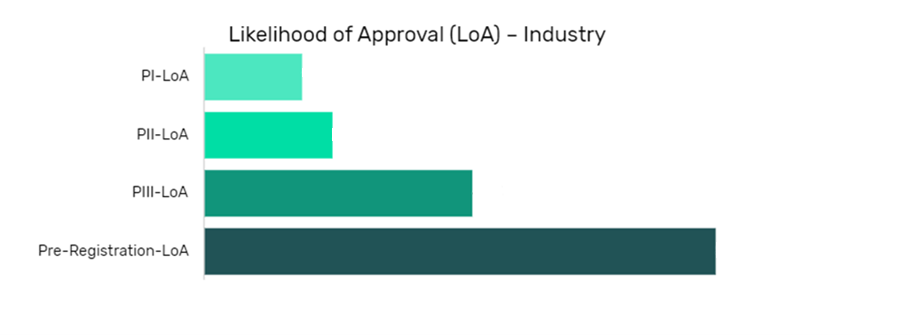
The data is segmented by drug name per indication and shows the current likelihood of approval for the drug compared to the indication benchmark and the industry benchmark.
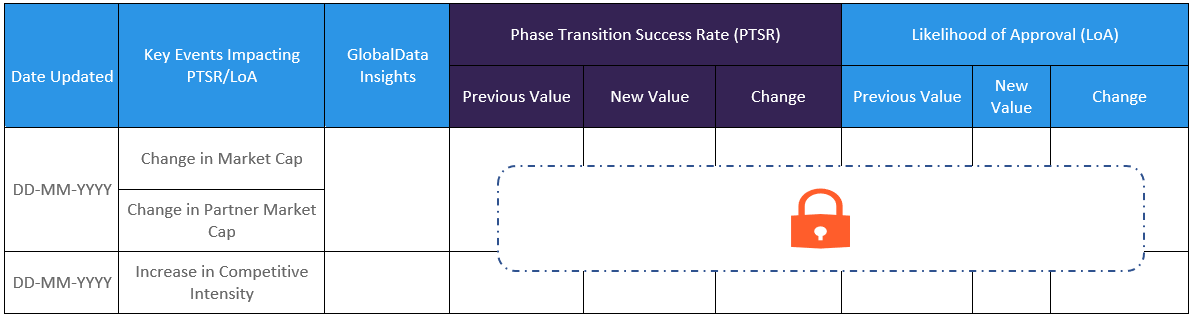
The Likelihood of Approval data is updated regularly based on events that take place which impact the clinical development process and regulatory considerations. GlobalData’s proprietary machine learning models consider these events in real time, to produce quantitative changes to the LOA and PTSR along with qualitative reasoning why the likelihood of approval has changed.
Scope of Report
- Drug Details: Drug name, Drug type, Intervention type
- Administration Pathway
- Therapeutic Areas
- Key Manufacturers
- Drug Development Status
Reasons to buy
- Precise Likelihood of Approval and Phase Transition Success Rates: Our machine learning and proprietary models provide accurate predictions, helping you gauge the potential success of a drug in the regulatory process.
- Competitive Strategy Planning: Access information on LOA and PTSR for competitors’ drugs, allowing you to plan your clinical development, commercialisation and marketing strategies
- Event-driven Updates: Track event-driven changes in LOA and PTSR benchmarked against indication LOA/PTSR. Get the latest insights to adapt your strategies promptly!
- Well-informed Investment Decisions: This data helps you navigate the dynamic landscape of drug development and regulatory considerations.







