Canada Wealth Management HNW Investors Market Overview
In Canada, the HNW population is dominated by men. While the proportion of female HNW investors is relatively low, it is slowly evolving, especially as female HNW investors form an increasingly attractive target segment. This can mainly be attributed to the increase in the share of women in the upper echelons of management, aided by initiatives to increase gender diversity on boards and in executive positions.
The Canada wealth management market report sizes the opportunity within Canada’s wealth market and analyzes the investment preferences, service requirements, and portfolio allocations of the country’s HNW investors.
What are the market dynamics in the Canada wealth management market?
The majority of the Canadian HNW population have sourced their wealth through earned income. Entrepreneurship forms a notably smaller yet growing source of wealth. While failure is notably more likely among nascent businesses, new entrepreneurs represent a lucrative market for those willing to target individuals who do not qualify as HNW yet. Supporting entrepreneurs during the early stages of their business venture allows providers to beat the competition and create loyalty early on. With lack of capital the number-one challenge faced by early-stage business owners, supporting entrepreneurs during the capital-raising process is key.
Despite being very small in Canada, the inheritor market is expected to grow over the coming years given the age structure of the current HNW cohort, which is dominated by older affluents. As a result, inherited spouses and second- and third-generation heirs are likely to gain a significant stake in HNW wealth over the coming years. Since HNW inheritors tend to be less financially adept than other investors, they may be interested in services such as financial education or discretionary asset management.
What are the key investment preferences for HNW investors in the Canada wealth management market?
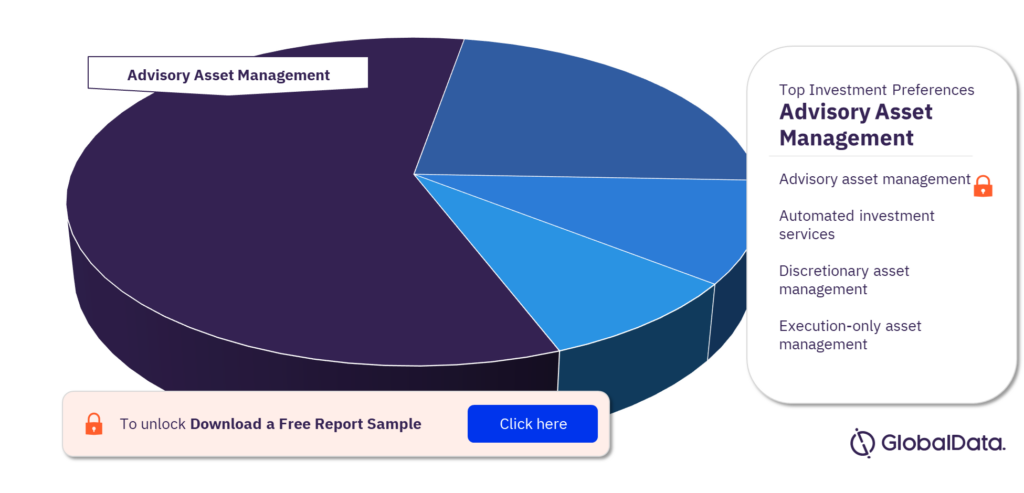
The key investment preferences for HNW investors in the Canada wealth management market are advisory asset management, automated investment services, discretionary asset management, and execution-only asset management. Current demand is distributed relatively equally across different types of mandates, reiterating the importance of a multi-asset management strategy.
However, forecast demand for discretionary mandates will stagnate as investors look for greater involvement. In part, this can be traced back to rising volatility, which means that investors are looking to be more “hands-on”. In addition, investors are becoming increasingly sophisticated, driving uptake in advisory and execution-only mandates.
Canada wealth management market, by investment preferences
For more investment preference insights, download a free sample
What are the key reasons for expatriation for HNW investors in the Canada wealth management market?
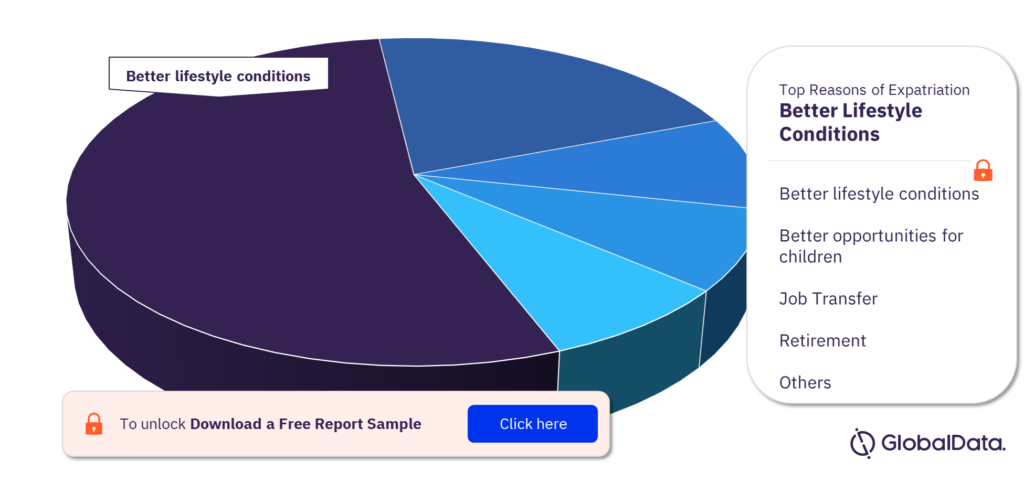
The key reasons of expatriation for HNW investors in the Canada wealth management market are job transfer, retirement, business start-up, tax efficiencies, better opportunities for children, better lifestyle conditions, and political/economic instability. Better lifestyle conditions is one of the major drivers of expatriation.
Canada wealth management market, by reasons of expatriation
For more reasons of expatriation insights, download a free sample
What are the major asset classes of wealth allocation for HNW investors in the Canada wealth management market?
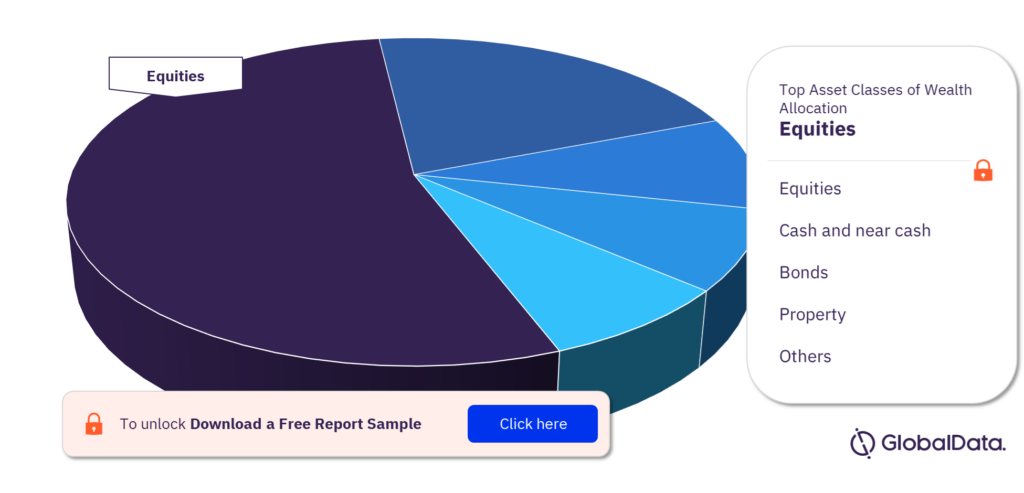
Equities, cash and near cash, bonds, property, alternatives and commodities are the major asset classes of wealth allocation for HNW investors in the Canada wealth management market. Canadian HNW investors invest a slightly above-average (albeit not notably high) allocation in equities. Also notable is the significant proportion Canadian HNW investors allocate to alternative investments. In fact, demand for the asset class has skyrocketed in recent years thanks to increased availability due to technological advances, and investors looking for new means to achieve greater diversification.
Canada wealth management market, by asset classes of wealth allocation
For more asset classes of wealth allocation insights, download a free sample
What are the major asset classes of offshore investment for HNW investors in the Canada wealth management market?
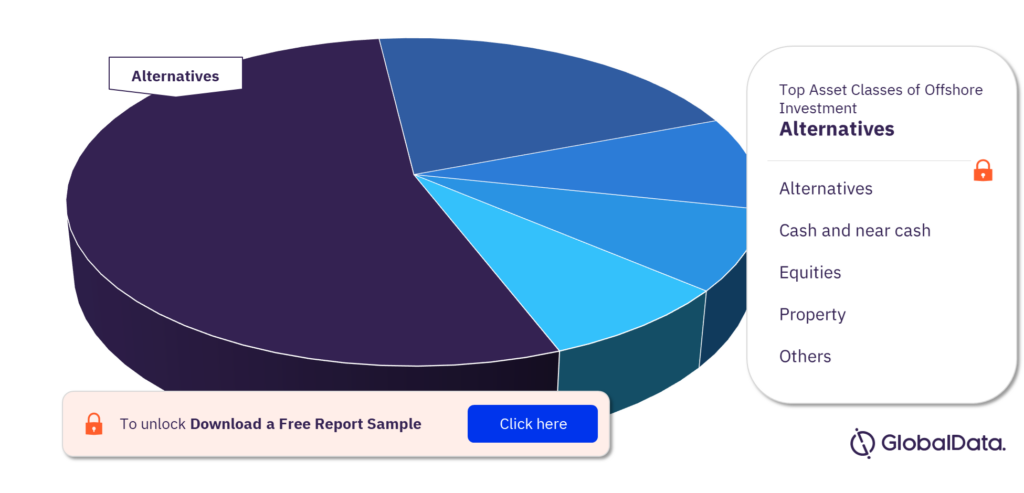
The major asset classes of offshore investment for HNW investors in the Canada wealth management market include equity, cash and near-cash products, bonds, property, alternatives, and commodities. Alternative investments attract the largest proportion of offshore HNW wealth. As discussed earlier, HNW investors are also showing a strong and rising demand for alternatives in the onshore space.
Canada wealth management market, by offshore investment
For more asset classes of wealth allocation insights, download a free sample
Market report scope
| Key investment preferences | Advisory Asset Management, Automated Investment Services, Discretionary Asset Management, and Execution-Only Asset Management. |
| Key reasons for expatriation | Job Transfer, Retirement, Business Start-Up, Tax Efficiencies, Better Opportunities for Children, Better Lifestyle Conditions, and Political/Economic Instability |
| Major asset classes of wealth allocation | Equities, Cash and Near Cash, Bonds, Property, Alternatives, and Commodities |
| Major asset classes of offshore investment | Equity, Cash and Near Cash, Bonds, Property, Alternatives, and Commodities |
Scope
- Expats represent an attractive target market thanks to their more complex service requirements.
- The market for robo-advisory services is growing rapidly in the HNW space in Canada.
- Equities, alternatives, and property dominate the Canadian HNW asset portfolio.
Reasons to buy
- Develop and enhance your client targeting strategies using our data on HNW profiles and sources of wealth.
- Enhance your marketing strategies and capture new clients using insights from our data on HNW investors’ asset management style preferences.
- Tailor your investment product portfolio to match the current and future demand for different asset classes among HNW individuals.
- Develop your service proposition to match the demand expressed by Canadian HNW investors and react proactively to forecasted changes in demand.
Key Stakeholders
Table of Contents
Graphs
List of Figures
Figure 1: The Canadian wealth market is more balanced by gender than most of the world 9
Figure 2: Business owners are the key demographic in Canada’s HNW market 11
Figure 3: Business owners are given a holistic package of services at RBC Wealth Management 12
Figure 4: A strong run in the property market has boosted the sector as a generator of HNW wealth 13
Figure 5: Expats represent an above-average proportion of the Canadian HNW population 14
Figure 6: Chinese migrants dominate Hong Kong’s HNW expat space 16
Figure 7: HNW investors in Canada typically work with only one or two wealth management firms 18
Figure 8: A lack of time and expertise drives uptake of financial advice in Canada 19
Figure 9: The majority of Canadian HNW wealth is held in discretionary mandates 20
Figure 10: HNW demand is strongest for advisory and discretionary mandates 22
Figure 11: On the whole, wealth managers expect demand to remain relatively unchanged across mandates 23
Figure 12: Canadian HNW investors are pressed for time and lack knowledge of investments 24
Figure 13: Investment in non-financial assets is the leading driver for execution-only asset management 25
Figure 14: BMO gives investors low fees and access to expert advisors, opening the robo space up to less confident investors 26
Figure 15: HNW investors are heavily exposed to equities, and this will not change in the near future 28
Figure 16: The typical HNW equity portfolio is dominated by funds 29
Figure 17: Capital appreciation opportunities is the leading driver of equity investments 30
Figure 18: HNW investors allocate around a fifth of their portfolio to fixed income products, in line with the global average 31
Figure 19: Bond investment is driven by Canadian HNW investors’ risk-averse nature 32
Figure 20: Only 7.2% of managed HNW wealth is held in cash products 33
Figure 21: Already low HNW demand for cash products will decline as investors deploy cash reserves 35
Figure 22: Offering REITS is a must in Canada, although ETFs are growing as a source of property exposure 36
Figure 23: The expectation of property price appreciation currently drives investment in this space 37
Figure 24: Hedge funds dominate Canadian HNW investors’ alternative investment portfolios 38
Figure 25: Demand for alternatives will increase significantly over the next 12 months 40
Figure 26: Appetite for commodity investments is extremely low among Canadian HNW clients 41
Figure 27: Demand for commodity investments is set to decline over the next 12 months 42
Figure 28: HNW investors are most drawn to holistic financial planning, although all planning services record strong demand 44
Figure 29: BMO targets family business owners concerned about succession, a key demographic in Canada 45
Figure 30: Already strong HNW demand for financial and pension planning services is forecast to increase modestly 46