Convenience in the Foodservice Industry Report Overview
The definition of ‘convenience’ is changing, thereby opening new value paths across industries including foodservice, as it relates to speed and ease. In the foodservice industry, ‘convenience’ is largely associated with fast-food restaurants. However, new trends have become more relevant due to the COVID-19 pandemic, and consumers’ perception of convenience has shifted as well. Moreover, with rising digitalization, consumers are relying largely on foodservice providers to match their expectations and priorities. Examples of technology-driven conveniences are flexible or digital payments systems, and restaurants offering Quick Response (QR) codes of their menu directly to consumers’ phones.
However, technology is not the only factor driving shifts in convenience, accessibility is improving as well. For instance, the availability of meal kits has proved convenient for consumers lacking the time or ability to cook. The option of eating out can also be seen as a convenience as consumers can order gourmet dishes which might be difficult to replicate at home.
The Convenience in the Foodservice Industry Report analyses how the foodservice providers are responding to the newest definition of convenience.
To know more about convenience in the foodservice industry, download a free report sample
Impact of Convenience in the Foodservice Industry
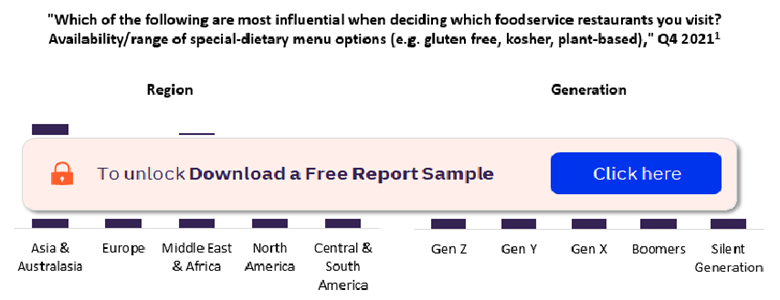
The availability of special dietary menu options makes it easier for consumers to make their choice for dining. Foodservice providers are incorporating dietary requirements such as food allergies and intolerances, (e.g. to dairy, nuts, or gluten), special dietary requirements (vegetarian, vegan, pregnancy), and religious reasons (Kosher, Halal) in their menus. For instance, Australia has one of the highest rates of documented food allergy and hospital anaphylaxis admissions in the developed world. Hence, it has a higher percentage of consumers whose choices are influenced by the availability of special dietary menu options. Besides medical needs, a trend for paleo, keto, or vegan diets has also resulted in the availability of alternative menus on the market.
Furthermore, the pandemic has accelerated technological advancements in the foodservice industry, helping restaurants and outlets put consumers at ease. Companies involved in all the stages of the supply chain have adopted digitalization, robotics, and automation in foodservice to speed up. For example, the adoption of QR code in restaurants has evolved from being used just as a feedback tool. It is applied to scan the full menu, order while in an outlet, perform contactless payment, and inform consumers of the ingredients in products. These newfound uses for the QR code are unlikely to go away as the foodservice providers continue to make them available to customers.
Meal kits continue to be a helping hand for consumers still wary to visit a restaurant post the pandemic. Meal kits primarily offer convenience, they provide consumers with a range of other benefits, including a choice of cuisines, reduction of food wastage, sustainable options, and fresh ingredients.
Additionally, foodservice providers are launching products in collaboration with retailers to make it convenient for consumers to have their products. While traditional channels might not always perform as expected, cross-channel sales can be seen as a quick way to protect profits and also offer on-premise products more conveniently at a lower price than the menus.
To know more about convenience in the foodservice industry, download a free report sample
Key Highlights
- Digitalization plays a crucial role in the way consumers view convenience in the foodservice industry.
- While dining out, different consumers have certain expectations and perceptions of what convenience entails.
- Dietary trends and medical needs are making menus more diverse.
- There is sustained demand for Q-commerce in the foodservice post-lockdown.
- Retail and foodservice partnerships are highly popular.
Reasons to buy
- Identify the reasons underpinning consumers’ inclination to frequent the foodservice premises post-pandemic.
- Gain insight into the key consumer trends that are most likely to drive innovation.
- Put innovative products into context by connecting them to specific consumer trends and preferences.