
Croatia Cards and Payments Market Report Overview
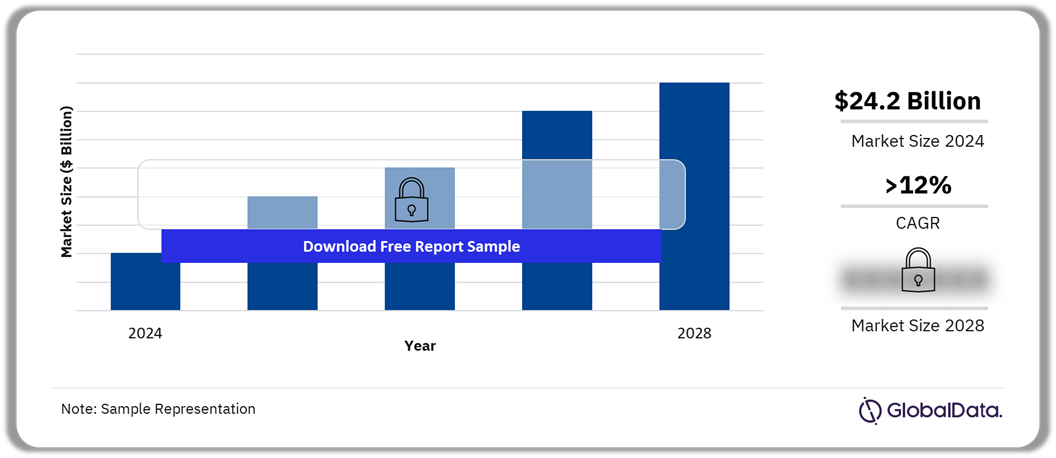
The annual value of card transactions in the Croatia cards and payments market is $24.2 billion in 2024. The market will grow at a CAGR of more than 12% during 2024-2028.
Croatia Card Transactions Outlook, 2024-2028 ($ Billion)
Buy the Full Report for More Information on the Croatia Cards and Payments Market Forecast
The Croatia cards and payments market research report provides a detailed analysis of market trends influencing the industry. It provides transaction values and volumes for several payment instruments for the review period. In addition, the Croatia cards and payments market analysis offers information on the country’s competitive landscape, including market shares of issuers and schemes. The report also entails regulatory policy details and provides extensive coverage of any recent changes in the regulatory structure.
| Annual Card Transactions Value (2024) | $24.2 billion |
| CAGR (2024-2028) | >12% |
| Forecast Period | 2024-2028 |
| Historical Period | 2020-2023 |
| Key Payment Instruments | · Cash
· Credit Transfers · Cards · Cheques |
| Key Segments | · Card-Based Payments
· E-commerce Payments · Alternative Payments |
| Leading Players | · Erste Bank
· OTP Bank · Mastercard · VISA |
| Enquire & Decide | Discover the perfect solution for your business needs. Enquire now and let us help you make an informed decision before making a purchase. |
Croatia Cards and Payments Market Dynamics
Although cash is still the preferred payment method in Croatia, it is steadily losing ground to digital payments. This is primarily due to the government and the Central Bank promoting electronic payments, growing financial awareness, and a gradual rise in payment card acceptance in Croatia. The expansion of a robust payment acceptance infrastructure has led to increased consumer use of electronic payments for everyday transactions.
Buy the Full Report to Get Additional Croatia Cards and Payments Market Dynamics
Croatia Cards and Payments Market Segmentation by Payment Instruments
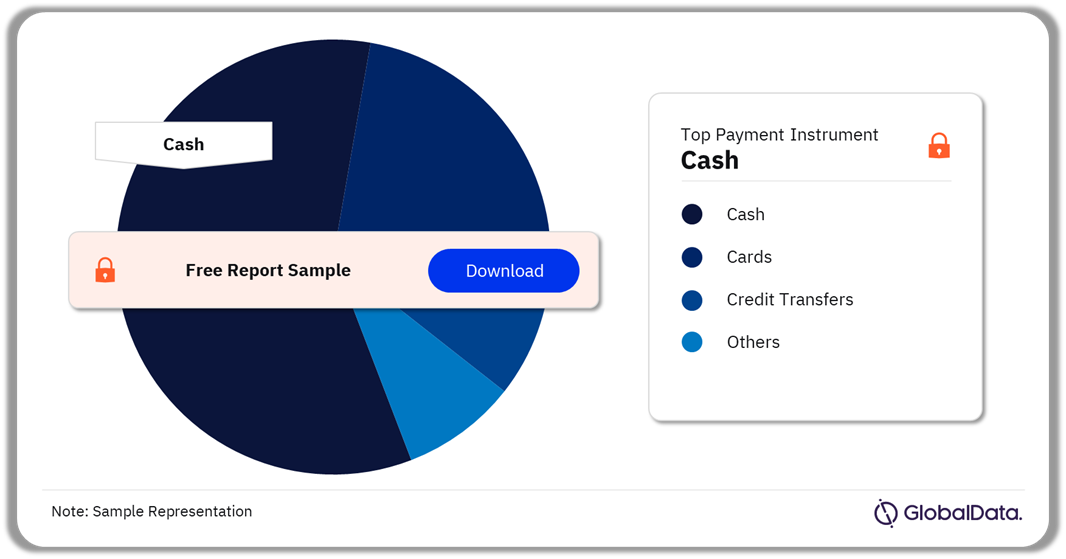
Cash has the highest transaction volume in the Croatia payments space in 2024
The key payment instruments in the Croatia cards and payments market are cash, credit transfers, cheques, and cards among others. The Croatian payment landscape is dominated by cash, especially in rural areas, and small businesses, especially local shops, and restaurants as they prefer cash payments. However, there is a gradual shift towards electronic payments thanks to various factors, such as increasing banking penetration and the rising adoption of cards and instant payments.
Croatia Cards and Payments Market Analysis by Payment Instruments (Volume Terms), 2024 (%)
Buy the Full Report for More Payment Instrument Insights into the Croatia Cards and Payments Market
Croatia Cards and Payments Market Segments
Debit cards are estimated to dominate the payment card market in 2024
The key segments in the Croatia cards and payments market are card-based payments, e-commerce payments, and alternative payments.
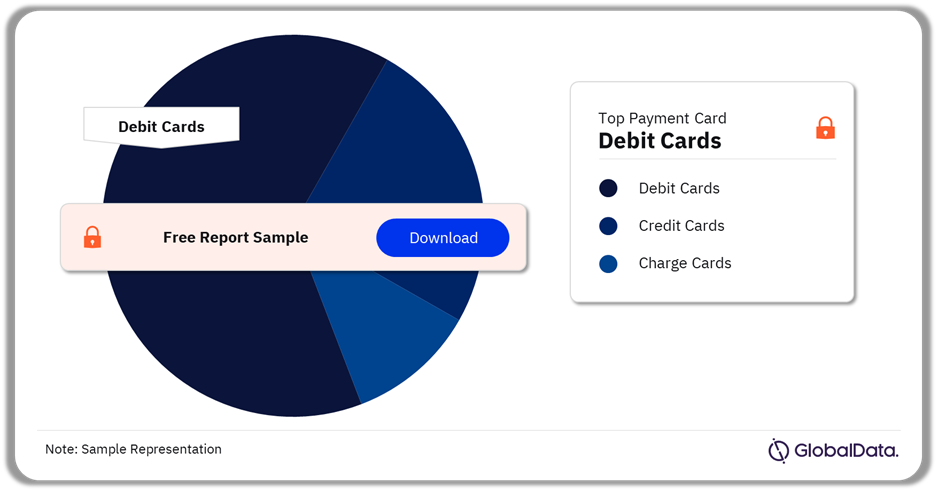
Card-Based Payments: The debit card is the preferred payment card; accounting for the higher share in terms of the number of cards in circulation, payment value, and payment volume. Growth was driven by the banks offering basic bank accounts and improved payment infrastructure. Debit cards account for more than 80% of total card payment transaction value in 2024e and are expected to maintain their dominance in the coming years. The advent of digital-only banks and the rising usage of contactless payments will support the debit card market’s future growth.
Croatia Cards-Based Payments Market Analysis, 2024 (%)
Buy the Full Report for More Market Segment Insights into the Croatia Cards and Payments Market
Croatia Cards and Payments Market - Competitive Landscape
A few of the leading players in the Croatia cards and payments market are:
- Erste Bank
- OTP Bank
- Mastercard
- VISA
To encourage card usage, providers (such as Visa and Mastercard) run various promotional campaigns. For instance, Visa offers discounts up to 6% discount on travel bookings via Booking.com and discounts across travel, lifestyle, retail, and dining at partnered merchants. Similarly, Mastercard provides discounts on travel and entertainment tickets at partnered merchants.
Croatia Cards and Payments Market Analysis by Players, 2024
 Buy the Full Report to Know More about the Leading Players in the Croatia Cards and Payments Market
Download a Free Sample Report
Croatia Cards and Payments Market - Latest Developments
- Croatia adopted the euro as its national currency on January 1, 2023, replacing the Croatian kuna (HRK) and becoming the 20th member of the euro area. The transition was executed smoothly, with no disruptions to the payment system, cash shortages, or long lines at banks and ATMs.
- To develop payment infrastructure and provide SMEs with convenient and low-cost payment options, in December 2023, Raiffeisen Bank partnered with the IT service provider IBA Group to launch RaiPOS. It is a mobile payment acceptance solution in Croatia.
Segments Covered in the Report
Croatia Cards and Payments Instruments Outlook (Value, $ Billion, 2020-2028)
- Cash
- Credit Transfers
- Cards
- Cheques
Croatia Cards and Payments Market Segments Outlook (Value, $ Billion, 2020-2028)
- Card-Based Payments
- E-commerce Payments
- Alternative Payments
Scope of Report
The report provides:
- Current and forecast values for each market in the Croatia cards and payments industry, including debit and credit cards.
- Detailed insights into payment instruments including cash, credit transfers, and cards. It also includes an overview of the country’s key alternative payment instruments.
- E-commerce market analysis.
- Analysis of various market drivers and regulations governing the Croatia cards and payments industry.
- Detailed analysis of strategies adopted by banks and other institutions to market debit and credit cards.
- Comprehensive analysis of consumer attitudes and buying preferences for cards.
- An overview of the competitive landscape of the Croatia cards and payments industry.
Key Highlights
Croatia adopted the euro as its national currency on January 1, 2023, replacing the Croatian kuna (HRK) and becoming the 20th member of the euro area. The transition was executed smoothly, with no disruptions to the payment system, cash shortages or long lines at banks and ATMs. Dual pricing, displaying both the kuna and euro, was implemented before the official switch to ease consumer adaptation. The European Exchange Rate Mechanism set a fixed conversion rate of EUR1 = HRK7.5345. Individuals could exchange up to HRK100 in banknotes and HRK100 in coins per transaction at no cost. However, an additional fee was charged for larger quantities.
Croatia’s NCSInst instant payment scheme was developed by Fina and was launched in October 2020. With Croatia adopting the euro as its new currency, the system was rebranded as EuroNCSInst on January 1, 2023 and it is aligned with the rules of the SCT Inst scheme of the European Payments Council. The scheme operates 24 hours a day, seven days a week, 365 days a year. EuroNKSInst settles funds in near real time, with recipient banks in the country required to credit amounts to customers within five seconds. There is a maximum of EUR100,000 ($108,126.93) per transaction and it supports both individual and business transactions. As of August 2024, there are seven participants in Croatia.
The use of payment cards is on the rise; the number of contactless cards in the country increased from 5.7 million in 2020 to 6.4 million in 2024e at a CAGR of 3.1%. The introduction of contactless cards on public transport is also aiding the adoption of payment cards. For instance, in April 2024, the payment infrastructure for transit and mobility provider Littlepay introduced a contactless EMV ticketing system in the bus network of the municipal utility provider Libertas in Dubrovnik, Croatia. This system allows passengers to use contactless bank cards, credit cards or digital wallets to pay for bus fares; making it more convenient for residents, commuters, and tourists. This initiative is part of a broader effort to modernize the ticketing system; providing flexibility and ease of use for passengers.
Reasons to buy
- Make strategic business decisions using top-level historical and forecast market data, related to the Croatia cards and payments industry and each market within it.
- Understand the key market trends and growth opportunities in the Croatia cards and payments industry.
- Assess the competitive dynamics in the Croatia cards and payments industry.
- Gain insights into marketing strategies used for various card types in Croatia.
- Gain insights into key regulations governing the Croatia cards and payments industry.
Key Stakeholders
Table of Contents
Tables
Key facts, 2024
Benchmarking of payment cards, 2024
Payment instrument transaction values (LCU), 2020–28f
Payment instrument transaction values ($), 2020–28f
Payment instrument transaction volumes (units), 2020–28f
Payment cards in circulation by type (units), 2020–28f
Volume of payment card transactions (units), 2020–28f
Value of payment card transactions (LCU), 2020–28f
Value of payment card transactions ($), 2020–28f
Debit cards in circulation (units), 2020–28f
Debit card transaction volumes, 2020–28f
Debit card transaction values (LCU), 2020–28f
Debit card transaction values ($), 2020–28f
Debit cards in circulation by scheme (units), 2020–24e
Debit card transaction values by scheme (LCU), 2020–24e
Debit card transaction values by scheme ($), 2020–24e
Debit cards in circulation by issuer (units), 2020–24e
Debit cards transaction value by issuer (LCU), 2020–24e
Debit cards transaction value by issuer ($), 2020–24e
credit and charge cards in circulation (units), 2020–28f
credit and charge card transaction volumes, 2020–28f
credit and charge card transaction values (LCU), 2020–28f
credit and charge card transaction values ($), 2020–28f
credit and charge cards in circulation by scheme (units), 2020–24e
credit and charge card transaction values by scheme (LCU), 2020–24e
credit and charge card transaction values by scheme ($), 2020–24e
credit and charge cards in circulation by issuer (units), 2020–24e
credit and charge cards transaction value by issuer (LCU), 2020–24e
credit and charge cards transaction value by issuer ($), 2020–24e
Credit cards in circulation (units), 2020–28f
Credit card transaction volumes, 2020–28f
Credit card transaction values (LCU), 2020–28f
Credit card transaction values ($), 2020–28f
Credit cards in circulation by scheme (units), 2020–24e
Credit card transaction values by scheme (LCU), 2020–24e
Credit card transaction values by scheme ($), 2020–24e
Credit cards in circulation by issuer (units), 2020–24e
Credit cards transaction value by issuer (LCU), 2020–24e
Credit cards transaction value by issuer ($), 2020–24e
charge cards in circulation (units), 2020–28f
charge card transaction volumes, 2020–28f
charge card transaction values (LCU), 2020–28f
charge card transaction values ($), 2020–28f
charge cards in circulation by scheme (units), 2020–24e
charge card transaction values by scheme (LCU), 2020–24e
charge card transaction values by scheme ($), 2020–24e
prepaid cards in circulation (000s), 2020–28f
prepaid card transaction values (EUR millions), 2020–28f
prepaid card transaction values ($ billions), 2020–28f
Graphs
Inflation rate
GDP growth rate
Payment instruments transaction value and volume
Instant payments transaction value and volume
Card penetration
Card payments by value
Debit card frequency of payments and average transaction value
Debit card schemes transaction value and volume
Debit card issuers by number of cards and transaction value
Credit and charge card frequency of payments and average transaction value
Credit and charge card schemes transaction value and volume
Credit and charge card issuers by number of cards and transaction value
Prepaid card number of cards and transaction value
E-commerce transaction value and ecommerce breakdown by mobile vs. desktop/laptop
Mobile wallet transaction volume and value
Active jobs intensity in the country
Number of POS terminals and ATMs








