Economic Outlook Executive Briefing (Fourteenth Edition): Strategic Intelligence
Powered by 
All the vital news, analysis, and commentary curated by our industry experts.

Global economic outlook 2026 covering GDP growth, inflation, interest rates, geopolitics, AI, energy shocks and sector impacts. Use GlobalData insights to support business planning, investment and risk decisions.
Economic conditions are becoming harder to interpret in isolation. Geopolitical tensions, energy shocks, changing political regimes, inflation risks and rapid AI adoption are increasingly interconnected. As a result, businesses need more than a single GDP forecast to understand the forces shaping markets.
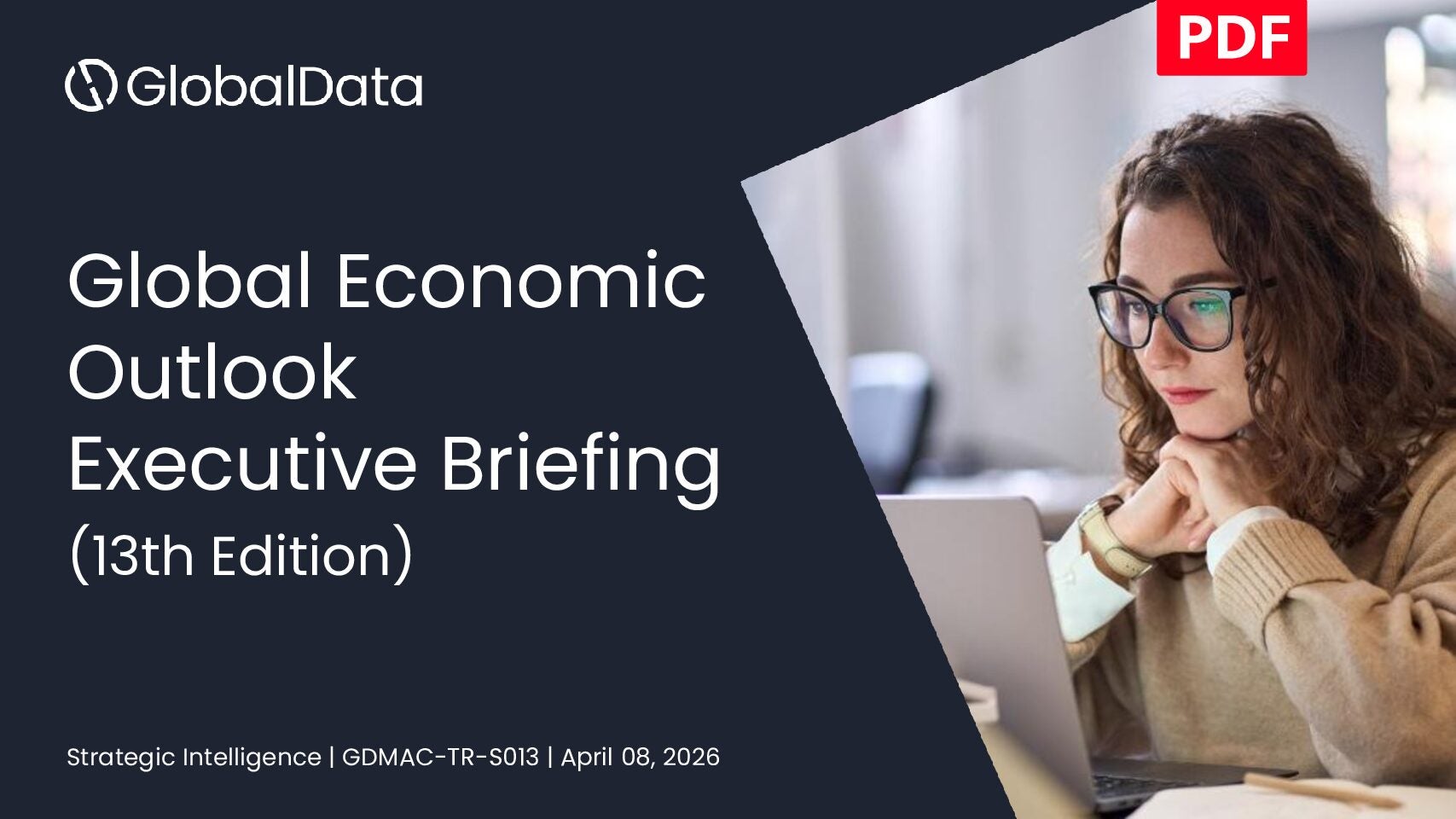
Global Economic Outlook 2026 provides a concise, cross-sector view of the global economy and the forces that may influence business conditions. The report examines the outlook for major economies, the relationship between geopolitics and macroeconomic conditions, inflation and interest-rate risks, and the longer-term economic implications of artificial intelligence.
Rather than assessing economic indicators individually, the report helps you understand how major macroeconomic and geopolitical developments can interact. It can therefore support decisions around market expansion, investment planning, scenario analysis, business strategy, risk management and resource allocation.
The analysis is particularly relevant as companies reassess assumptions about globalisation, supply chains, labour markets, energy costs, monetary policy and technology-driven productivity. GlobalData’s macroeconomic research combines global themes with country-level analysis. It also draws on proprietary models and processes that monitor leading indicators, macroeconomic indicators and financial flows.
Why the Global Economic Outlook Matters for Business
Political and economic cycles are becoming more closely connected. At the same time, geopolitical developments can create supply shocks that affect energy prices, trade, inflation and investment decisions. The report examines the potential implications of these developments for the global economy.
The report also considers how a reopening of the Strait of Hormuz could affect the economic outlook. Lower disruption could ease energy-related inflationary pressure. Consequently, it could reduce pressure on central banks to raise interest rates and limit recession risks in economies exposed to energy-price shocks.
Scope
The report provides insight into questions such as:
- What are the key forces shaping the global economic forecast for 2026?
- What are the main inflation risks facing major economies?
- How could energy-price shocks affect economic growth and corporate costs?
- What does the evolving interest-rate outlook mean for businesses and investors?
- How could geopolitical developments affect trade, investment and market conditions?
- How might demographic change and tighter labor markets affect wages and operating costs?
- What role could AI play in future economic growth and productivity?
- Could AI investment create new sources of demand across industries?
- How could changing government policies affect businesses and investment?
- Which sectors may be more exposed to changing macroeconomic conditions?
Who should buy the Global Economic Outlook 2026 Report?
The report is relevant for professionals who need to understand economic conditions and translate them into business decisions.
- Chief Strategy Officers
- Strategy Directors and Managers
- Corporate Strategy teams
- Strategic Planning teams
- Chief Financial Officers and Finance Directors
- Corporate Development and M&A teams
- Investment and Portfolio Strategy teams
- Economists and Economic Research teams
- Market Intelligence and Competitive Intelligence teams
- Business Intelligence teams
- Enterprise Risk and Risk Management teams
- Business Development and Growth leaders
- Country Managers and Regional Directors
- Supply Chain and Procurement leaders
- Investor Relations teams
- Consulting and Advisory firms
- Government and public-sector economic planning teams
It may be particularly relevant for multinational organisations that need to understand how global economic developments could affect different markets and industries.
Geopolitical Risk, Inflation and the Interest Rate Outlook
Geopolitical developments are increasingly relevant to economic planning. Trade restrictions, government intervention and energy disruptions can create supply-side pressures. These pressures can then affect inflation, interest rates, corporate costs and consumer demand.
The report examines these relationships and provides insight into how the economic environment could evolve. As a result, you can use the analysis alongside your own financial modelling, market intelligence and strategic planning.
Key Highlights
Political regimes are shifting across the globe, and a new general-purpose technology is rapidly emerging. We are moving away from a macro super-regime in which the political systems of the age, combined with the industrial organization of the era, created an ever-more-concentrated distribution of profits. That system sowed the seeds of its own demise. Globalization reduced inequality between nations while increasing inequality within them, fundamentally changing the types of shocks that are likely to hit the economy.
Geopolitically driven negative supply shocks are now more frequent. Governments are becoming increasingly interventionist, introducing their own negative supply shocks, such as tariffs and anti-immigration policies, but also boosting demand to capture a new electorate and attacking institutions. The new regime is already visible in global macro data and financial markets, but its evolution is in its infancy.
Reasons to Buy
This report goes beyond describing what is happening in the global economy. It helps you connect macroeconomic developments with practical business decisions.
- Strengthen Strategic Planning: Use the global economic outlook to challenge assumptions behind growth strategies, investment plans and long-term business objectives.
- Assess Macroeconomic and Geopolitical Risk: Identify economic and geopolitical developments that may affect your markets, operating costs, investment environment or customer demand.
- Support Scenario Planning: Consider how different combinations of inflation, interest rates, energy prices, labor-market conditions and AI adoption could influence the business environment.
- Inform Investment Decisions: Use macroeconomic analysis as an input when assessing capital allocation, market expansion and investment priorities.
- Understand Sector-Level Implications: Assess how broad economic trends may translate differently across automotive, construction, consumer, foodservice and retail, energy, and financial services.
- Benchmark Your Economic Assumptions: Compare your strategic assumptions with GlobalData’s view of global economic and industry developments. This can help you identify where your expectations may align with, or differ from, broader market trends and global leaders.
- Support Executive Decision-Making: Give senior stakeholders a concise, evidence-based view of the economic forces that could influence growth, costs, investment and competitive conditions.
Get the Global Economic Outlook 2026
Economic conditions can change quickly. Strategic decisions, however, often have much longer time horizons.
Understanding the forces shaping inflation, interest rates, geopolitical risk, AI investment and global growth can help you prepare for different economic scenarios.
Explore the GlobalData Economic Outlook Executive Briefing to assess the global economic forecast for 2026 and understand the trends that could shape your markets, investments and business strategy.
Table of Contents
Get in touch to find out about multi-purchase discounts
reportstore@globaldata.com
Tel +44 20 7947 2745
Sample Report
Economic Outlook Executive Briefing (Fourteenth Edition): Strategic Intelligence was curated by the best experts in the industry and we are confident about its unique quality. However, we want you to make the most beneficial decision for your business, so we offer free sample pages to help you:
- Assess the relevance of the report
- Evaluate the quality of the report
- Justify the cost
Download your copy of the sample report and make an informed decision about whether the full report will provide you with the insights and information you need.