Deep Dive into the Environmental Impact of Data Centers – Thematic Intelligence
Powered by 
All the vital news, analysis, and commentary curated by our industry experts.

Deep Dive into the Environmental Impact of Data Centers Report Overview
The growth in artificial intelligence (AI) has significantly increased the demand for data processing capabilities and capacity, leading to the expansion of data centers globally. As these data centers consume vast amounts of energy and water and heavily contribute to CO2 emissions, they pose a significant environmental challenge. Initiatives to make data centers more sustainable include increased use of renewables, more effective cooling technologies, and design optimization.
Furthermore, Big Tech is increasing its water consumption for cooling purposes. However, water cooling is not ideal in the long term due to the scarcity of water in certain areas and because it is ultimately a finite resource.
The deep dive into the environmental impact of data centers thematic report looks in detail at the environmental impact of data centers and highlights new approaches to winning the war against heat.
Impact of Data Centers on the Environment
Data centers are critical infrastructure in today’s digital world. However, they have a huge environmental impact, which was exacerbated by the advent of generative AI. Negative environmental contributions are due to the energy required to power data centers, the water required to cool them, and the electronic and chemical waste they produce. In addition, power requirements for AI applications are rising sharply and are being reflected in data centers’ energy consumption. Data centers are growth drivers in electricity demand. Their global consumption is expected to grow significantly by 2026.
Measures to Cool Data Centers
Some new initiatives are being taken to cool data centers, for instance, the American Society of Heating, Refrigerating and Air-Conditioning Engineers (ASHRAE) recommends a temperature range of 4–81°F (18-27°C) for IT equipment inlet conditions. Additionally, as water is the most common liquid cooling method and following the AI boom, its usage is expected to rise. However, in 2022, data centers using water for cooling were audited, and observed anomalies were reviewed and corrected. This resulted in lower water use and increased water usage efficiency.
Big Tech company’s total water consumption increased when they started training LLMs. Microsoft increased its water usage by more than 33% between 2021 and 2022.
Big Tech Water Consumption
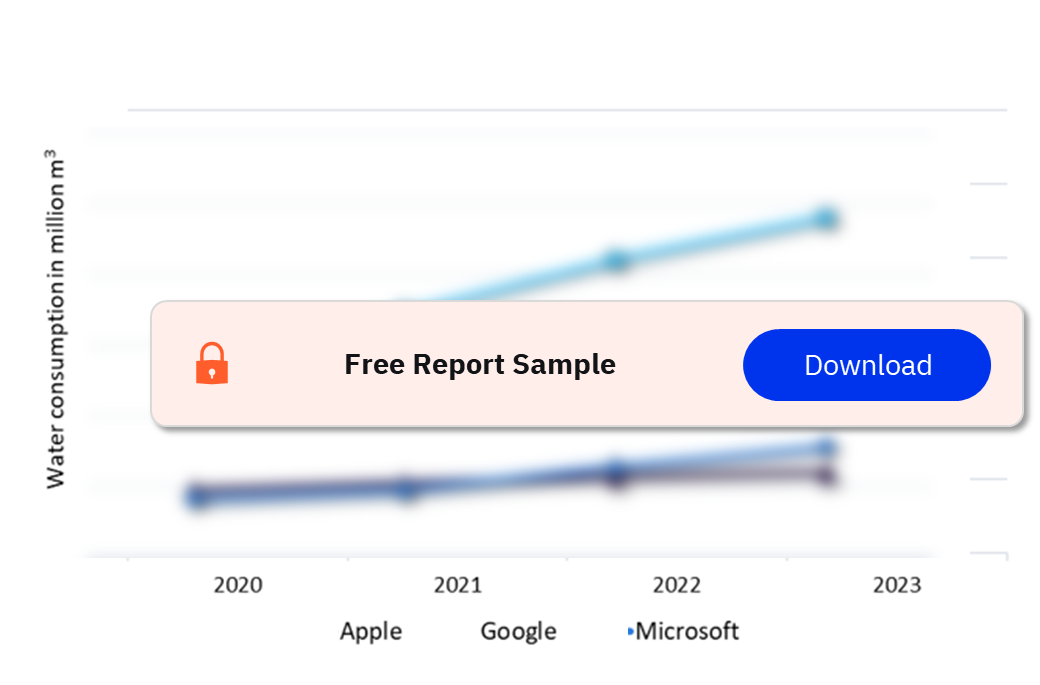
Buy the Full Report for More Big Tech Water Consumption Insights, Download a Free Report Sample
Scope
Data centers are critical infrastructure in today’s digital world. However, they have a big environmental impact, which was exacerbated by the advent of generative AI. This Deep Dive report looks in detail at the environmental impact of data centers and highlights new approaches to winning the war against heat.
Key Highlights
- Overheating of the IT equipment can lead to failure and inefficiencies. As the number and scale of AI and generative AI (GenAI) applications grow, managing these temperatures is increasingly important.
- Big Tech is increasing its water consumption for cooling purposes. However, water cooling is not ideal in the long term due to the scarcity of water in certain areas and because it is ultimately a finite resource.
- Emerging cooling technologies include immersion cooling using dielectric fluids and the use of ceramic components for circuit boards and semiconductors. Future cooling methods being explored are underwater data centers and data centers in space.
Reasons to Buy
- It is expected that investments in data center capacity specifically optimized for AI workloads will dramatically accelerate, and as the carbon footprint of data centers materially increases, it will become a problem for AI adoption, particularly in the context of ESG targets. This report provides an in-depth look at this increasingly important issue, including an analysis of the initiatives attempting to make data centers more sustainable.
Apple
Liteon
Maruwa
Meta
Microsoft
NDT
Table of Contents
Frequently asked questions
-
What is leading to the expansion of data centers globally?
The growth in artificial intelligence (AI) has significantly increased the demand for data processing capabilities and capacity, leading to the expansion of data centers globally.
-
Why do data centers have negative environmental contributions?
The negative environmental contributions of data centers are due to the energy required to power them, the water required to cool them, and the electronic and chemical waste they produce.
-
Why water is not a long-term ideal option for cooling data centers?
Water cooling is not ideal for long-term usage in data centers due to the scarcity of water in certain areas and because it is ultimately a finite resource.

Get in touch to find out about multi-purchase discounts
reportstore@globaldata.com
Tel +44 20 7947 2745


Related reports
View more Technology reports
