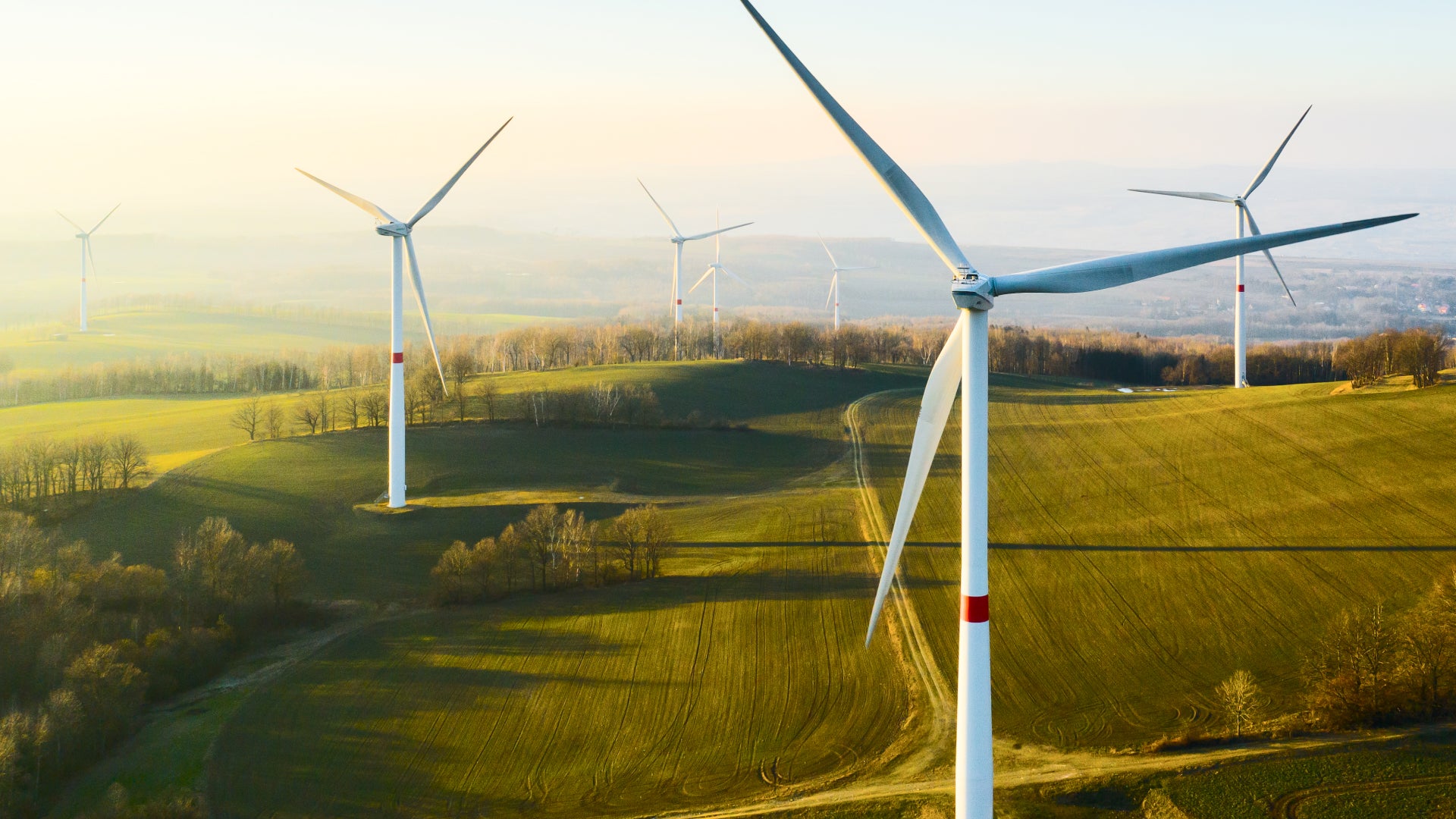
Europe’s energy transition is entering a new phase, with renewables forecast to reach 75% of total power capacity by 2035, increasing the need for energy storage and grid flexibility while gas retains a role in balancing variable generation.
Decarbonization is broadening across transport and industry, with EV adoption accelerating, renewable-fuel mandates supporting SAF growth, and CCUS increasingly targeting hard-to-abate sectors.
Policy is increasingly focused on overcoming implementation barriers and strengthening European competitiveness, with greater emphasis on demand creation, domestic clean-tech manufacturing, and infrastructure development.
• Europe’s renewable power buildout is set to continue, with renewable capacity forecast to reach 75% of total power capacity by 2035, up 16 percentage points from 2025, and renewable generation is forecast to exceed 50% of total power generation by 2029. Coal and oil-fired capacity will continue to be decommissioned, but gas is expected to see further additions as its flexibility helps balance growing volumes of variable renewable generation.
• Europe’s energy storage market is accelerating alongside renewable deployment, with capacity forecast to grow at a 27% CAGR between 2020 and 2030. Growth reflects the increasing need for flexibility as wind and solar penetration rises, with storage playing a greater role in balancing supply and demand. However, rapid deployment is sharpening the focus on domestic battery manufacturing, with the EU’s NZIA setting out to reduce import dependence despite uncertainty around planned European production capacity.
• Europe’s EV transition is set to accelerate sharply towards 2035, with combined electric, hybrid and fuel-cell vehicles expected to exceed 50% of light-vehicle sales by 2029. Growth is being driven by tighter emissions requirements, expanding model availability and charging infrastructure, although the pace of adoption continues to vary significantly between European markets.
• Europe’s renewable fuels capacity is forecast to reach almost 6,500mmgy by 2030, but RD and SAF are following different development trajectories. RD is already comparatively mature, with the vast majority of projected 2030 capacity already active, supporting near-term decarbonisation of the existing diesel fleet. SAF is at an earlier stage but is set for significant growth, with upcoming projects accounting for 58% of expected 2030 capacity, as rising blending mandates across the region create a stronger demand signal.
• Europe has the world’s second-largest CCUS pipeline after North America, with around 356mtpa of upcoming capacity compared with only 15.7mtpa active. However, execution remains a key challenge: of the roughly 165mtpa expected by 2030, around 96mtpa remains at feasibility stage. The UK leads Europe with 73.4mtpa of expected 2030 capacity, while power and cement dominate targeted applications, accounting for 35% and 27% of prospective capacity, respectively.
• Europe leads globally in low-carbon hydrogen development, but deployment remains well behind ambition, as around 60% of expected 2030 capacity remains at feasibility stage. Amid rising industry criticism of strict RFNBO requirements, the EU is actively reconsidering its approach and, in some cases, broadening its policy support. For example, the third European Hydrogen Bank auction, which awarded over €1 billion to nine projects, included dedicated funding for offtakers of both RFNBO and non-RFNBO hydrogen.
Scope of Report
European climate targets, CO2 emissions, renewable energy potential, leaders in renewable energy, renewable energy policies, power consumption and demand, renewable power capacity and generation, decommissioning of thermal power, energy storage capacity, electric vehicle and hybrid vehicle sales, upcoming renewable refineries, biodiesel, ethanol, RD, SAFs, CCUS outlook, upcoming CCS projects, hydrogen policies, upcoming hydrogen capacity by stage, type and end use.
Key Highlights
Europe’s renewable capacity is forecast to reach 75% of total power capacity by 2035, up 16 percentage points from 2025, and renewable generation is forecast to exceed 50% of total power generation by 2029.
European energy storage capacity is forecast to rise from 7.8GW in 2020 to over 84GW by 2030.
Europe’s EV transition is set to accelerate sharply towards 2035, with combined electric, hybrid and fuel cell vehicles reaching over 50% of light vehicle sales by 2029.
Binding SAF mandates are shifting Europe’s renewable fuels investment towards aviation, with established refining hubs and access to feedstocks positioning the Netherlands as the region’s dominant production centre.
Europe has the world’s second-largest CCUS pipeline after North America, but its 2030 outlook remains heavily dependent on early-stage projects progressing to construction.
Europe leads globally for active and upcoming low-carbon hydrogen capacity, with a pipeline of around 19.2mtpa, ahead of Africa at 16.6mtpa and Asia at 11.5mtpa. However, only around 0.15mtpa is currently active, highlighting the significant gap between Europe’s project ambitions and deployment to date.
Reasons to buy
Assess the current regional emissions, thermal and renewable capacity, and generation share, and identify which countries are driving the energy transition in Europe.
Identify market trends within the industry, including expected 2030 capacities for a range of technologies.
Identify who the leading countries and regional players are in renewable energy capacity and energy transition technologies such as hydrogen and CCUS.
Understand the legislative framework laid out by the region’s governments and the European Commission aimed at accelerating the region's race to net-zero by 2050.
Key Stakeholders
Table of Contents
Tables
Sector grid and leaders in Europe
Major solar PV EPC providers
Major solar PV equipment manufacturers
Major wind EPC providers
Major wind equipment manufacturers
Largest upcoming energy storage projects in Europe
Leading European charging networks and charger speeds
Key policies concerning EVs in Europe
Largest active and upcoming renewable refineries in Europe
Largest active and upcoming carbon capture projects in Europe
Largest active and upcoming carbon storage projects in Europe
Largest upcoming low-carbon hydrogen plants in Europe by 2030
Graphs
Annual CO2 emissions by region, 2000-2024
Top 5 emitting countries in Europe, 2000-2024
Top 5 European countries for power consumption and demand, 2015-2035
Power consumption and demand by segment, 2015 vs 2025 vs 2035
European power capacity share by technology, 2015-2035
European power capacity share, 2035
European power generation share by technology, 2015-2035
European renewable power generation by technology, 2015-2035
Key European countries' renewable power generation share, 2025 vs 2030 vs 2035
Upcoming and decommissioning thermal capacity, 2026-2030
Major solar PV project owners in Europe based on active and pipeline capacity
Major wind project owners in Europe based on active and pipeline capacity
Global vs European energy storage capacity, 2020-2030
European energy storage technology split by 2030 capacity
Leading European countries by number of active and upcoming energy storage projects
European xEV* vs ICE sales forecast, 2025-2035
EV charging points in Europe in 2026
EV charging points in Europe in 2026
Active and upcoming renewable refineries in Europe, 20206YTD
Renewable fuel capacity by refinery type in Europe, 2020-2030
Renewable diesel capacity by project status in Europe, 2025-2030
Leading European countries by renewable diesel capacity by 2030
SAF capacity by project status in Europe, 2025-2030
Leading European countries by SAF capacity by 2030
Expected 2030 CCS capacity by region
European CCS capacity by development stage and project count, 2025-2030
Active and upcoming CCS projects in Europe, 2026YTD
Leading European countries by expected 2030 CCS capacity
Leading industries adopting carbon capture in Europe by share of 2030 capacity
Active and upcoming low-carbon hydrogen capacity by region
European low-carbon hydrogen capacity by development stage, 2025-2030
Leading European countries by active and upcoming low-carbon hydrogen capacity
Europe's major target end-use sectors for low-carbon hydrogen, 2026YTD