
Reasons to buy the ‘Female Infertility’ market report:
- Assess annualized female infertility therapeutics market revenue, cost of therapy per patient, and treatment usage patterns forecast from 2023 to 2033.
- Get access to key topics including strategic competitor assessment, market characterization, unmet needs, clinical trial mapping, and implications of these factors for the female infertility therapeutics market.
- Detailed pipeline analysis, with comprehensive data assessing, emerging trends and mechanisms of action under development for female infertility treatment. The most promising candidates in late-stage development are also profiled.
- Analyze the current and future market competition in the global female infertility therapeutics market. Insightful review of the key industry drivers, restraints, and challenges. Each trend is independently researched to provide a qualitative analysis of its implications.
How will the ‘Female Infertility in Major Markets’ report help achieve your business goals?
- Develop and design your in-licensing and out-licensing strategies through a review of pipeline products and technologies and identify the companies with the most robust pipeline.
- Develop business strategies by understanding the trends shaping and driving the 7MM female infertility therapeutics market.
- Drive revenues by understanding the key trends, innovative products and technologies, market segments, and companies likely to impact the 7MM female infertility therapeutics market in the future.
- Formulate effective sales and marketing strategies by understanding the competitive landscape and by analyzing the performance of various competitors.
- Identify emerging players with potentially strong product portfolios and create effective counterstrategies to gain a competitive advantage.
- Organize your sales and marketing efforts by identifying the market categories and segments that present maximum opportunities for consolidations, investments, and strategic partnerships.
We recommend this valuable source of information to anyone involved in:
- Pharmaceutical/Biotech/Drug Manufacturing Companies (Big Pharma, Small Biotech, Start-ups, etc.),
- Pharmaceutical Industry Suppliers (e.g., Consulting Companies, CMOs, CDMOs, CROs, Technology Vendors)
- Pharma Manufacturers/Distributors (Innovative, Biotech, Generics, Biosimilars, Rare/Orphan Disease)
- Financial Institutions (Investors in Pharma/Biotech, Pricing Consultancies)/Parallel Trade Organizations
- Clinical Research Organizations (CROs)/Hospitals, Healthcare Organizations (HTA Bodies, Reimbursement Groups and Payers, Government Healthcare Organizations)
- Consulting and Professional Services (e.g., Investment Companies, Investment Banks, Equity Companies, etc.)
To Get a Snapshot of the Female Infertility in Major Markets Report
Female Infertility Market Report Overview
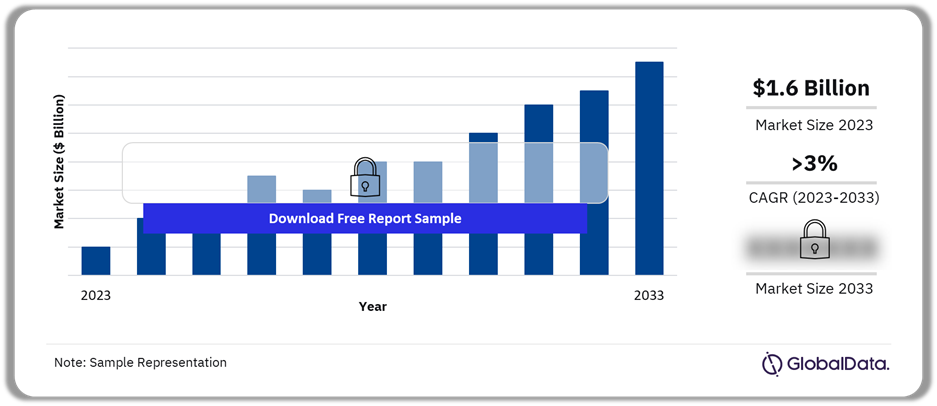
The female infertility market size across the 7MM was $1.6 billion in 2023. The market will achieve a CAGR of more than 3% during 2023-2033 because of the projected increase in assisted reproductive technology (ART) treatment rates in the 7MM during the forecast period.
Female Infertility Market Outlook, 2023-2033 ($ Billion)
Buy the Full Report to Know More about the Female Infertility Market Forecast
The female infertility market research report offers a comprehensive insight into the market through 2033. The report provides an overview of the disease including epidemiology, diagnosis, disease management, countries where the disease is prevalent, and leading players associated with the market. The report also includes the current treatment options available along with an analysis of the pipeline products.
| Market Size (2023) | $1.6 billion |
| CAGR (2023-2032) | >3% |
| Forecast Period | 2023-2033 |
| Key Countries | · US
· France · Germany · Italy · Spain · UK · Japan |
| Key Class | · Aromatase Inhibitor
· Gonadotropins · GnRH Agonists · GnRH Antagonists · Human Chronic Gonadotropin |
| Leading Players | · Ferring Holdings
· Allergan Plc/AbbVie · Merck & Co · Novartis AG · Sanofi |
| Enquire & Decide | Discover the perfect solution for your business needs. Enquire now and let us help you make an informed decision before making a purchase. |
Female Infertility Market Segmentation by Countries
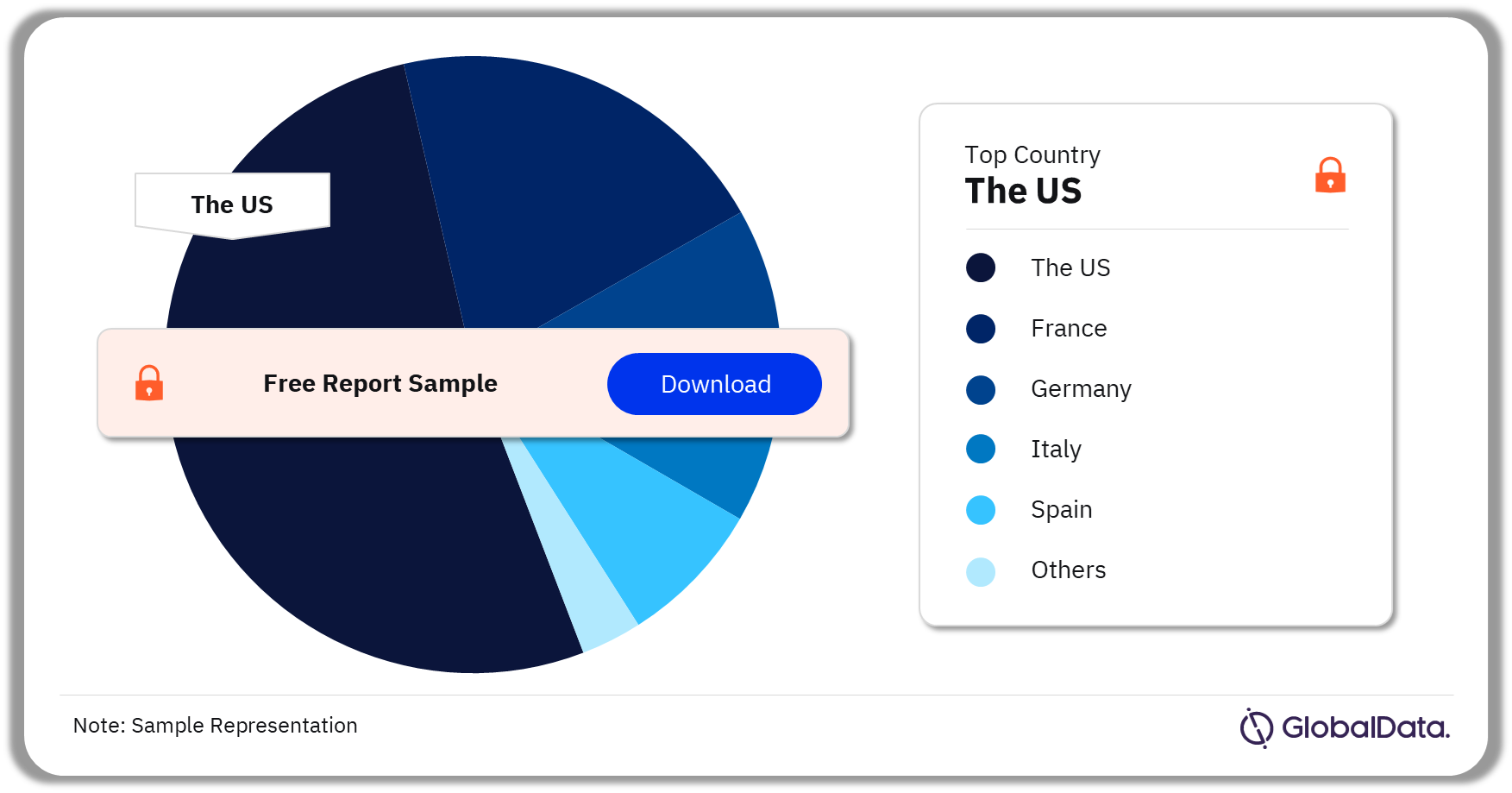
Increased sales throughout the forecast period due to the growing populations in the US drive the female infertility market in the country
A few of the key countries where the female infertility market is prevalent are the US, France, Germany, Italy, Spain, the UK, and Japan. The US had the highest female infertility market share in the 7MM in 2023 and will continue to grow more rapidly than the 5EU and Japan. This can be attributed to the potential launch of Kissei Pharmaceutical’s linzagolix choline and IBSA Institut Biochimique’s subcutaneous progesterone.
Female Infertility Market Analysis by Countries, 2023 (%)
Buy the Full Report for More Country Insights into the Female Infertility Market
Female Infertility Market Segmentation by Class
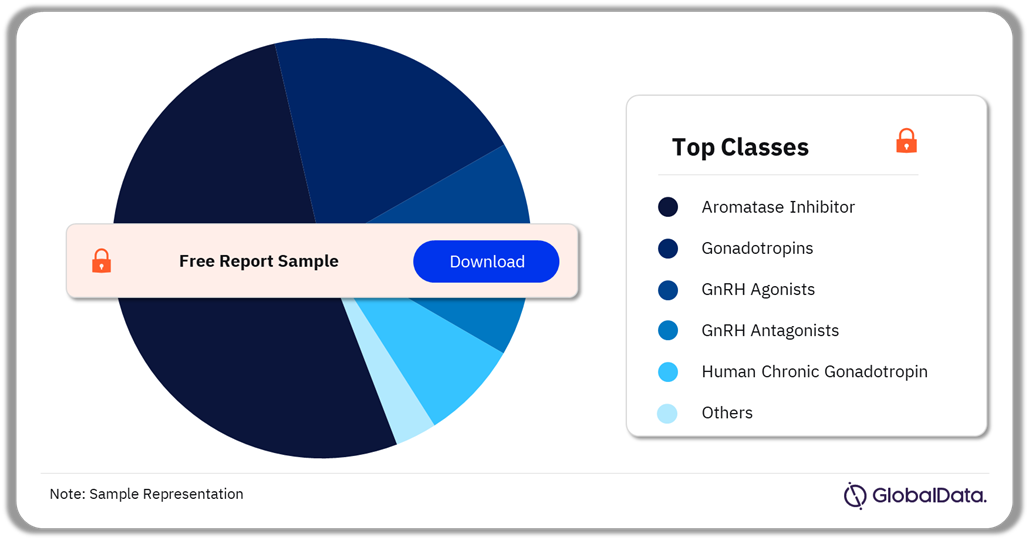
A few of the key classes in the female infertility market are aromatase inhibitor, gonadotropins, GnRH agonists, GnRH antagonists, and human chronic gonadotropins. Gonadotropins are the drug class forecast to generate the highest sales.
US Female Infertility Market Analysis by Class, 2023 (%)
Buy the Full Report for More Class Insights into the Female Infertility Market
Female Infertility Market - Competitive Landscape
The female infertility market is highly competitive with several key players dominating the field. A few of the major players in the market are:
- Ferring Holdings
- Allergan Plc/AbbVie
- Merck & Co
- Novartis AG
- Sanofi
Female Infertility Market Analysis by Players, 2023

Buy the Full Report to Know More about Companies in the Female Infertility Market
Segments Covered in the Report
Female Infertility Country Outlook (Value, $ Billion, 2023-2033)
- US
- France
- Germany
- Italy
- Spain
- The UK
- Japan
Female Infertility Class Outlook (Value, $ Billion, 2023-2033)
- Aromatase Inhibitor
- Gonadotropins
- GnRH Agonists
- GnRH Antagonists
- Human Chronic Gonadotropin
Key Stakeholders
Table of Contents
Tables
Table 1: Female infertility: key metrics in the 7MM
Table 2: Classification of female infertility
Table 3: Risk factors and comorbidities associated with female infertility
Table 4: Treatment guidelines for female infertility
Table 5: Top 10 deals by value, 2018–24
Table 6: Female infertility market – global drivers and barriers, 2023–33
Table 7: Key events impacting sales for female infertility in the US, 2023–33
Table 8: Female infertility market – drivers and barriers in the US, 2023–33
Table 9: Key events impacting sales for female infertility in the 5EU, 2023–33
Table 10: Female infertility market – drivers and barriers in the 5EU, 2023–33
Table 11: Key events impacting sales for female infertility in Japan, 2023–33
Table 12: Female infertility market – drivers and barriers in Japan, 2023–33
Table 13: High-prescribing physicians (non-KOLs) surveyed, by country
Graphs
Figure 1: Global sales forecast by country for female infertility in 2023 and 2033
Figure 2: Analysis of the company portfolio gap in female infertility during the forecast period
Figure 3: Competitive assessment of the late-stage pipeline agents that GlobalData expects to be licensed for the treatment of female infertility during the forecast period
Figure 4: Major etiologic factors of female infertility
Figure 5: 7MM, diagnosed incidence of female infertility, women, cases per 100,000 population, ages 15–44 years, 2023
Figure 6: 7MM, total prevalence of female infertility and impaired fecundity, women, cases per 100,000 population, ages 15–44 years, 2023
Figure 7: 7MM, sources used and not used to forecast the diagnosed incident cases of female infertility
Figure 8: 7MM, sources used and not used to forecast the total prevalent cases of female infertility
Figure 9: 7MM, sources used and not used to forecast the total prevalent cases of impaired fecundity
Figure 10: 7MM, sources used and not used to forecast the total prevalent cases of female infertility by major etiologic factors
Figure 11: 7MM, diagnosed incident cases of female infertility, N, women, ages 15–44 years, 2023
Figure 12: 7MM, diagnosed incident cases of female infertility by age, N, women, 2023
Figure 13: 7MM, total prevalent cases of female infertility, N, women, ages 15–44 years, 2023
Figure 14: 7MM, total prevalent cases of female infertility by age, N, women, 2023
Figure 15: 7MM, total prevalent cases of female infertility by major etiologic factors, N, women, ages 15–44 years, 2023
Figure 16: 7MM, total prevalent cases of impaired fecundity, N, women, ages 15–44 years, 2023
Figure 17: 7MM, total prevalent cases of impaired fecundity by age, N, women, 2023
Figure 18: An overview of the treatment of female infertility including the main decision points and treatment suggestions
Figure 19: Unmet needs and opportunities in female infertility
Figure 20: Overview of the development pipeline in female infertility
Figure 21: Key late-stage trials for the promising pipeline agents that GlobalData expects to be licensed for female infertility in the 7MM during the forecast period
Figure 22: Competitive assessment of the promising pipeline agents that GlobalData expects to be licensed for female infertility in the 7MM during the forecast period
Figure 23: Competitive assessment of the pipeline drug linzagolix choline benchmarked against the standard of care (SOC), GnRH antagonist ganirelix acetate
Figure 24: Competitive assessment of the pipeline drug Menopur benchmarked against the standard of care (SOC), FSHR agonist, LHR agonist hCG
Figure 25: Competitive assessment of the pipeline drug subcutaneous progesterone benchmarked against the standard of care (SOC), progesterone receptor agonist intramuscular progesterone
Figure 26: Analysis of the company portfolio gap in female infertility during the forecast period
Figure 27: Global (7MM) sales forecast by country for female infertility in 2023 and 2033
Figure 28: Sales forecast by class for female infertility in the US in 2023 and 2033
Figure 29: Sales forecast by class for female infertility in the 5EU in 2023 and 2033
Figure 30: Sales forecast by class for female infertility in Japan in 2023 and 2033







