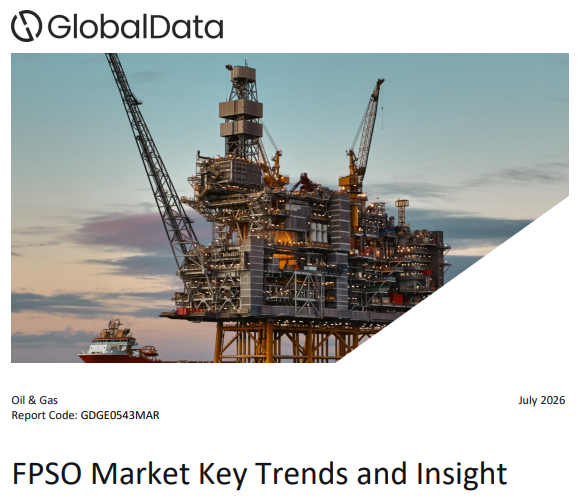
FPSO Market: Key Trends, Supply and Delivery Capacity, Project Pipeline, Competitive Landscape, Digitalization, Decarbonization and Emissions, 2026-2030

Powered by

All the vital news, analysis, and commentary curated by our industry experts.

Explore FPSO market trends, with forecasts for 45+ deliveries in 2026–2030, $65bn+ in projected CAPEX, regional opportunities, technology and supply chains.

Why Does the FPSO Market Matter?

The floating production, storage and offloading (FPSO) market is entering a strong new-build cycle, with more than 45 units expected to be delivered between 2026 and 2030. Capital expenditure across the projected pipeline is estimated to exceed $65 billion, highlighting the scale of investment and potential opportunities across offshore oil and gas production.

South America, particularly Brazil, is expected to remain a key growth engine for upcoming FPSO projects, while Guyana and emerging opportunities in Africa add to the regional outlook. The FPSO Market Trends Analysis report examines the delivery pipeline, investment trends, regional demand, competitive dynamics and technological developments shaping the market, helping businesses evaluate opportunities and prepare for evolving project requirements.
Key Insights in the FPSO Market

  • Upcoming project pipeline: More than 45 FPSO units are expected to be delivered between 2026 and 2030, signalling a significant period of market activity.
  • Capital expenditure outlook: Projected FPSO pipeline CAPEX is estimated to exceed $65 billion during 2026–2030, highlighting potential investment opportunities.
  • Regional growth: South America is positioned as a major demand centre, with Brazil playing a leading role in upcoming FPSO developments.
  • Emerging opportunities: Guyana and Africa offer additional areas to monitor as offshore production activity shapes future demand.
  • Technology evolution: High-capacity, gas-rich FPSO units and deeper water developments are influencing future project requirements.
  • Supply chain dynamics: Evolving supply chain requirements and project execution considerations are shaping the competitive landscape.
  • Market positioning: Understanding regional demand, technology requirements and project timing can help businesses assess where they may be best placed to compete.

Scope

What Will You Learn from This FPSO Market Trends Analysis Report?

This report provides insight into the expected FPSO delivery pipeline, investment outlook and market developments influencing offshore production projects.

Key areas covered include:

  • Market outlook and delivery pipeline: Assess expected FPSO deliveries during 2026–2030 and understand the scale of the upcoming project cycle.
  • Capital expenditure trends: Examine projected investment requirements and the opportunities associated with upcoming FPSO projects.
  • Regional demand analysis: Explore demand patterns across Brazil, Guyana, South America and emerging African markets.
  • Competitive landscape: Understand the competitive dynamics influencing the FPSO market and project execution.
  • Supply chain requirements: Evaluate supply chain considerations that may affect project planning, delivery and execution.
  • Technology trends: Examine the shift towards high-capacity units, gas-rich FPSOs and deeper water operations.
  • Strategic opportunities: Identify factors that can support market entry assessments, investment decisions and longer-term business planning.

Who Should Buy This FPSO Market Trends Analysis Report?

This report is designed for professionals involved in offshore energy, FPSO development and the wider oil and gas supply chain, including:

  • Oil and gas companies: Assess the upcoming FPSO pipeline and regional developments relevant to offshore production strategies.
  • FPSO contractors and operators: Understand project timing, technology requirements and competitive developments.
  • Engineering, procurement and construction (EPC) companies: Evaluate future project opportunities and changing requirements for FPSO delivery.
  • Equipment and technology suppliers: Identify potential demand associated with high-capacity units, gas handling and deepwater operations.
  • Investors and corporate strategy teams: Assess projected CAPEX, regional growth opportunities and potential market entry priorities.
  • Supply chain and procurement professionals: Understand emerging project requirements and supply chain dynamics influencing execution.
  • Energy market analysts and consultants: Track regional demand, project pipeline developments and technology trends shaping the FPSO market.
How Companies Use This FPSO Market Analysis

Businesses can use this analysis to support market assessment, investment planning and competitive strategy across the FPSO value chain.

  • Prioritise regional opportunities: Evaluate the outlook for Brazil, Guyana, wider South America and emerging African markets.
  • Plan for upcoming projects: Use the projected 2026–2030 delivery pipeline to inform business development and resource planning.
  • Assess investment potential: Understand the scale of anticipated CAPEX and its implications for market opportunities.
  • Align technology capabilities: Evaluate how demand for high-capacity, gas-rich and deepwater-capable units may influence future requirements.
  • Strengthen supply chain planning: Consider evolving project execution needs when assessing procurement, partnerships and delivery capabilities.
  • Benchmark competitive positioning: Review market dynamics to identify potential areas of differentiation and strategic focus.
  • Support market entry decisions: Use regional, investment and technology trends to assess opportunities across established and emerging offshore production hubs.

Reasons to Buy

Benchmark the FPSO Market Landscape

The FPSO market is being shaped by a substantial upcoming delivery pipeline, major capital investment and evolving offshore production requirements. South America, particularly Brazil, is positioned as a key growth region, while Guyana and Africa provide additional areas of interest.

At the same time, the move towards higher-capacity, gas-rich units and deeper water developments is changing project requirements. The report brings together these regional, technological and competitive considerations to help businesses understand the opportunities and challenges associated with the next phase of FPSO market activity.

Built on GlobalData Oil and Gas Intelligence

GlobalData’s FPSO market analysis examines the expected project pipeline alongside capital expenditure, regional demand, competitive positioning, supply chain dynamics and technology developments. This combined perspective helps industry participants assess the factors influencing future project delivery and identify areas for strategic consideration across the offshore production value chain.

Act Now to Identify Opportunities in the FPSO Market

With more than 45 FPSO units expected to be delivered and projected pipeline CAPEX exceeding $65 billion between 2026 and 2030, the coming years represent an important period for offshore production and its supply chain.

Use the FPSO Market Trends Analysis report to evaluate upcoming project opportunities, understand regional growth drivers and align your strategy with the technologies and supply chain requirements shaping the market.

Table of Contents

1. Executive Summary

1.1 Market overview

1.2 Key findings

2. Demand Engine and Forecast Logic

2.1 The auditable chain from price deck to award

2.2 Historical awards versus the 2026–30 forecast

2.3 Demand decomposition and the replacement pull

3. Supply and Delivery Capacity

3.1 Yard capacity and the order backlog

3.2 Hull strategy: conversion versus newbuild

3.3 Topsides, long-lead equipment, and slippage

4. Project Pipeline

4.1 Probability-adjusted start-up schedule

4.2 Average unit metrics and the second-life set

4.3 Capacity mix: the shift to larger, gas-rich units

5. Demand by Region and Country

5.1 Brazil: the pre-salt core

5.2 Guyana–Suriname: the growth premium

5.3 West Africa and the African frontier

5.4 Asia-Pacific, North Sea, and North America

6. Commercial Models and the Leasing Market

6.1 Lease versus operator-owned: the capacity read

7. Competitive Landscape

7.1 Operators and lessors by units

7.2 Fabrication concentration and standardization

7.3 Leading contractors and operators: technology and outlook

8. Project Economics and Scenarios

8.1 CAPEX benchmarking and the breakeven link

8.2 Base, high, and low award scenarios

8.3 Sensitivities

9. Technology Trends and Digitalization

9.1 Standardization and hull replication

9.2 Deeper, more capable units

9.3 Rising gas-handling content

9.4 Automation, remote operations, and digital twins

9.5 All-electric drives and cycle-time compression

9.6 Emerging technology frontiers

10. Decarbonization and Emissions

10.1 Electrification, flaring, and combined-cycle power

10.2 Carbon capture, methane, and pilot concepts

10.3 Carbon-pricing and regulatory overlay

11. Risk and Disruption

11.1 Delays, postponements, and cancellations

11.2 Key uncertainties that move the forecast

12. Key Project Spotlight

13. Outlook and Strategic Implications

13.1 Demand outlook, 2026–30

13.2 Forward 12–24 month view

13.3 Where value accrues

13.4 Strategic recommendations

14. Methodology and Definitions

14.1FPSO Capital Cost Estimation — Methodology

14.2 Definitions and sources

14.3 About GlobalData

14.4 Contact Us

Table

Table 1: FPSO market at a glance, 2026–30

Table 2: FPSO pipeline start-up schedule and estimated capital, 2026–30

Table 3: FPSO capacity mix, active fleet versus 2026–30 pipeline

Table 4: FPSO pipeline units and capital by region

Table 5: FPSO pipeline units and capital by country

Table 6: Fleet operators and lessors by in-service units

Table 7: Leading FPSO contractors and operators: technology strategy and market stance

Table 8: Award-cycle scenarios, 2026–30 (start-up-weighted)

Table 9: Technology-adoption maturity across the floating fleet

Table 10: Indicative time-to-first-oil by build route

Table 11: FPSO forecast risk register by category

Table 12: Largest pipeline FPSO units by estimated capital cost

Table 13: FPSO value-chain outlook by stakeholder, 2026–30

Figures

Figure 1: FPSO start-ups by year, in-service base versus forecast pipeline

Figure 2: FPSO In-service fleet age profile

Figure 3: Forecast FPSO capital spend by region (2026–2030)

Figure 4: FPSO In-service fleet by commercial model

Figure 5: Fleet operators and lessors by in-service units

Figure 6: Largest pipeline units by estimated FPSO capital cost

Figure 7: Award-cycle scenarios, 2026–30

Figure 8: FPSO Build-mix inversion: active fleet versus forward pipeline

FPSO Market: Key Trends, Supply and Delivery Capacity, Project Pipeline, Competitive Landscape, Digitalization, Decarbonization and Emissions, 2026-2030 standard reports
Currency USD
$3,000

Can be used by individual purchaser only

$9,000

Can be shared globally by unlimited users within the purchasing corporation e.g. all employees of a single company


Undecided about purchasing this report?

Enquire Before Buying Download FREE Resources

Get in touch to find out about multi-purchase discounts

reportstore@globaldata.com
Tel +44 20 7947 2745

Sample Report

FPSO Market: Key Trends, Supply and Delivery Capacity, Project Pipeline, Competitive Landscape, Digitalization, Decarbonization and Emissions, 2026-2030 was curated by the best experts in the industry and we are confident about its unique quality. However, we want you to make the most beneficial decision for your business, so we offer free sample pages to help you:

  • Assess the relevance of the report
  • Evaluate the quality of the report
  • Justify the cost

Download your copy of the sample report and make an informed decision about whether the full report will provide you with the insights and information you need.

Below is a sample report to understand what you are buying

See what our customers are saying
testimonial-image
testimonial-image
testimonial-image
testimonial-image
testimonial-image
testimonial-image
testimonial-image

“The GlobalData platform is our go-to tool for intelligence services. GlobalData provides an easy way to access comprehensive intelligence data around multiple sectors, which essentially makes it a one-for-all intelligence platform, for tendering and approaching customers.

GlobalData is very customer orientated, with a high degree of personalised services, which benefits everyday use. The highly detailed project intelligence and forecast reports can be utilised across multiple departments and workflow scopes, from operational to strategic level, and often support strategic decisions. GlobalData Analytics and visualisation solutions has contributed positively when preparing management presentations and strategic papers.”

Business Intelligence & Marketing Manager, SAL Heavy Lift

“COVID-19 has caused significant interference to our business and the COVID-19 intelligence from GlobalData has helped us reach better decisions around strategy. These two highlights have helped enormously to understand the projections into the future concerning our business units, we also utilise the project database to source new projects for Liebherr-Werk to use as an additional source to pitch for new business.”

Market Analyst & Management, Liebherr-Werk

Your daily news has saved me a lot of time and keeps me up-to-date with what is happening in the market, I like that you almost always have a link to the source origin. We also use your market data in our Strategic Business Process to support our business decisions. By having everything in one place on the Intelligence Center it has saved me a lot of time versus looking on different sources, the alert function also helps with this.

Head of Key Accounts, Saab AB

Having used several other market research companies, I find that GlobalData manages to provide that ‘difficult-to-get’ market data that others can’t, as well as very diverse and complete consumer surveys.

Marketing Intelligence Manager, Portugal Foods

Our experience with GlobalData has been very good, from the platform itself to the people. I find that the analysts and the account team have a high level of customer focus and responsiveness and therefore I can always rely on. The platform is more holistic than other providers. It is convenient and almost like a one stop shop. The pricing suite is highly competitive and value for our organisation.

I like reports that inform new segments such as the analysis on generation Z, millennials, the impact of COVID 19 to our banking customers and their new channel habits. Secondly the specialist insight on affluent sector significantly increases our understanding about this group of customers. The combination of those give us depth and breadth of the evolving market.

I’m in the business of answering and helping people make decisions so with the intelligence center I can do that, effectively and efficiently. I can share quickly key insights that answer and satisfy our country stakeholders by giving them many quality studies and primary research about competitive landscape beyond the outlook of our bank. It helps me be seen as an advisory partner and that makes a big difference. A big benefit of our subscription is that no one holds the whole data and because it allows so many people, so many different parts of our organisation have access, it enables all teams to have the same level of knowledge and decision support.

Head of Customer Insight and Research, Standard Chartered

“I know that I can always rely on Globaldata’s work when I’m searching for the right consumer and market insights. I use Globaldata insights to understand the changing market & consumer landscape and help create better taste & wellbeing solutions for our customers in food, beverage and healthcare industries.

Globaldata has the right data and the reports are of very high quality compared to your competitors. Globaldata not only has overall market sizes & consumer insights on food & beverages but also provides insights at the ingredient & flavour level. That is key for B2B companies like Givaudan. This way we understand our customers’ business and also gain insight to our unique industry”

Head of Consumer Sensory Insights, Givaudan

GlobalData provides a great range of information and reports on various sectors that is highly relevant, timely, easy to access and utilise.  The reports and data dashboards help engagement with clients; they provide valuable industry and market insights that can enrich client conversations and can help in the shaping of value propositions. Moreover, using GlobalData products has helped increase my knowledge of the finance sector, the players within it, and the general threats and opportunities.

I find the consumer surveys that are carried out to be extremely beneficial and not something I have seen anywhere else. They provided an insightful view of why and which consumers take (or don’t) particular financial products. This can help shape conversations with clients to ensure they make the right strategic decisions for their business.

One of the challenges I have found is that data in the payments space is often piecemeal. With GD all of the data I need is in one place, but it also comes with additional market reports that provide useful extra context and information. Having the ability to set-up alerts on relevant movements in the industry, be it competitors or customers, and have them emailed directly to me, ensures I get early sight of industry activity and don’t have to search for news.

Senior Account Manager, TSYS
Go even deeper with GlobalData Intelligence Center

Every Company Report we produce is powered by the GlobalData Intelligence Center.

Subscribing to our intelligence platform means you can monitor developments at FPSO Market: Key Trends, Supply and Delivery Capacity, Project Pipeline, Competitive Landscape, Digitalization, Decarbonization and Emissions, 2026-2030 in real time.

  • Access a live FPSO Market: Key Trends, Supply and Delivery Capacity, Project Pipeline, Competitive Landscape, Digitalization, Decarbonization and Emissions, 2026-2030 dashboard for 12 months, with up-to-the-minute insights.
  • Fuel your decision making with real-time deal coverage and media activity.
  • Turn insights on financials, deals, products and pipelines into powerful agents of commercial advantage.