Internet of Things (IoT) in Aerospace, Defense, and Security: Strategic Intelligence
Powered by 
All the vital news, analysis, and commentary curated by our industry experts.
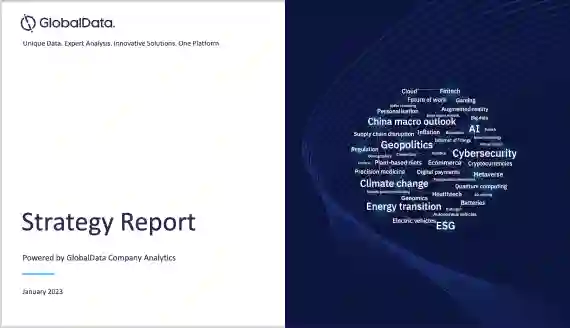
At GlobalData, we track all themes impacting all companies across all sectors. Understanding the themes set out in this report will help you outperform your peers in 2025. The graphic below depicts our 2025 theme map. It highlights the big themes driving profits across industries and is the result of a series of interviews with senior industry executives and investors, reflecting an up-to-date view of the issues that keep them awake at night. Our 2025 theme map covers not only disruptive technology themes but also ESG, macroeconomic, and regulatory themes.
In the world of Aerospace, defense and security, our industry-specific themes focus on particular defense-related technologies, as well as trending segments of the market with the largest up-front investments in expanding production, R&D and product development. Naturally, geopolitics remains a central theme for aerospace and defense, as the core primary driver of investment and growth in this space.
The internet originated from the defense industry
The US military used DARPANET, a precursor to the internet, to give communications networks Cold War survivability. The Internet of Things, or IoT, extends internet connections into everyday objects using connected sensors and actuators. Military applications of IoT have a wide range of battlefield applications, including soldier and vehicle health monitoring, predictive maintenance, uncrewed platforms, smart battlefields, smart weapons, and smart bases.
Connected devices combine to enhance the OODA loop
Uncertainty is rife on battlefields. Commanders tirelessly attempt to improve their information to navigate the fog of war. IoT devices can aggregate data from soldiers, equipment, drones, and vehicles to create a smart battlefield, improving command, control, communications, computers, intelligence, surveillance, and reconnaissance (C4ISR) and enhancing the observe, orient, decide, and act (OODA) loop. As battlefields digitalize and armed forces rely less on first-hand information from soldiers, data-aggregating connected devices will only proliferate.
Drones are developing into powerful assets
Drones are a versatile component of modern military operations, offering capabilities ranging from surveillance to direct engagement in combat scenarios. Drones rely on IoT sensors, especially when it comes to autonomous drones. Uncrewed aerial systems (UASs) already support armed forces for urban combat and at sea. 5G and artificial intelligence (AI) will enable drones to significantly alter working relationships in the defense sector as it transitions to increasingly digitized and automated battlespaces.
Maintenance, repair, and overhaul are dependent on IoT
As costs increase for contractors, maintenance, repair, and overhaul (MRO) are becoming vital to help reduce any potential burden on taxpayers. Sensor-dependent health and usage monitoring systems (HUMSs) ensure the reliability and safety of vehicles, particularly in aerospace. They enable condition-based maintenance (CBM) and operational data recording (ODR) by continuously monitoring equipment conditions. When combined with AI and digital twins, IoT also enables predictive maintenance, allowing armed forces to detect equipment failures before they occur.
Scope
The report details the key technoliges comprising GlobalData’s Internet of Things framework, and their effect on the aerospace, defense, and security sectors. The physical layer, connectivity layer, services layer, app layer, and data layers represent Global Data’s interet of things framework.
Key Highlights
Overview of themes: automation, visualization, connectivity, collaboration, and interpretation in the defense sector. Key technologies mentioned include drones, UAS, UGVs, UMVs, Soldier Modernizaiton, 5G, AI, LAWS, AR, VR, Digital Twins, MUM-T.
Reasons to Buy
Determine potential investment companies based on trend analysis and market projections.
Gaining an understanding of the market challenges and opportunities surrounding trending defense themes in 2025.
Understanding how spending on these themes will fit into the overall defense market.
Accenture
Alteryx
Alibaba
Alphabet (Google)
Anduril
Amazon
AMD
Apple
Arista Networks
Arup
Atos
AT&T
BAE Systems
Bain & Company
Baidu
Bentley Systems
Boeing
Booz Allen
Bosch
Broadcom
Capgemini
Cisco
Citrix
Cognex
Cognizant
Cloudera
Dataiku
DataStax
Dell Technologies
Deloitte
Deutsche Telekom
DXC Technology
Elbit Systems
Ericsson
Fortinet
Fujitsu
Getac
General Dynamics
Honeywell
Hikvision
Hitachi Vantara
Huawei
IBM
IFS
Infineon
Informatica
Intel
Juniper Networks
KPMG
Kyndryl
Leidos
Leonardo
Lockheed Martin
L3Harris
MediaTek
MarkLogic
Microsoft
MongoDB
Murata
NTT Data
Nokia
Northrop Grumman
Oracle
Palantir
Philips
PTC
Qualcomm
Qinetiq
Rafael
Renesas
RTX
Salesforce
Samsung Electronics
Samsung SDS
SAS
Schneider Electric
Shield AI
Siemens
Snowflake
Sopra Steria
Software AG
Tech Mahindra
Tietoevry
Tesla
Texas Instruments
Thales
Toshiba
Veritas
Wipro
Wolfram
Table of Contents

Get in touch to find out about multi-purchase discounts
reportstore@globaldata.com
Tel +44 20 7947 2745
Sample Report
Internet of Things (IoT) in Aerospace, Defense, and Security: Strategic Intelligence was curated by the best experts in the industry and we are confident about its unique quality. However, we want you to make the most beneficial decision for your business, so we offer free sample pages to help you:
- Assess the relevance of the report
- Evaluate the quality of the report
- Justify the cost
Download your copy of the sample report and make an informed decision about whether the full report will provide you with the insights and information you need.







Related reports
View more Aerospace and Defense reports