
Empower your strategies with our Likelihood of Approval and Phase Transition Success Rate Model – Isatuximab in Natural Killer Cell Lymphomas report and make more profitable business decisions.
This report provides you with the data that allows you to track and predict the specific likelihood of approval (LOA) and phase transition success rate (PTSR) of a drug using GlobalData’s proprietary machine learning algorithms developed using over 10 years of historical data.
Isatuximab in Natural Killer Cell Lymphomas Drug Details:
Isatuximab (Sarclisa) is a monoclonal antibody acts as anticancer agent. It is formulated as solution and concentrate for solution for intravenous route of administration. Sarclisa is indicated for treatment of patients with multiple myeloma who have received at least two prior therapies including lenalidomide and a proteasome inhibitor, and relapsed or refractory multiple myeloma.Isatuximab (SAR650984) is under development for the treatment of relapsed or refractory natural killer cell lymphoma, T-cell lymphomas, AL amyloidosis, pediatric patients for the treatment of relapsed/refractory acute lymphoblastic leukemia and relapsed/refractory acute myeloid leukemia, hematological malignancies including B-cell non-Hodgkin-lymphoma/leukemia (NHL), metastatic colorectal cancer, chronic lymphocytic leukemia (CLL), plasma cell myeloma, smoldering multiple myeloma and relapsed and refractory multiple myeloma. It is administered through intravenous and subcutaneous routes. The drug candidate is a naked humanized monoclonal antibody targeting CD38 antigen. It is a new molecular entity (NME). It was also under development for the treatment of non-small cell lung cancer, metastatic castration-resistant prostate cancer, as a third line therapy for recurrent metastatic squamous cell carcinoma of the head and neck (SCCHN), diffuse large b-cell lymphoma, peripheral T-cell lymphoma, mantle cell lymphoma, acute lymphoblastic lymphoma and refractory immune cytopenias.It was also under development for the treatment of classic Hodgkin’s lymphoma, hepatocellular carcinoma (HCC), recurrent glioblastoma multiforme (GBM) and epithelial ovarian cancer (EOC), oral cavity, T-cell acute lymphoblastic leukemia (T-ALL), acute myeloid leukemia (AML), oropharyngeal cancer, laryngeal cancer, autoimmune hemolytic anemia.
Report Coverage
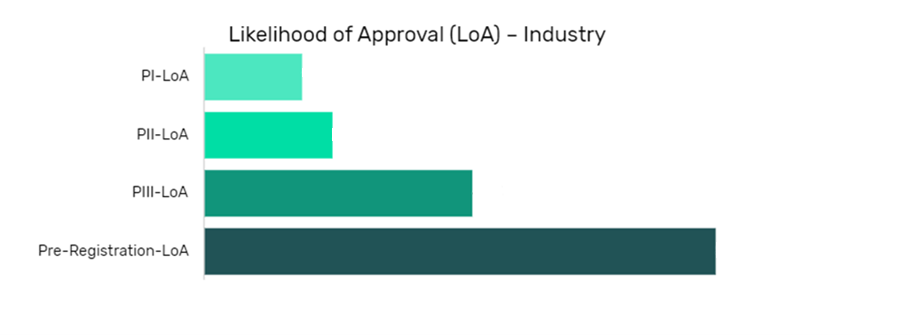
The data is segmented by drug name per indication and shows the current likelihood of approval for the drug compared to the indication benchmark and the industry benchmark.
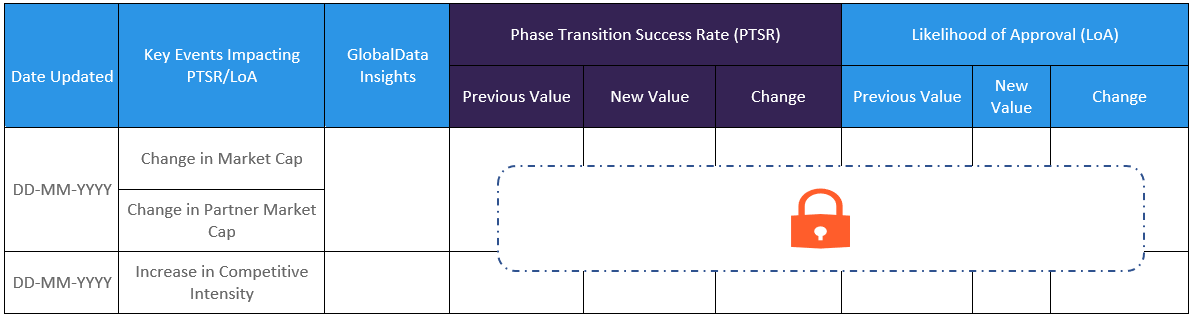
The Likelihood of Approval data is updated regularly based on events that take place which impact the clinical development process and regulatory considerations. GlobalData’s proprietary machine learning models consider these events in real time, to produce quantitative changes to the LOA and PTSR along with qualitative reasoning why the likelihood of approval has changed.
Scope of Report
- Drug Details: Drug name, Drug type, Intervention type
- Administration Pathway
- Therapeutic Areas
- Key Manufacturers
- Drug Development Status
Reasons to buy
- Precise Likelihood of Approval and Phase Transition Success Rates: Our machine learning and proprietary models provide accurate predictions, helping you gauge the potential success of a drug in the regulatory process.
- Competitive Strategy Planning: Access information on LOA and PTSR for competitors’ drugs, allowing you to plan your clinical development, commercialisation and marketing strategies
- Event-driven Updates: Track event-driven changes in LOA and PTSR benchmarked against indication LOA/PTSR. Get the latest insights to adapt your strategies promptly!
- Well-informed Investment Decisions: This data helps you navigate the dynamic landscape of drug development and regulatory considerations.






