
Kenya Defense Market Report Overview
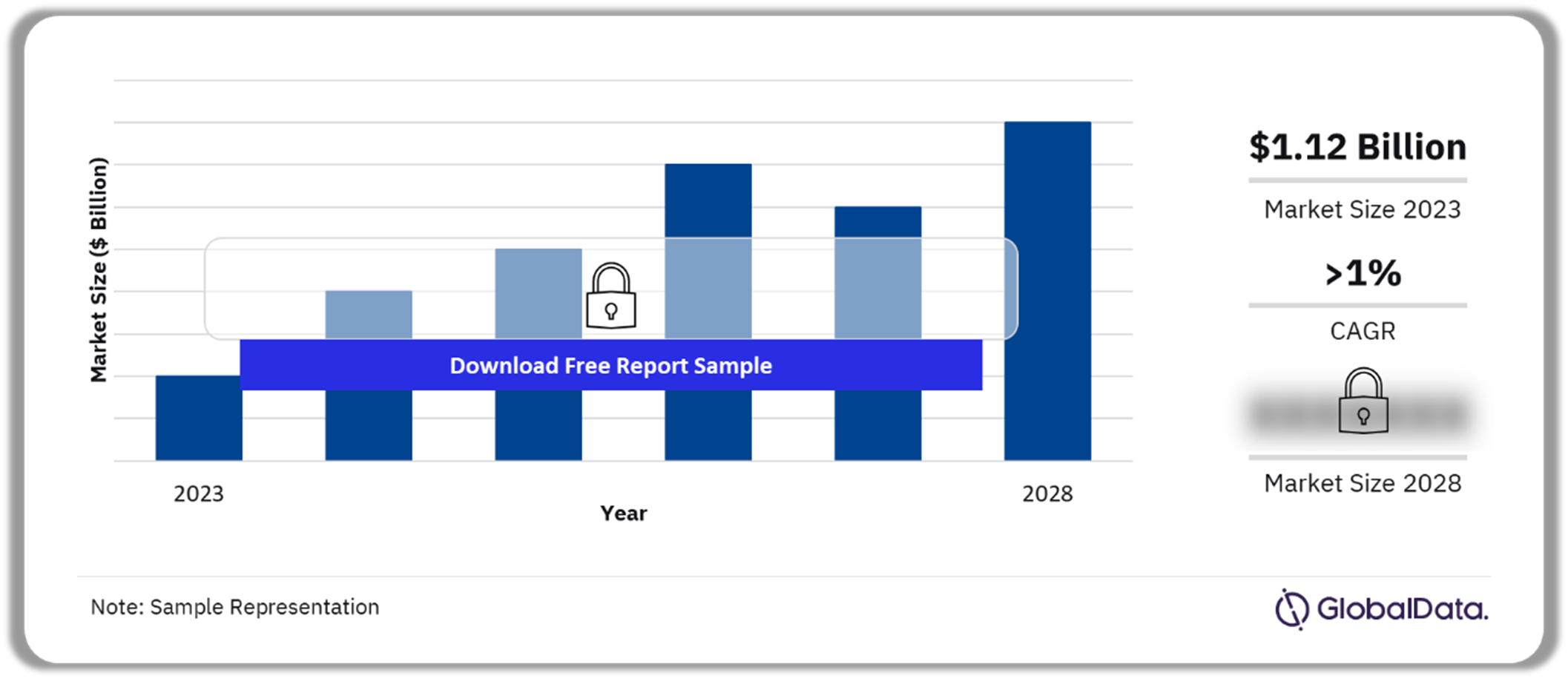
The Kenya defense budget was worth $1.12 billion in 2023. The country’s defense budget is set to register a CAGR of more than 1% between 2024 and 2028. Kenya has one of the most capable armed forces in the East and Central African region. The Kenyan government’s military capability and capacity expansion plans, the need to effectively counter terrorist groups, and the country’s participation in various peacekeeping missions are anticipated to boost military expenditure over the forecast period. Over the forecast period, the country is expected to invest around 3.8% of its defense budget in acquisition expenditure. Kenya’s capital expenditure over the forecast period is likely to consist of platform-based MDS and armored multirole vehicles.
Kenya Defense Market Outlook, 2023-2028 ($ Billion)
Buy the Full Report to Gain More Information about the Kenya Defense Market Forecast
The Kenya defense market research report provides the market size forecast and the projected growth rate for the next five years. Furthermore, our analysts have carried out a comprehensive industry analysis to determine key market drivers, emerging technology trends, key sectors, and major challenges faced by market participants, in this report. The Kenya defense market study has also assessed key factors and government programs that are expected to influence the demand for military platforms over the forecast period.
| Market Size (2023) | $1.12 Billion |
| CAGR (2024-2028) | >1% |
| Forecast Period | 2024-2028 |
| Historical Period | 2019-2023 |
| Key Drivers | · Terrorism
· Force Modernization and Capability Enhancements · Conflict with Somalia |
| Key Sectors | · Missile and Missile Defense Systems
· Military Land Vehicles · Military Simulation and Training · Tactical Communication Systems · Military Radar |
| Leading Companies | · Ministry of Defence (Kenya)
· Katmerciler · Kenya Ordnance Factories Corporation (KOFC) |
| Enquire & Decide | Discover the perfect solution for your business needs. Enquire now and let us help you make an informed decision before making a purchase. |
Kenya Defense Market Drivers
The key factors driving Kenya defense market growth are the impact of terrorism, force modernization and capability enhancements, and conflict with Somalia.
Force Modernization and Capability Enhancements: Kenya has been modestly increasing its defense expenditure due to several threats from terrorist attacks. The government intends to re-equip its armed forces with more advanced technology to achieve its strategic military goals and strengthen its defense against external and internal threats. Furthermore, the Kenyan government has started replacing some of its aging platforms, as well as modernizing and upgrading comparatively new platforms to extend their service lives. In addition, Kenya’s 2030 vision of fueling economic growth and employment will augment the defense expenditure.
Buy the Full Report for Additional Information on the Key Kenya Defense Market Drivers, Download a Free Sample Report
Kenya Military Doctrines and Defense Strategies
The country has set out a foreign policy comprising a clear set of objectives to be considered to achieve maximum protection and promotion of the national interest. Security and defense policy is an integral part of this foreign policy. The primary objective of Kenya’s security and defense policy is the maintenance of peace by ruling out the threat or use of force as a means of settling disputes between states, promoting cooperation between states, and achieving a stable balance of forces at the lowest possible level to ensure security. Kenya’s defense policy is determined by the country’s national interests, as defined by the constitution. It is articulated by its people and shaped by the country’s political leadership.
Kenya relies mainly on imported military equipment for its security forces. Most of the procurement contracts pursued by Kenya are finalized through government-to-government agreements. Kenya procures its defense equipment from various countries, which include China, Serbia, India, the US, Jordan, and Russia. Furthermore, DCA emerged as the most common practice of institutionalized defense cooperation. DCAs establish broad defense-oriented legal frameworks among parties, facilitating defense arms procurement that acts as one of the key market entry routes to Kenya’s Defense market.
Buy the Full Report for More Insights on the Main Military Doctrines and Defense Strategies in the Kenya Defense Market,
Kenya Defense Market Segmentation by Sectors
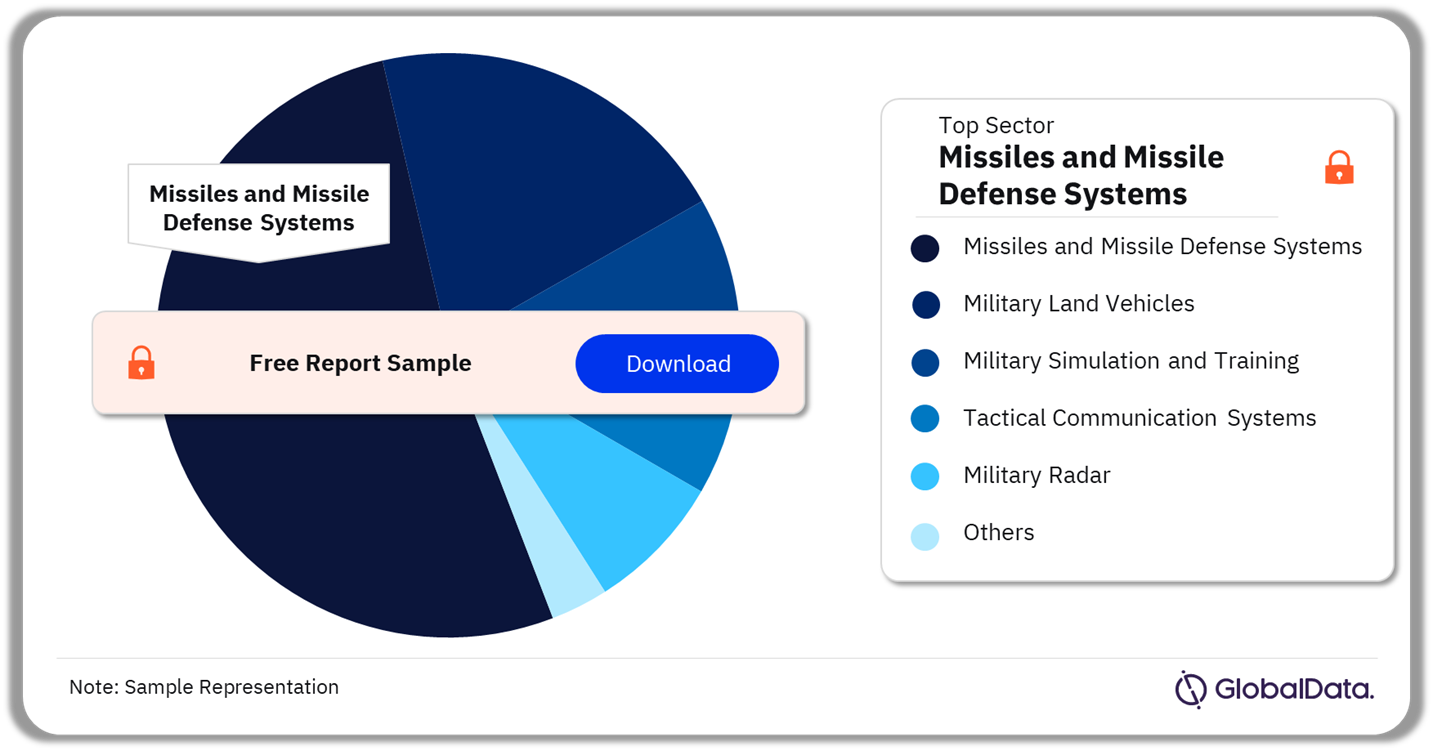
The key sectors in the Kenya defense market are missiles and missile defense systems, military land vehicles, military simulation and training, tactical communication systems, and military radar among others. In 2023, the most attractive sector in Kenya’s defense market was missiles and missile defense systems, followed by military land vehicles, and military simulation and training.
The country is anticipated to cumulatively spend $1.5 billion on missiles and missile defense systems sector. Furthermore, growing investments in the platform-based MDS are expected to drive growth of the missiles and missile defense systems sector during the forecast period.
Kenya Defense Market Analysis by Sectors, 2023 (%)
 Buy the Full Report for more Sector Insights into the Kenya Defense Market
Kenya Defense Market - Competitive Landscape
The leading defense companies operating in Kenya are Ministry of Defence (Kenya), Katmerciler, and Kenya Ordnance Factories Corporation (KOFC) among others.
Katmerciler: Katmerciler is headquartered in Izmir, Turkey. The company is a manufacturer and supplier of defense vehicles and equipment. Its product range includes firefighting vehicles; environmental vehicles, including garbage trucks; and combined canal jetting vehicles. The company also offers special products, such as airport fuel service vehicles, recovery tools, shields, and snowplows. Furthermore, Katmerciler provides aftersales and spare parts support services. It serves the defense, construction, and on-vehicle equipment sectors and exports its products to cater to the demand from other countries.
Kenya Defense Market Analysis by Companies
 Buy the Full Report for more Company Insights into the Kenya Defense Market
Segments Covered in the Report
Kenya Defense Market Sectors Outlook (Value, $ Billion, 2019-2028)
- Missile and Missile Defense Systems
- Military Land Vehicles
- Military Simulation and Training
- Tactical Communication Systems
- Military Radar
Scope of Report
The report provides:
- Detailed analysis of the Kenya 2023 defense budget, which is broken down into market size and market share. This is coupled with an examination of key current and future acquisitions.
- Explanation of the procurement policy and process. This is coupled with an analysis of Kenya’s military doctrine and strategy to provide a comprehensive overview of Kenya’s military regulation.
- Examination of political alliances and perceived security threats to Kenya and explains trends in spending and modernization.
- Analysis of prevalent trends in the country’s imports and exports over the last five years.
- Analysis of the competitive landscape of Kenya’s defense industry.
Key Highlights
• Kenya spent an average of 5.2% of its allocated defense budget on acquisition expenditure during 2019–23. Over the forecast period, the country is expected to invest around 3.8% of its defense budget in acquisition expenditure. Kenya’s acquisition expenditure over the forecast period is likely to consist of platform-based MDS and armored multirole vehicles.
• Missiles and missile defense systems, military land vehicles and military simulation and training are the most attractive sectors.
Reasons to buy
- Determine prospective investment areas based on a detailed trend analysis of the Kenya defense market over the next five years.
- Understand the underlying factors driving demand for different defense and internal security segments in the Kenya market and identify the opportunities offered.
- Understand the demand drivers, market trends, and the latest technological developments, among others.
- Identify the major threats and future opportunities that can be tapped for revenue expansion.
- Channel resources by focusing on the ongoing programs that are being undertaken by the Kenya government.
- Make correct business decisions based on an in-depth analysis of the competitive landscape consisting of detailed profiles of the top defense equipment providers in the country. The company profiles also include information about the key products, alliances, recent contracts awarded, and financial analysis, wherever available.
Key Stakeholders
Table of Contents
Tables
List of Tables
Table 1: Kenya – Ongoing Development and Procurement Programs
Table 2: Kenya – Future Procurement Programs
Table 3: Kenya – Top Defense Procurement Programs by Value (US$ Million), 2020-2025
Table 4: Kenyan Defense Expenditure (KES Billion & US$ Billion), 2016-2025
Table 5: Kenyan GDP Growth and Defense Expenditure as Percentage of GDP Growth, 2016-2025
Table 6: Kenyan Defense Budget Split Between Capital and Revenue Expenditure (%), 2016-2025
Table 7: Kenyan Defense Capital Expenditure (KES Billion & US$ Million), 2016-2025
Table 8: Kenyan Per Capita Defense Expenditure (US$), 2016-2025
Table 9: Kenyan Homeland Security Expenditure (KES Billion& US$ Billion), 2016-2025
Table 10:Benchmarking with Key Markets – 2016-2020vs. 2021-2025
Table 11: Top 10 Kenya Defense Market Sectors by Value (US$ Million) – 2020-2025
Table 12: Kenya Budget Formation Timetable
Table 13: Kenya – Competitive Landscape of Defense Industry, 2020
Graphs
List of Figures
Figure 1: Kenyan Defense Budget, 2021 and 2025
Figure 2: KenyanDefense Imports/Exports, 2015 and 2019
Figure 3: Kenyan Defense Budget, 2021 and 2025
Figure 4 : Kenya’s Top Prospective Procurements/Developments
Figure 5: Kenyan Defense Expenditure (KES Billion), 2016-2025
Figure 6: Kenyan DefenseExpenditure (US$ Billion), 2016-2025
Figure 7: Kenya GDP Growth and Defense Expenditure as Percentage of GDP Growth,2016-2025
Figure 8: Kenyan Defense Budget Split Between Capital and Revenue Expenditure (%), 2016-2025
Figure 9: Kenyan Defense Capital Expenditure (KES Billion), 2016-2025
Figure 10: Kenyan Defense Capital Expenditure (US$ Million), 2016-2025
Figure 11: Kenyan Per Capita Defense Expenditure (US$), 2016-2025
Figure 12: Kenyan Homeland Security Expenditure (KES Billion), 2016-2025
Figure 13: Kenyan Homeland Security Expenditure (US$ Million), 2016-2025
Figure 14: Benchmarking with Key Markets, 2016-2020 vs. 2021-2025
Figure 15: Defense Expenditure of the World’s Largest Military Spenders (US$ Billion), 2020and 2025
Figure 16: Defense Expenditure as a Percentage of GDP of Largest Military Spenders (%), 2020
Figure 17: Kenya Defense Import Trend, 2015-2019 (US$ Million)
Figure 18: Kenyan Defense Import by Country, 2015-2019
Figure 19: Kenyan Defense Imports by Category (%), 2015-2019
Figure 20: Kenya’s BudgetingProcess
Figure 21: Kenya – RealGDP Growth (%), 2016-2025
Figure 22: Kenya -Nominal GDP (US$), 2016-2025
Figure 23: Kenya – Consumer Price Inflation (%) 2016-2025
Figure 24: Kenya -Unemployment Rate (%), 2015-2025







