Medical Technology Market Bundle Report Overview
The healthcare industry constantly demands innovation, improvement, accessibility, and affordability. Over the years, the healthcare industry has undergone digitalization, driving the need for technology-driven healthcare solutions. Emerging technologies such as 5G, AI, cloud computing, AR & VR, data science, and predictive analytics are expected to diagnose problems effectively and enhance patient treatment and care.
As a part of this bundle, you will gain access to in-depth insights available in the following reports:
- Thematic Research: EMR Systems
- Thematic Research: 5G in Medical Devices
- Thematic Research: Cloud Computing in Medical Devices
- Thematic Research: Augmented Reality in Medical Devices
- Thematic Research: Social Media in Medical Devices
Report 1: EMR Systems – Thematic Research
Electronic medical record (EMR) systems are being integrated into the healthcare sector to facilitate patient record keeping that can be shared between healthcare practitioners and their patients. The data can be extracted by billing software to decrease administration work for healthcare providers. Furthermore, EMR systems contain details on demographics, test results, medical history, history of present illness, and medications, which can be transferred to new care providers. Soon, EMR systems will grow and support other themes, including 5G, artificial intelligence (AI), cloud, blockchain, mobile health, and the internet of things (IoT).
EMR Systems Value Chain

To gain more information on EMR systems, download a free report sample
Report 2: 5G in Medical Devices – Thematic Research
The adoption of 5G into medical devices is still at an early stage., but the industry could reap enormous benefits from the adoption of 5G technology, especially in sectors such as telehealth, remote surgery, wearable devices, and the transferring of large medical files. For instance, telemedicine requires a network that can support real-time, high-quality videos. Likewise, the possibilities of 5G-enabled remote surgery is also being explored, where doctors can perform procedures from a remote location and surgical feedback can be sent to the surgeon instantly.
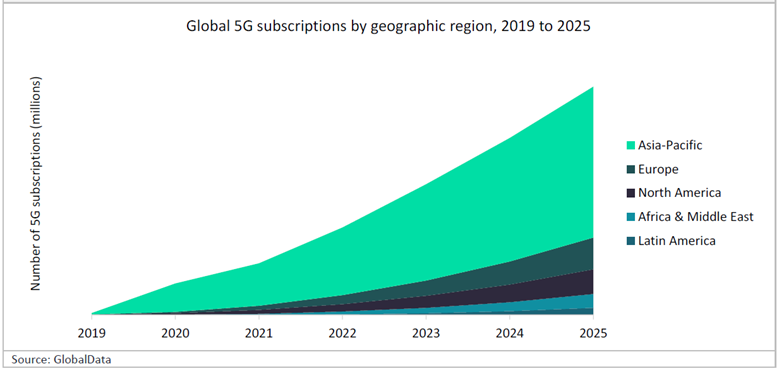
To gain more information on implications of 5G in medical devices market, download a free report sample
Report 3: Cloud Computing in Medical Devices – Thematic Research
Cloud computing has widespread applications in medical devices because it can simplify access to patient records, drive efficiency, facilitate communication, support artificial intelligence (AI), and provide secure virtual storage. Moreover, medical devices now carry more personal information than ever, which can pose more significant security challenges. Various policies, procedures, and technologies are being implemented to protect medical devices, infrastructure, cloud-based systems, and data. For this purpose, cloud firewalls are being used to stop unwanted access to private networks.
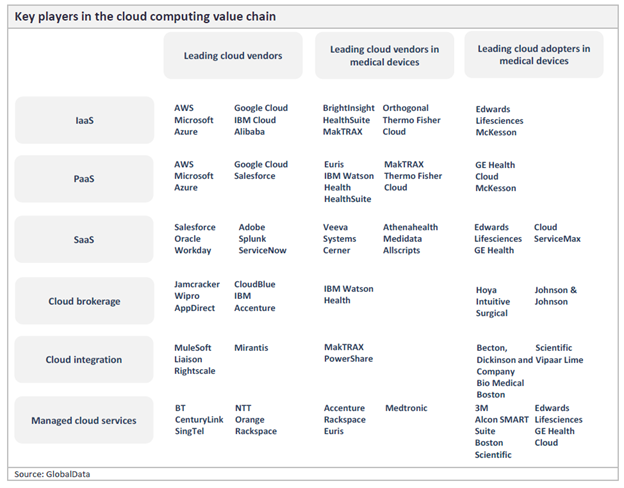
To gain more information on cloud computing in medical devices market, download a free report sample
Report 4: Augmented Reality in Medical Devices – Thematic Research
AR is in its infancy in the medical devices sector but has been identified as an essential technology for the future by several tech leaders. AR is widely used to train medical students and doctors. However, its applications in other healthcare dimensions are being explored. For instance, AR may have the most significant impact in aiding visualization during minimally invasive surgery (MIS). It can be used to educate patients about healthcare procedures they may be undergoing by utilizing AR’s ability to see the real world with a layer of digital content. Furthermore, organizations engaged in R&D and preclinical trials should invest in AR devices, platforms, apps, and content to increase production efficiency and productivity. Similarly, marketing and sales could use these to add a virtual component to marketing materials.
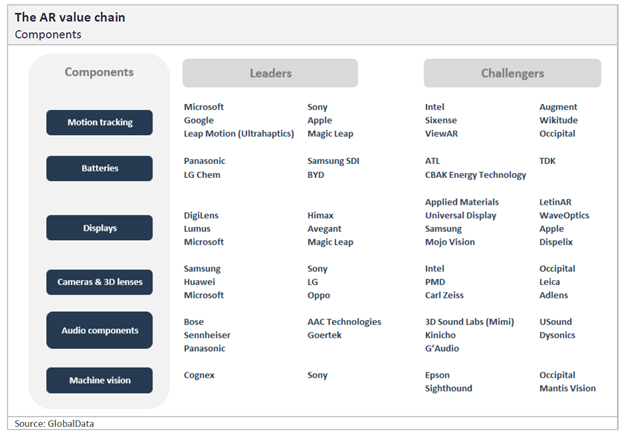
To gain more information on AR in medical devices market, download a free report sample
Report 5: Social Media in Medical Devices – Thematic Research
Medical device companies leverage social media platforms to engage with their end users and potential patients, from advertising their products to educational posts. Engaging with end users through an active, targeted social media presence enables medical device manufacturers to build confidence in their brands, improving brand recognition and loyalty. Furthermore, social media helps develop collaborative relationships with established physicians in the field. More physicians and patients are turning to social media to research new medical devices and share their experiences and knowledge within the community.
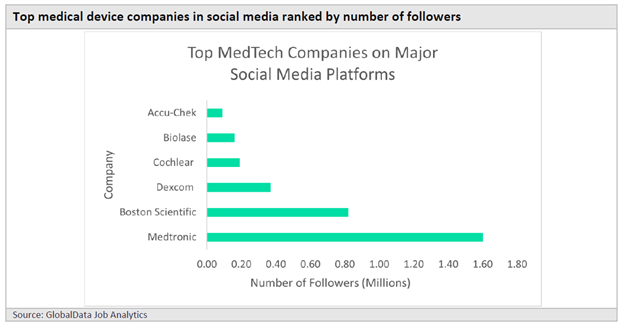
To gain more information about the use of social media in medical devices market, download a free report sample