Net Zero Strategies in Agriculture – Strategic Intelligence
Powered by 
All the vital news, analysis, and commentary curated by our industry experts.

Net Zero Strategies Strategic Intelligence Report Overview
Companies achieve net zero emissions by cutting greenhouse gas (GHG) emissions to nearly zero and offsetting remaining emissions. Agribusinesses are at risk of pricing emissions on fertilizer and shipping fuels and potentially regulating methane emissions. Furthermore, regenerative agriculture can help agribusinesses reduce their emissions of the GHGs carbon dioxide and nitrous oxide by minimizing soil disturbance and agrochemical use. They are being adopted in some form and discussed by a large number of agribusinesses.
The ‘Net Zero Strategies – Strategic Intelligence’ report covers the net zero theme and the strategies agribusinesses are using to meet its challenge. The report further identifies those companies most likely to succeed in a world filled with disruptive threats. Furthermore, GlobalData’s briefly analyzed thematic report predicts how regenerative agriculture, methane inhibitors, and precision agriculture themes will evolve and identify the leading and disrupting companies.
| Report Pages | 61 |
| Regions Covered | Global |
| Key Strategies | · Regenerative Agriculture
· Methane Inhibitors · Precision Agriculture |
| Leading Companies Adopting Regenerative Agriculture | · Cargill
· Bunge · Olam |
| Leading Companies Adopting Methane Inhibitors | · Bovaer
· Arkea Bio · ADM |
| Leading Companies Adopting Precision Agriculture | · John Deere
· Bunge · Wilmar |
| Enquire & Decide | Discover the perfect solution for your business needs. Enquire now and let us help you make an informed decision before making a purchase. |
Net Zero – Key Strategies
The key net zero strategies in the agriculture sector are regenerative agriculture, methane inhibitors, and precision agriculture.
Regenerative agriculture: It is an approach to farming that focuses on restoring soils degraded by the industrial agricultural system. It improves soil health, biodiversity, and crop quality. It also helps to store carbon in the soil, a process known as sequestration.
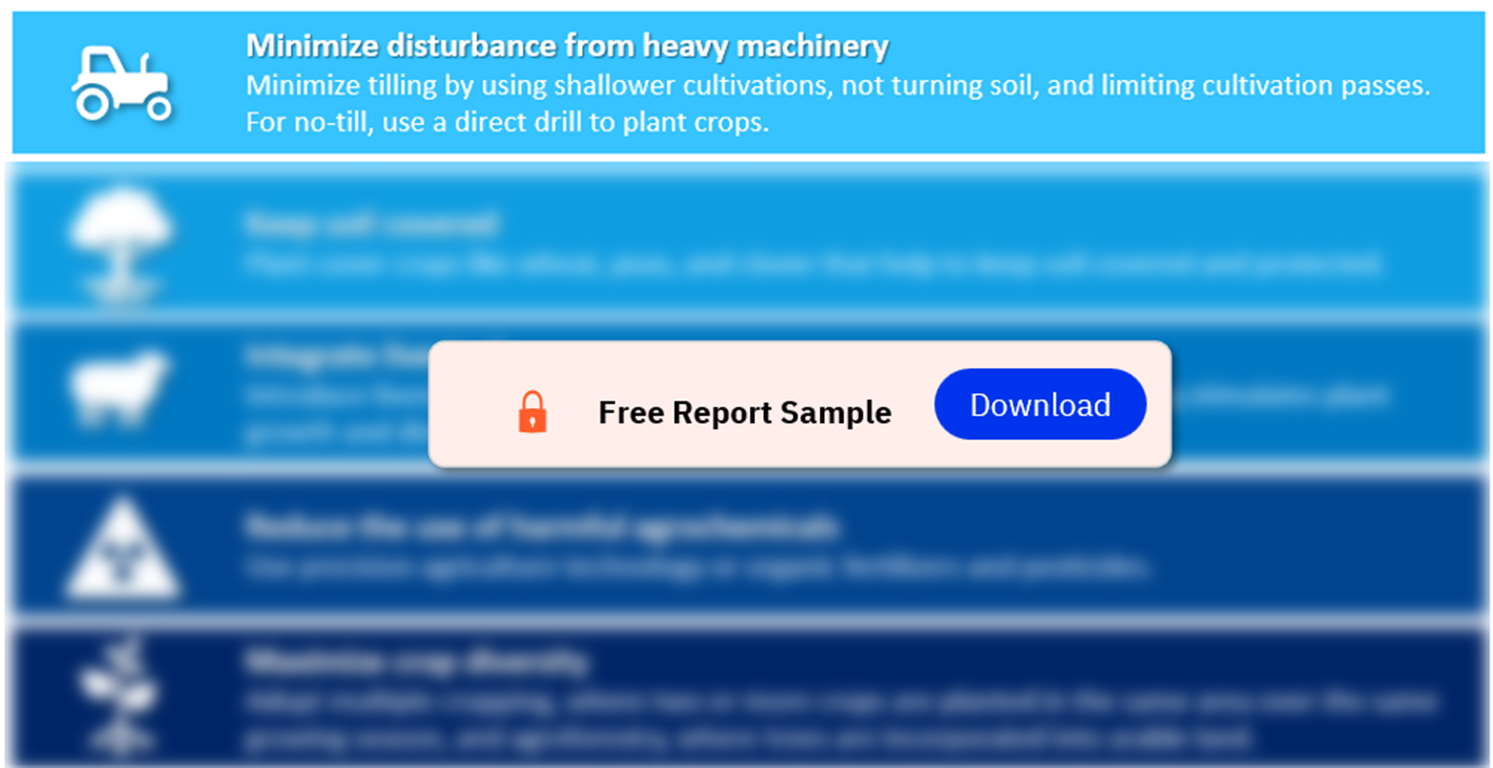
Regenerative agriculture promotes carbon capture and storage. Moreover, increased coverage with trees and different crops helps trap more CO₂ while minimizing tilling while soil exposure prevents carbon release. Additionally, minimal use of synthetic agrochemicals reduces GHG emissions as they are energy-intensive to produce, and nitrogen-based fertilizers release the GHG nitrous oxide when they mix with the soil.
A Practical Guide to Regenerative Agriculture
Buy the Full Report for More Insights into the Regenerative Agriculture Theme in Net Zero Strategies in the Agriculture Sector Report, Download a Free Report Sample
Methane inhibitors: Methane is approximately 85 times more effective than carbon dioxide at trapping heat over 20 years. Many countries around the world have recognized methane reduction as the single most effective strategy to keep the goal of limiting global warming to 1.5 degrees within reach.
Methane vaccines is one of the ways to reduce methane emissions which aim to provide a long-term solution by modifying the animal’s biological processes rather than just adding a substance to their diet. For instance, New Zealand is at the forefront of research on methane reduction, with publications dating back to 2013 that include experiments conducted on sheep and cattle.
Venture Financing Deal Value for Methane Inhibitors 2019 – 2023

Buy the Full Report for More Insights into the Methane Inhibitors Theme in Net Zero Strategies in the Agriculture Sector Report, Download a Free Report Sample
Precision agriculture: It is a farm management approach that uses technology to maximize output while minimizing inputs. It often involves the application of water and agrochemicals in a prescriptive manner to reduce pollution and waste.
Precision agriculture reduces emissions by minimizing the use of agrochemicals like synthetic pesticides and fertilizers, Further, it reduces carbon emissions in production and nitrous oxide emissions during use.
The Main Technologies Supporting Precision Agriculture

Buy the Full Report for More Insights into the Precision Agriculture Theme in Net Zero Strategies in the Agriculture Sector Report, Download a Free Report Sample
Net Zero Strategies - Leading Companies
A few of the leading companies adopting regenerative agriculture are:
- Cargill
- Bunge
- Olam
The following are the companies in the methane inhibitors theme:
- Bovaer
- Arkea Bio
- ADM
The leading companies associated with the precision agriculture theme are:
- John Deere
- Bunge
- Wilmar
Buy the Full Report to Know More About the Companies Making their Mark within the Net zero Strategies Theme or Download a Free Report Sample
Scope
- The report is a thematic brief, which identifies those companies most likely to succeed in a world filled with disruptive threats.
- The report explains how each theme will evolve and identify the leading and disrupting companies.
- The report covers the net zero theme and the strategies agribusinesses are using to meet its challenge.
Reasons to Buy
- GlobalData’s thematic research ecosystem is a single, integrated global research platform that provides an easy-to-use framework for tracking all themes across all companies in all sectors. It has a proven track record of identifying important themes early, enabling companies to make the right investments ahead of the competition and secure that all-important competitive advantage.
- Develop and design your corporate strategies through an in-house expert analysis of a net zero by understanding the primary ways in which this theme is impacting the agricultural industry.
- Stay up to date on the industry’s major players and where they sit in the value chain.
- Identify emerging industry trends to gain a competitive advantage.
Akrea Bio
Barry Callebaut
BASF
Bayer
BayWa
Borregaard
Bovaer
Bunge
Carbon Robotics
Cargill
CH4
CNH Industrial
Crop X
Dagan
DSM Firmenich
Dupont
eAgronom
Farm IQ Systems
Farmax
Flurosat
Golden Agri Resources
Grain Corp
Green Brain
Greenfield Technologies
Ingredion
John Deere
McCain Foods
Nutrien
Olam
PepsiCo
Regrow
Semex
SpaceSenseAI
Symbrosia
Syngenta
Terramerra
True Algae
Tyson Foods
Verbio
Volta Greentech
WayCool
Wilmar
xFarm
Yara
Table of Contents
Frequently asked questions
-
Which are the key net zero strategies in the agriculture sector?
The key net zero strategies in the agriculture sector are regenerative agriculture, methane inhibitors, and precision agriculture.
-
What are the key trends associated with the Net zero strategies theme?
A few of the leading companies adopting regenerative agriculture are Cargill, Bunge, Olam, and others.
-
Which are the leading companies in the methane inhibitors theme?
A few of the companies in the methane inhibitors theme are Bovaer, Arkea Bio, ADM, and others.
-
Who are the leading companies associated with the precision agriculture theme?
The leading companies associated with the precision agriculture theme are John Deere, Bunge, Wilmar, and others.

Get in touch to find out about multi-purchase discounts
reportstore@globaldata.com
Tel +44 20 7947 2745
Sample Report
Net Zero Strategies in Agriculture – Strategic Intelligence was curated by the best experts in the industry and we are confident about its unique quality. However, we want you to make the most beneficial decision for your business, so we offer free sample pages to help you:
- Assess the relevance of the report
- Evaluate the quality of the report
- Justify the cost
Download your copy of the sample report and make an informed decision about whether the full report will provide you with the insights and information you need.


Related reports
View more Agriculture reports