
Neuroendocrine Tumors Pipeline Drugs Market Report Overview
Neuroendocrine tumor begins in the hormone-producing cells of the body’s neuroendocrine system, which is made up of cells that are a cross between traditional endocrine cells (or hormone-producing cells) and nerve cells. Symptoms includes hyperglycemia, diarrhea, loss of appetite/weight loss, thickening or lump in any part of the body, jaundice, headache, anxiety, and gastric ulcer disease.
The Neuroendocrine Tumors pipeline drugs market research report provides comprehensive information on the therapeutics under development for Neuroendocrine Tumors, complete with analysis by stage of development, drug target, mechanism of action (MoA), route of administration (RoA), and molecule type. The report also covers the descriptive pharmacological action of the therapeutics, its complete research and development history, and the latest news and press releases. Additionally, the report offers an overview of key players involved in therapeutic development for Neuroendocrine Tumors and features dormant and discontinued projects from different companies.
Neuroendocrine Tumors Pipeline Drugs Market Segmentation by Targets
The key targets in the Neuroendocrine Tumors pipeline drugs market are Programmed Cell Death Protein 1, Somatostatin Receptor, Vascular Endothelial Growth Factor Receptor 2, Cells Expressing Somatostatin Receptor Type 2, Somatostatin Receptor Type 2, and others. Programmed Cell Death Protein 1 has the highest number of products in development in the Neuroendocrine Tumors pipeline drugs market.
Neuroendocrine Tumors Pipeline Drugs Market Analysis by Targets
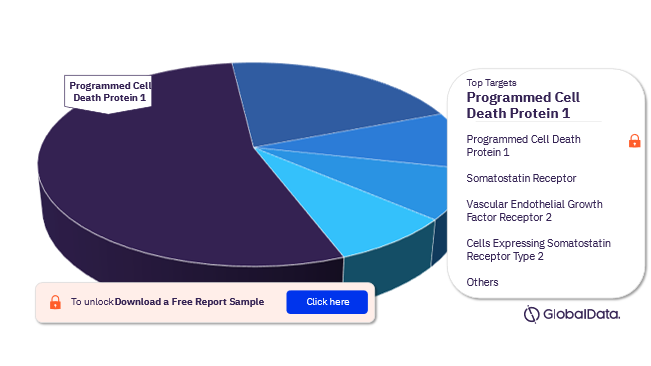 For more target insights into the Neuroendocrine Tumors pipeline drugs market, download a free report sample
Neuroendocrine Tumors Pipeline Drugs Market Segmentation by Mechanisms of Action
The key mechanisms of action in the Neuroendocrine Tumors pipeline drugs market are Programmed Cell Death Protein 1 Antagonist, Somatostatin Receptor Agonist, Vascular Endothelial Growth Factor Receptor 2 Inhibitor, Cytotoxic To Cells Expressing Somatostatin Receptor Type 2, Somatostatin Receptor Type 2 Agonist, and others. Programmed Cell Death Protein 1 Antagonist leads the Neuroendocrine Tumors pipeline drugs market in terms of MoA.
Neuroendocrine Tumors Pipeline Drugs Market Analysis by Mechanisms of Action
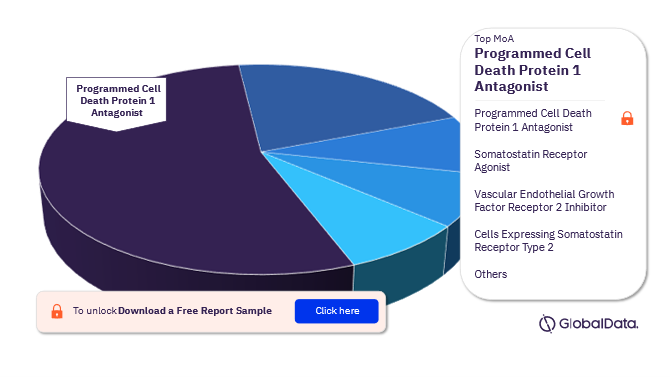 For more MoA insights into the Neuroendocrine Tumors pipeline drugs market, download a free report sample
Neuroendocrine Tumors Pipeline Drugs Market Segmentation by Routes of Administration
The key routes of administration in the Neuroendocrine Tumors pipeline drugs market are oral, intravenous, subcutaneous, intravenous drip, and others. The oral RoA has the highest number of Neuroendocrine Tumors drugs in development in 2022.
Neuroendocrine Tumors Pipeline Drugs Market Analysis by Routes of Administration
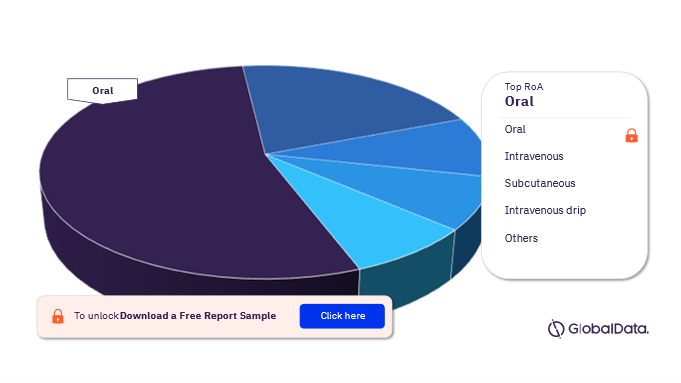 For more RoA insights into the Neuroendocrine Tumors pipeline drugs market, download a free report sample
Neuroendocrine Tumors Pipeline Drugs Market Segmentation by Molecule Types
The key molecule types in the Neuroendocrine Tumors pipeline drugs market are small molecule, synthetic peptide, monoclonal antibody, peptide, and others. Small molecule leads the Neuroendocrine Tumors pipeline drugs market in terms of molecule type.
Neuroendocrine Tumors Pipeline Drugs Market Analysis by Molecule Types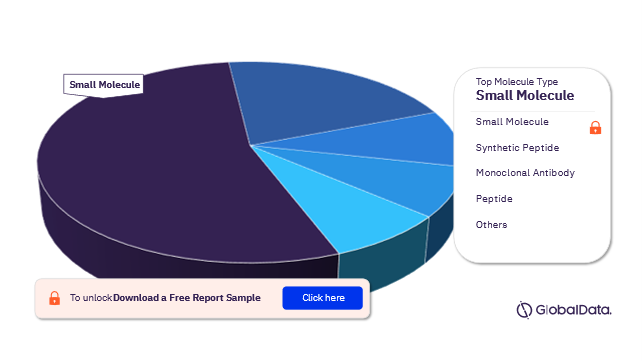 For more molecule type insights into the Neuroendocrine Tumors drugs market, download a free report sample
Neuroendocrine Tumors Pipeline Drugs Market - Competitive Landscape
Some of the leading companies in the Neuroendocrine Tumors pipeline drugs market are ASCIL Biopharm, Eli Lilly and Co, Merck & Co Inc, and Novartis AG. ASCIL Biopharm and Eli Lilly and Co are some of the market leaders with highest number of Neuroendocrine Tumors drugs in the pipeline.
Neuroendocrine Tumors Pipeline Drugs Market Analysis by Companies
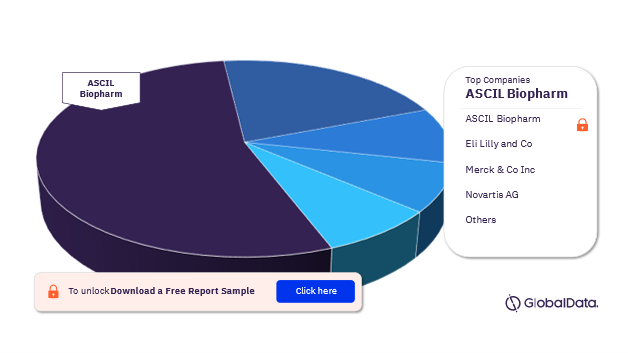 To know more about the leading Neuroendocrine Tumors pipeline drugs market players, download a free report sample
Neuroendocrine Tumors Pipeline Products Market Overview
| Key Targets | Programmed Cell Death Protein 1, Somatostatin Receptor, Vascular Endothelial Growth Factor Receptor 2, Cells Expressing Somatostatin Receptor Type 2, Somatostatin Receptor Type 2, and Others |
| Key Mechanisms of Action | Programmed Cell Death Protein 1 Antagonist, Somatostatin Receptor Agonist, Vascular Endothelial Growth Factor Receptor 2 Inhibitor, Cytotoxic To Cells Expressing Somatostatin Receptor Type 2, Somatostatin Receptor Type 2 Agonist, and Others |
| Key Routes of Administration | Oral, Intravenous, Subcutaneous, Intravenous Drip, and Others |
| Key Molecule Type | Small Molecule, Synthetic Peptide, Monoclonal Antibody, Peptide, and Others |
| Leading Companies | ASCIL Biopharm, Eli Lilly and Co, Merck & Co Inc, Novartis AG, and Others |
Scope of Report
- The pipeline guide provides a snapshot of the global therapeutic landscape of Neuroendocrine Tumors.
- The pipeline guide reviews pipeline therapeutics for Neuroendocrine Tumors by companies and universities/research institutes based on information derived from company and industry-specific sources.
- The pipeline guide covers pipeline products based on several stages of development ranging from pre-registration till discovery and undisclosed stages.
- The pipeline guide features descriptive drug profiles for the pipeline products which comprise, product description, descriptive licensing and collaboration details, R&D brief, MoA & other developmental activities.
- The pipeline guide reviews key companies involved in Neuroendocrine Tumors therapeutics and enlists all their major and minor projects.
- The pipeline guide evaluates Neuroendocrine Tumors therapeutics based on mechanism of action (MoA), drug target, route of administration (RoA), and molecule type.
- The pipeline guide encapsulates all the dormant and discontinued pipeline projects.
- The pipeline guide reviews the latest news related to pipeline therapeutics for Neuroendocrine Tumors
Reasons to buy
- Procure strategically important competitor information, analysis, and insights to formulate effective R&D strategies.
- Recognize emerging players with potentially strong product portfolios and create effective counter-strategies to gain competitive advantage.
- Find and recognize significant and varied types of therapeutics under development for Neuroendocrine Tumors.
- Classify potential new clients or partners in the target demographic.
- Develop tactical initiatives by understanding the focus areas of leading companies.
- Plan mergers and acquisitions meritoriously by identifying key players and their most promising pipeline therapeutics.
- Formulate corrective measures for pipeline projects by understanding the Neuroendocrine Tumors pipeline depth and focus of Indication therapeutics.
- Develop and design in-licensing and out-licensing strategies by identifying prospective partners with the most attractive projects to enhance and expand business potential and scope.
- Adjust the therapeutic portfolio by recognizing discontinued projects and understanding from the know-how what drove them from the pipeline.
Key Stakeholders
Table of Contents
Tables
List of Tables
Number of Products under Development for Neuroendocrine Tumors, 2022
Number of Products under Development by Companies, 2022
Number of Products under Development by Universities/Institutes, 2022
Products under Development by Companies, 2022
Products under Development by Universities/Institutes, 2022
Number of Products by Stage and Target, 2022
Number of Products by Stage and Mechanism of Action, 2022
Number of Products by Stage and Route of Administration, 2022
Number of Products by Stage and Molecule Type, 2022
Neuroendocrine Tumors – Dormant Projects, 2022
Neuroendocrine Tumors – Discontinued Products, 2022
Graphs
List of Figures
Number of Products under Development for Neuroendocrine Tumors, 2022
Number of Products under Development by Companies, 2022
Number of Products by Top 10 Targets, 2022
Number of Products by Stage and Top 10 Targets, 2022
Number of Products by Top 10 Mechanism of Actions, 2022
Number of Products by Stage and Top 10 Mechanism of Actions, 2022
Number of Products by Stage and Top 10 Routes of Administration, 2022
Number of Products by Top 10 Molecule Types, 2022
Number of Products by Stage and Top 10 Molecule Types, 2022







