New Zealand Baby Food Market Report Overview
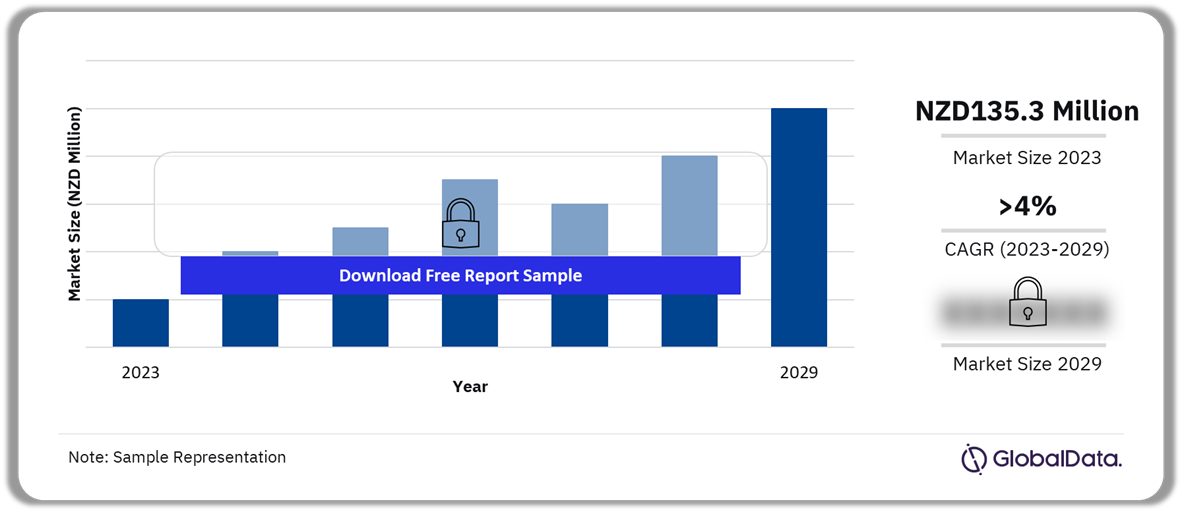
The baby food sales in New Zealand were worth NZD135.3 million in 2023. The New Zealand baby food market will record a CAGR of more than 4% from 2023 to 2029. The New Zealand baby food market outlook includes demographic and socio-economic trends to aid clients in effective decision-making.
New Zealand Baby Food Market Outlook, 2023-2029 (NZD Million)
Buy the Full Report for More Insights on the New Zealand Baby Food Market Forecast
The New Zealand baby food market insights cover current and future trends that will influence the baby food industry. This report collates multiple data sources to offer a comprehensive overview of the baby food sector in New Zealand from 2017 to 2029.
| Market Size (2023) | NZD135.3 Million |
| CAGR (2023-2029) | >4% |
| Historical Period | 2017-2022 |
| Forecast Period | 2023-2029 |
| Key Categories | · Baby Milks
· Baby Cereals & Dry Meals · Baby Wet Meals & Other · Baby Finger Food |
| Key Distribution Channels | · Hypermarkets & Supermarkets
· Drugstores & Pharmacies · E-Retailers · Convenience Stores · Department Stores |
| Leading Manufacturers | · Danone
· The Kraft Heinz Company · McCallum · Nestlé · PZ Cussons |
| Enquire & Decide | Discover the perfect solution for your business needs. Enquire now and let us help you make an informed decision before making a purchase. |
New Zealand Baby Food Market Trends
In 2023, women aged between 25 and 34 accounted for more than 60% of childbirths. This contributed to the overall market growth of New Zealand baby food. Furthermore, women’s participation in the workforce has witnessed a considerable increase in recent years due to favorable laws regarding parental leave. For example, on July 1, 2020, the New Zealand government increased paid primary caregiver leave from 22 weeks to 26 weeks.
High inflation in the country has stimulated the demand for low-priced products among consumers. Moreover, given their busy lifestyle, New Zealand consumers seek easy-to-use products. Thus, to capitalize on these trends, manufacturers should focus on introducing economical and convenient baby food products.
Buy the Full Report for New Zealand Baby Food Trends Analysis, Download PDF Sample
New Zealand Baby Food Market Segmentation by Categories
Baby milk category led the New Zealand baby food market sales in 2023
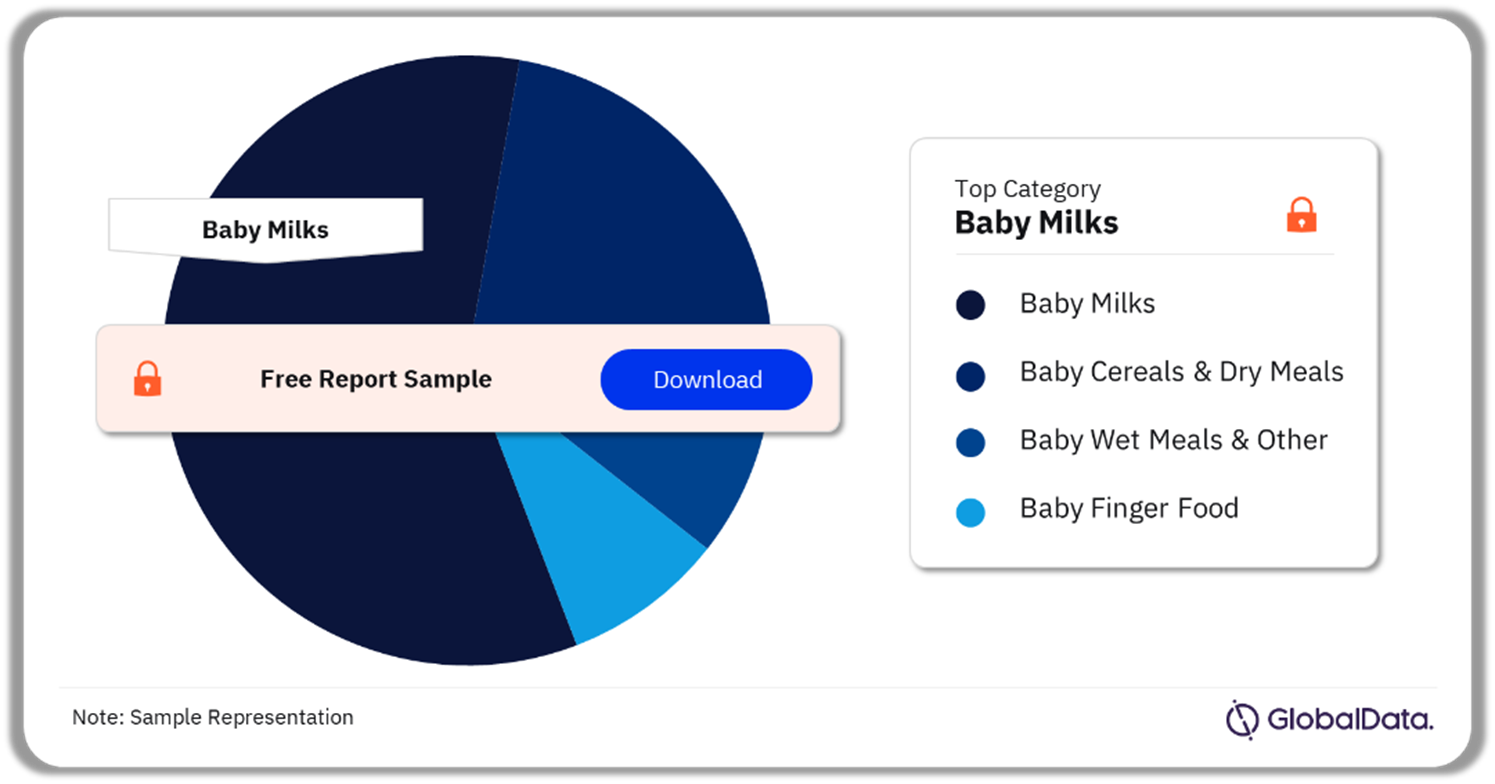
The key categories in the New Zealand baby food market are:
- Baby Milks
- Baby Cereals & Dry Meals
- Baby Wet Meals & Other
- Baby Finger Food
The baby milk category’s key segments are first-stage milk, growing-up milk, and follow-on milk, among others. First-stage milk made up most of the baby milk category in 2023. Baby milk is usually sold in cans or boxes and is only available in powdered form.
Buy Full Report for Categorical New Zealand Baby Food Market Outlook
Segments Covered in the Report
New Zealand Baby Food Categories Outlook (Value, NZD Million, 2017-2029)
- Baby Milks
- Baby Cereals & Dry Meals
- Baby Wet Meals & Other
- Baby Finger Food
New Zealand Baby Food Distribution Channel Outlook (Value, NZD Million, 2017-2029)
- Hypermarkets & Supermarkets
- Drugstores & Pharmacies
- E-Retailers
- Convenience Stores
- Department stores
New Zealand Baby Food Market Segmentation by Distribution Channels
Hypermarkets & supermarkets led the New Zealand baby food sales in 2023
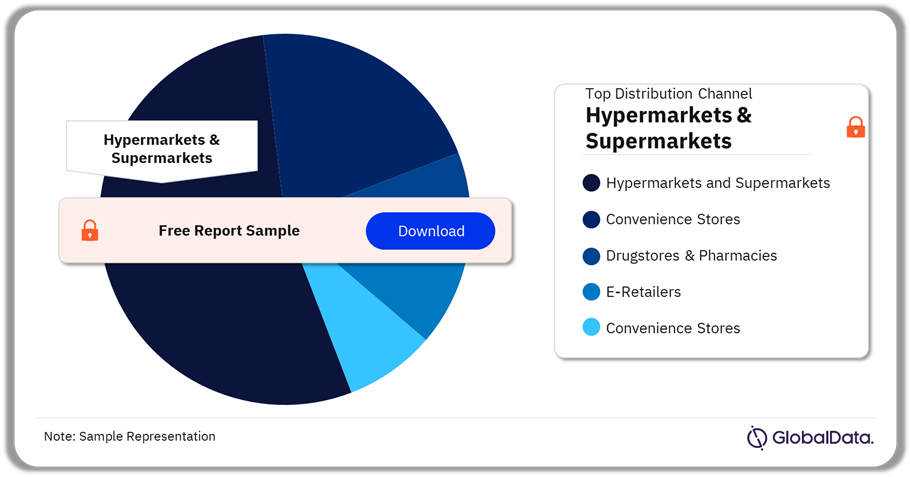
The key distribution channels in the New Zealand baby food market are:
- Hypermarkets & Supermarkets
- Drugstores & Pharmacies
- E-Retailers
- Convenience Stores
- Department stores
Hypermarkets & supermarkets emerged as the most preferred distribution channel with the highest value sales in 2023. Convenience stores ranked as the second-largest distribution channel that year.
Buy the Full Report for New Zealand Baby Food Market Insights by Distribution Channel
New Zealand Baby Food Market - Competitive Landscape
In 2023, Danone garnered the largest New Zealand baby food value
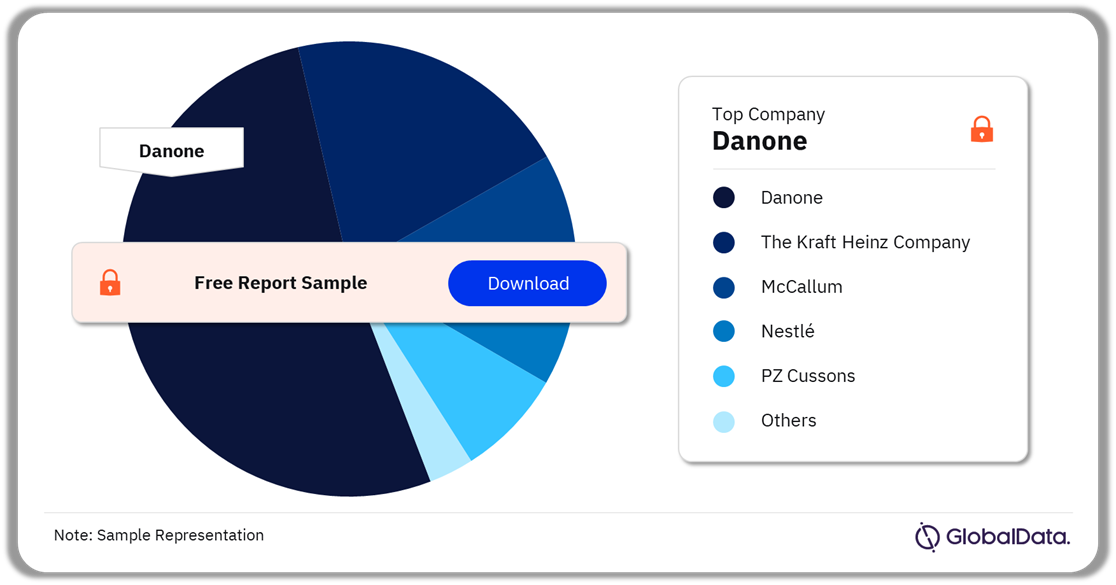
The leading baby food manufacturers in New Zealand are:
- Danone
- The Kraft Heinz Company
- McCallum
- Nestlé
- PZ Cussons
Danone dominated the New Zealand baby food market with key brands including Karicare and Aptamil. The Kraft Heinz Company followed the lead among other baby food companies in New Zealand.
Buy the Full Report to know more about New Zealand Baby Food Manufacturers
Scope of Report
This report provides:
- Consumption data based upon a unique combination of industry research, fieldwork, and market sizing work. In-house expertise to offer extensive trends and dynamics data affecting the industry.
- Detailed company profiles considering their entry into the baby food industry with key product sectors.
- Market profile of the various product sectors with their key features & developments. Extensive insights about product segmentation, per capita trends, and the various manufacturers & brands.
- Baby food industry retailing overview with company revenues along with the distribution channel insights.
- Future projections considering various baby food market trends that are likely to affect the industry.
Key Highlights
Value sales of baby milks grew from NZD63.5 million ($45.1 million) in 2017 to NZD75.7 million ($46.5 million) in 2023, registering a CAGR of 3% during this period.
Baby cereals & dry meals’ volumes decreased from 0.05 million kg in 2017 to 0.041 million kg in 2023, at a negative CAGR of 3.6%.
Value sales of the baby wet meals & others category rose from NZD46.8 million ($33.3 million) in 2017 to NZD55.6 million ($34.1 million) in 2023, at a CAGR of 2.9%.
During 2017–23, per capita consumption of baby finger food increased by 3.2%.
Reasons to buy
- Evaluate important changes in consumer behavior and identify profitable markets and areas for product innovation.
- Analyse current and forecast behavior trends in each category to identify the best opportunities to exploit.
- Detailed understanding of consumption by individual product categories in order to align your sales and marketing efforts with the latest trends in the market.
- Investigates which categories are performing the best and how this is changing market dynamics.
Key Stakeholders
Table of Contents
Tables
Birth & population trends, 2008-28
Live births by region, 2010 and 2014-21
Live births, by ethnicity of child, 2010-21
Live births by age of mother, 2010, 2012, 2014, and 2016-21
Number of women of childbearing age, by age group, 2010 and 2016-21
Female employment trends, 2016-22
Breastfeeding trends, 2017-21
Infant feeding data by ethnicity, 2019 and 2021
Breastfeeding by area, 2019-21
Leading categories (value and volume), 2022
Baby food: manufacturer shares, value & volume, %, 2016-22
Baby food: manufacturer shares by category, %, 2022
Baby milks: SKUs by pack type, 2022
Baby milks: SKUs by pack size, 2022
Baby milks: brand price positioning analysis, 2022
Baby milks: manufacturer shares, value & volume, %, 2016-22
Baby milks: manufacturer & brand shares, value %, 2016-22
Baby milks: manufacturer & brand shares, volume %, 2016-22
Baby cereals & dry meals: SKUs by pack type, 2022
Baby cereals & dry meals: SKUs by pack size, 2022
Baby cereals & dry meals: brand price positioning analysis, 2022
Baby cereals & dry meals: manufacturer shares, value & volume, %, 2016-22
Baby cereals & dry meals: manufacturer & brand shares, value %, 2016-22
Baby cereals & dry meals: manufacturer & brand shares, volume %, 2016-22
Baby wet meals & other: SKUs by pack type, 2022
Baby wet meals & other: SKUs by pack size, 2022
Baby wet meals & other: brand price positioning analysis, 2022
Baby wet meals & other: manufacturer shares, value & volume, %, 2016-22
Baby wet meals & other: manufacturer & brand shares, value %, 2016-22
Baby wet meals & other: manufacturer & brand shares, volume %, 2016-22
Baby finger food: SKUs by pack type, 2022
Baby finger food: SKUs by pack size, 2022
Baby finger food: brand price positioning analysis, 2022
Baby finger food: manufacturer shares, value & volume, %, 2016-22
Baby finger food: manufacturer & brand shares, value %, 2016-22
Baby finger food: manufacturer & brand shares, volume %, 2016-22
Baby milks & cereals: trends in imports, 2014-21
Imports of baby milks & cereals by country of origin, 2019-21
Other baby food: trends in imports, 2014-21
Imports of other baby food by country of origin, 2019-21
Baby milks & cereals: trends in exports, 2014-21
Exports of baby milks & cereals by country of destination, 2019-21
Other baby food: trends in exports, 2014-21
Exports of other baby food by country of destination, 2019-21
Change in distribution share, 2016-22
Baby food: sales by outlet type, % value, 2016-22
Baby food: sales by type of food & outlet type, % value, 2022
Category definitions
Terminology definitions
Baby population, number of babies (’000), 2006-28
Baby food: market value, current prices ($ million), 2016-22
Baby food: market value, constant prices, 2016-22
Baby food: market volume, million kg, 2016-22
Baby food: per capita expenditure, current prices ($), 2016-22
Baby food: per capita expenditure, constant prices, 2016-22
Baby food: per capita consumption, kg, 2016-22
Baby milks: category segmentation, value & volume, 2016-22
Baby food: market value forecasts, current prices ($ million), 2022-28
Baby food: market value forecasts, constant prices, 2022-28
Baby food: market volume forecasts, million kg, 2022-28
Baby food: per capita expenditure forecasts, current prices ($), 2022-28
Baby food: per capita expenditure forecasts, constant prices, 2022-28
Baby food: per capita consumption forecasts, kg, 2022-28
Exchange rates: LCU per $, 2016-22
Exchange rates: LCU per $, 2023-28
SKUs allocation by product type
Graphs
New Zealand’s value and volume shares in the global and Asia-Pacific baby food sectors, 2022-27
New Zealand compared with the other top countries in terms of market share, growth, and competitive landscape
PCC* comparison – New Zealand, Asia Pacific, and global, 2017-27
PCE* comparison – New Zealand, Asia Pacific, and global, 2017-27
New Zealand: In light of the rising cost of living, how have your shopping habits changed for baby care and child care products?
New Zealand: How would you describe your spend on the following products in the last three months? For “baby food”, for “baby milk”
New Zealand: Which of the following features do you actively look for when making a purchase?
Baby food: sector size (value), 2016-22
Baby food: sector size (volume), 2016-22
Market size and growth analysis by value and volume, baby food sector, 2016-28
Baby food: manufacturer shares, value %, 2022
Baby food: manufacturer shares, volume %, 2022
Baby food: manufacturer shares by category, % value, 2022
Market size and growth analysis by value and volume, baby milks category, 2016-28
Baby milks: per capita expenditure & consumption, 2016-22
Baby milks: per capita expenditure & consumption by age group, 2016-22
Baby milks: segmentation, value, and volume, 2016-22
Market size and growth analysis by value and volume, baby cereals & dry meals category, 2016-28
Baby cereals & dry meals: per capita expenditure & consumption, 2016-22
Market size and growth analysis by value and volume, baby wet meals & other category, 2016-28
Baby wet meals & other: per capita expenditure & consumption, 2016-22
Market size and growth analysis by value and volume, baby finger food category, 2016-28
Baby finger food: per capita expenditure & consumption, 2016-22
Share of key distribution channels (in value terms) baby food, 2022
Key distribution channel share by category (in value terms), 2022
GDP at current prices (NZD billion)
Real GDP growth rate (%)
Consumer price inflation (%)
Unemployment rate (%)