
Empower your strategies with our Likelihood of Approval and Phase Transition Success Rate Model – Onabotulinumtoxin A in Chronic Obstructive Pulmonary Disease (COPD) report and make more profitable business decisions.
This report provides you with the data that allows you to track and predict the specific likelihood of approval (LOA) and phase transition success rate (PTSR) of a drug using GlobalData’s proprietary machine learning algorithms developed using over 10 years of historical data.
Onabotulinumtoxin A in Chronic Obstructive Pulmonary Disease (COPD) Drug Details:
Onabotulinumtoxin A (Botox / Vistabel) is a sterile, vacuum-dried purified botulinum toxin type A, produced from fermentation of Hall strain Clostridium botulinum type A. It is formulated as injectable powder solution for intramuscular, transdermal, subcutaneous and intradermal route of administration. Botox is indicated for cervical dystonia, chronic migraine, axillary hyperhidrosis, blepharospasm, strabismus, blepharospasm, muscle spasm, overactive bladder, and urinary incontinence. It is also indicated for focal spasticity, including the treatment of spasticity in ambulant paediatric cerebral palsy patients, wrist and hand disability due to upper limb spasticity and ankle disability due to lower limb spasticity associated with stroke, for the treatment of upper limb spasticity in pediatric patients 2 to 17 years of age.Botox is under development for the treatment of myofascial pain, chronic exertional compartment syndrome (CECS), episodic migraine prophylaxis, interstitial cystitis/bladder pain syndrome (IC/BPS), cold intolerance secondary to digital amputations and replantations, COPD, stress urinary incontinence (SUI), essential tremor, masseter muscle prominenceand dentoalveolar neuropathic pain.It was also under development for the treatment of Incisional (Ventral) Hernia, non-relaxing puborectalis syndrome, benign prostatic hyperplasia, premature ejaculation, neuropathic pain, chronic prostatitis, chronic orchialgia, osteoarthritis pain, major depressive disorder, migraine, carpal tunnel syndrome, scleroderma-associated Raynaud’s syndrome, trigeminal neuralgia, overactive bladder with urinary incontinence due to neurogenic detrusor overactivity and pruritus, spasticity in pediatric patients 2 years of age and older, including those with lower limb spasticity caused by cerebral palsy, pediatric lower limb spasticity, bilateral masseter muscle hypertrophy (MMH), complex regional pain syndrome, hypertrophic scarring, pediatric patients with neurogenic detrusor overactivity (overactive bladder),
Report Coverage
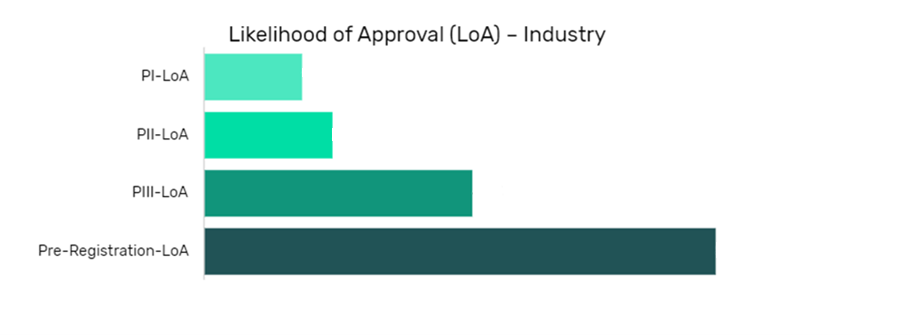
The data is segmented by drug name per indication and shows the current likelihood of approval for the drug compared to the indication benchmark and the industry benchmark.
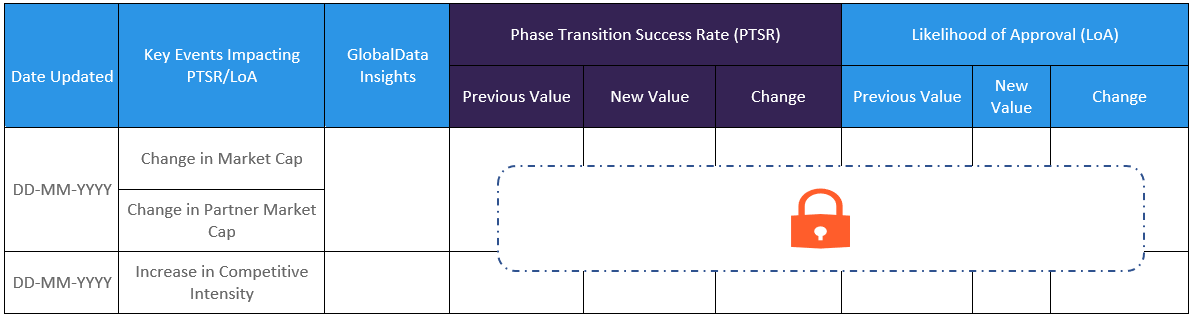
The Likelihood of Approval data is updated regularly based on events that take place which impact the clinical development process and regulatory considerations. GlobalData’s proprietary machine learning models consider these events in real time, to produce quantitative changes to the LOA and PTSR along with qualitative reasoning why the likelihood of approval has changed.
Scope of Report
- Drug Details: Drug name, Drug type, Intervention type
- Administration Pathway
- Therapeutic Areas
- Key Manufacturers
- Drug Development Status
Reasons to buy
- Precise Likelihood of Approval and Phase Transition Success Rates: Our machine learning and proprietary models provide accurate predictions, helping you gauge the potential success of a drug in the regulatory process.
- Competitive Strategy Planning: Access information on LOA and PTSR for competitors’ drugs, allowing you to plan your clinical development, commercialisation and marketing strategies
- Event-driven Updates: Track event-driven changes in LOA and PTSR benchmarked against indication LOA/PTSR. Get the latest insights to adapt your strategies promptly!
- Well-informed Investment Decisions: This data helps you navigate the dynamic landscape of drug development and regulatory considerations.







