
Empower your strategies with our Likelihood of Approval and Phase Transition Success Rate Model – Pegipanermin in Alzheimer’s Disease report and make more profitable business decisions.
This report provides you with the data that allows you to track and predict the specific likelihood of approval (LOA) and phase transition success rate (PTSR) of a drug using GlobalData’s proprietary machine learning algorithms developed using over 10 years of historical data.
Pegipanermin in Alzheimer’s Disease Drug Details:
Pegipanermin (INB-03) is under development for the treatment of Alzheimer’s disease, Duchenne muscular dystrophy, mild cognitive impairment, amyotrophic lateral sclerosis (ALS), multiple sclerosis, breast cancer, non-small cell lung cancer, malignant melanoma, treatment resistant depression, epithelial cancer, kidney cancer, upper or lower gastrointestinal tract cancer includes anal cancer, colorectal cancer, stomach cancer, esophageal cancer, duodenal, ileum cancer, HER2+ breast cancer and other solid tumors that have failed multiple lines of therapy. It was also under development for complications of cytokine storm caused by COVID-19. The drug candidate is administered as a once-a-week subcutaneous injection. It is a TNFR1 inhibitor that targets myeloid-derived suppressor cells (MDSC). It was also under development for the treatment of Parkinson’s disease, metastatic epithelial cancer, depression, Huntington’s disease, autoimmune and neuroinflammatory diseases including rheumatoid arthritis, asthma, uveitis and Crohn’s disease. It is being developed based on DN-TNF platform.
Report Coverage
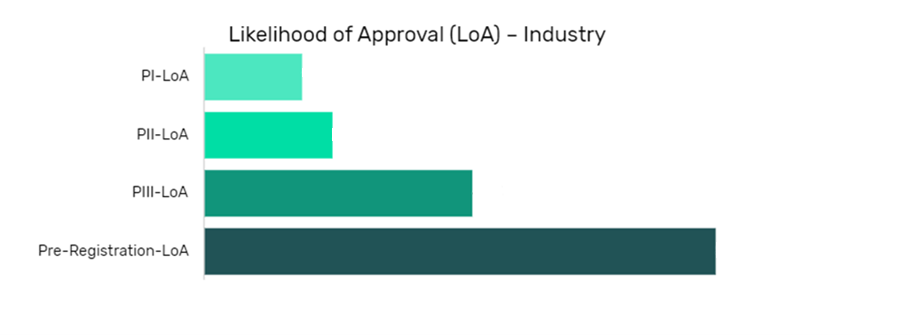
The data is segmented by drug name per indication and shows the current likelihood of approval for the drug compared to the indication benchmark and the industry benchmark.
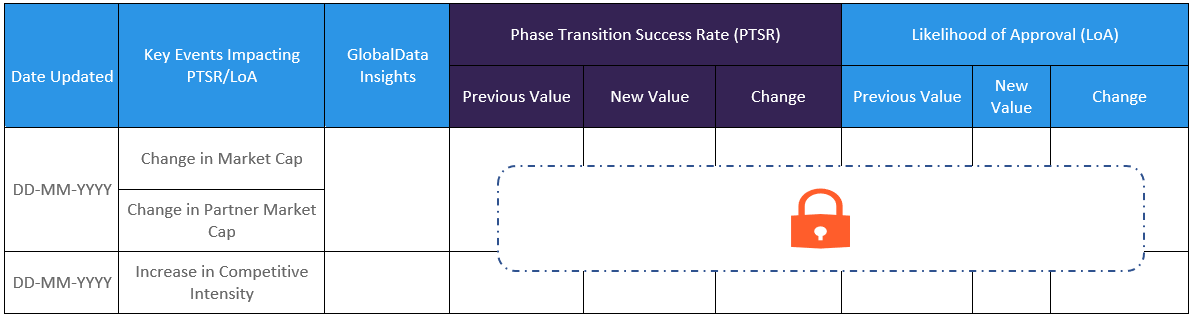
The Likelihood of Approval data is updated regularly based on events that take place which impact the clinical development process and regulatory considerations. GlobalData’s proprietary machine learning models consider these events in real time, to produce quantitative changes to the LOA and PTSR along with qualitative reasoning why the likelihood of approval has changed.
Scope of Report
- Drug Details: Drug name, Drug type, Intervention type
- Administration Pathway
- Therapeutic Areas
- Key Manufacturers
- Drug Development Status
Reasons to buy
- Precise Likelihood of Approval and Phase Transition Success Rates: Our machine learning and proprietary models provide accurate predictions, helping you gauge the potential success of a drug in the regulatory process.
- Competitive Strategy Planning: Access information on LOA and PTSR for competitors’ drugs, allowing you to plan your clinical development, commercialisation and marketing strategies
- Event-driven Updates: Track event-driven changes in LOA and PTSR benchmarked against indication LOA/PTSR. Get the latest insights to adapt your strategies promptly!
- Well-informed Investment Decisions: This data helps you navigate the dynamic landscape of drug development and regulatory considerations.







