
Respiratory syncytial virus (RSV) is a common respiratory infection that most children will be infected with by the time they are two years old. RSV infection generally causes mild flu-like symptoms, which can include a runny nose, lowered appetite, fever, coughing, and/or sneezing. Irritability and difficulty breathing may be the only symptoms shown by very young infants with RSV. RSV is a viral infection that is transmitted through contact with droplets in the air or on surfaces like doorknobs, tabletops, and cribs, and through direct contact with the virus. Although RSV currently has neither a known cure nor a vaccine, preventive measures can be taken to help mitigate the spread of the disease.
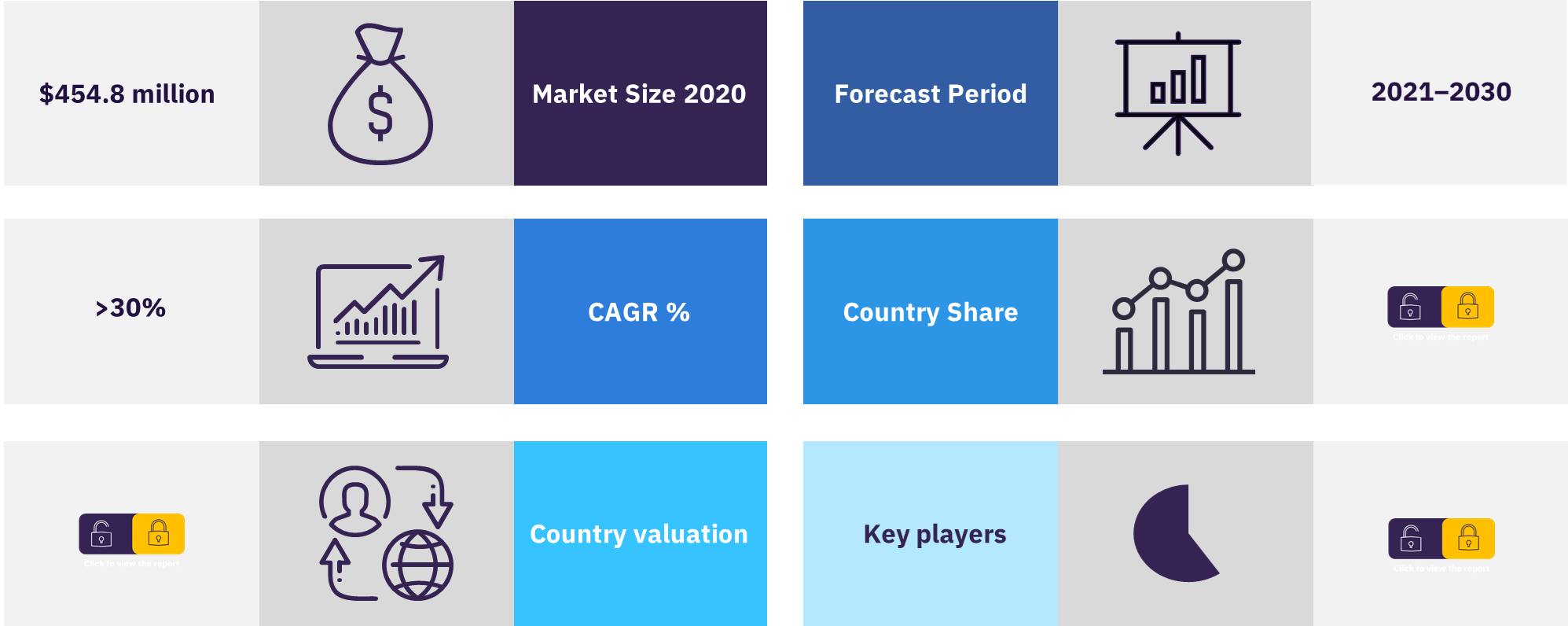
The RSV market is expected to experience significant growth over the forecast period (2020-2030) with the launches of numerous first-in-class products. The global prophylactic RSV market across the 8MM was valued at $454.8 million in 2020 and is expected to grow at an exponential CAGR of more than 30% over the 10-year forecast period. The RSV market’s growth is subjected to the launches of numerous first-in-class products.
The prophylactic market in the 8MM in 2020 consists of only one product-Sobi/AbbVie’s (formerly AstraZeneca’s) monoclonal antibody, Synagis (palivizumab). However, sales of Synagis are expected to drop substantially after the launch of competing passive prophylaxis products including AstraZeneca/Sanofi’s nirsevimab (MEDI-8897) and Merck’s clesrovimab (MK-1654).
Overview of global prophylactic RSV market
For more insights on this report, download a free report sample
What are the key countries in the global prophylactic RSV market?
The US was the leading country in the market followed by the UK, Germany, France, Japan, Italy, Australia, and Spain.
Global prophylactic RSV market, by countries
For more country insights on this report, download a free report sample
What are the market dynamics of global prophylactic RSV market?
The global prophylactic RSV market is driven by the projected launch of AstraZeneca/Sanofi’s nirsevimab across the 8MM, the first vaccines to reach the market to prevent medically significant RSV infections in infants and older adults, and the expectation that a range of prophylactic products will be needed to address the diversity of infection in different patient populations.
There is currently only one FDA-approved preventative product on the market-Sobi/AbbVie’s monoclonal antibody, Synagis (palivizumab). Key opinion leaders (KOLs) have identified the dosing burden of five monthly injections during RSV season and the high cost of Synagis as major areas for improvement. These factors contribute to a limited recommendation issued by the American Academy of Pediatrics (AAP) that restricts its use to only the highest-risk premature infants, including those with conditions such as congenital heart disease (CHD) and chronic lung disease (CLD). The adult prophylaxis market currently has no products available and will also experience rapid growth with the launch of several vaccines for third-trimester pregnant women and adults 60 years of age and older. Due to the high level of competition in RSV prophylaxis, products will need to differentiate themselves using innovative therapeutic approaches.
What is the competitive landscape and opportunities of the global prophylactic RSV market?
The competitive landscape of RSV therapies is characterized by a high level of unmet needs and opportunities. Although nearly all individuals are infected by RSV by the end of their second year of life, infants who are premature, immunocompromised, or who have chronic lung or heart disease are more likely to develop severe lower respiratory tract infections (LRTIs) as a result of infection.
Despite a surge in R&D for RSV prophylactics and antivirals over the past decade, the field has produced significantly more disappointments than success stories. Synagis remains the only licensed intervention for the prevention of RSV in infants at high risk of severe infection, and there are no approved prophylactic agents for adults or otherwise healthy young children. The short half-life and high cost of Synagis continue to be a major barrier to its widespread clinical use despite its efficacy in high-risk infants. Synagis is not used in current practice as a therapeutic intervention for the treatment of existing RSV infections, which means that there are effectively no targeted treatment options for RSV in the 8MM. Ribavirin, although approved for the treatment of RSV infections in infants and adults, is rarely used as its clinical efficacy has not reliably been demonstrated.
Most individuals at risk for moderate or severe RSV infections do not currently have any prophylactic options available. Synagis is only recommended for certain high-risk pediatric patients due to its high cost. Because a significant number of infants hospitalized for RSV infections do not belong to any of the high-risk categories that are eligible for prophylaxis, they are therefore not targeted for prophylaxis during the RSV season.
Who are the major players in the global prophylactic RSV market?
In the global prophylactic RSV market, the major players include AstraZeneca, Sobi Inc., AbbVie Inc., and AIMM Therapeutics.
Market report scope
| Market size (Year – 2020) | $454.8 million |
| Growth rate | CAGR of >30% from 2020 to 2030 |
| Base year for estimation | 2020 |
| Forecast period | 2020-2030 |
| Key Countries | The US, France, Spain, Germany, Italy, United Kingdom, Japan and Australia |
| Key players | AstraZeneca, Sobi Inc., AbbVie Inc., AIMM Therapeutics, GlaxoSmithKline, Pfizer, Johnson & Johnson, Sanofi, Merck, and Bavarian Nordic |
This report provides a comprehensive analysis of the global prophylactic RSV market. It provides:
- Overview of RSV, including epidemiology, etiology, pathophysiology, symptoms, diagnosis, and current management strategies.
- Topline RSV prophylaxis market revenue from 2020-2030. The annual cost of therapy and major pipeline product sales in this forecast period are included.
- Key topics covered include current RSV prophylaxis, unmet needs and opportunities, and the drivers and barriers affecting CHB treatment sales in the 8MM.
- Pipeline analysis: comprehensive data split across different phases, emerging novel trends under development, synopses of innovative early-stage projects, and detailed analysis of late-stage pipeline products.
- Analysis of the current and future market competition in the global RSV prophylaxis market. Insightful review of the key industry drivers, constraints, and challenges. Each trend is independently researched to provide a qualitative analysis of its implications.
Reasons to buy
The report will enable you to:
- Develop and design your in-licensing and out-licensing strategies through a review of pipeline products and technologies, and by identifying the companies with the most robust pipeline.
- Develop business strategies by understanding the trends shaping and driving the global RSV prophylactic market.
- Drive revenues by understanding the key trends, innovative products and technologies, market segments, and companies likely to impact the RSV prophylaxis market in the future.
- Formulate effective sales and marketing strategies by understanding the competitive landscape and by analyzing the performance of various competitors.
- Identify emerging players with potentially strong product portfolios and create effective counterstrategies to gain a competitive advantage.
- Organize your sales and marketing efforts by identifying the market categories and segments that present maximum opportunities for consolidations, investments, and strategic partnerships.
Key Stakeholders
Table of Contents
Tables
Table 1: Respiratory Syncytial Virus: Key Metrics in the 8MM
Table 2: Risk Factors for Severe RSV
Table 3: Leading Treatments for RSV, 2021
Table 4: Treatment Guidelines for RSV
Table 5: Clinical Trial Designs for RSV Vaccines for Maternal Immunization
Table 6: Clinical Trial Designs for RSV Prophylactics for Pediatric Patients
Table 7: Clinical Trial Designs for RSV Prophylactics for Adult Patients
Table 8: Innovative Early-Stage Approaches for RSV, 2021
Table 9: Drugs in Early-Stage Development for RSV, 2021
Table 10: RSV Prophylactics Market – Global Drivers and Barriers, 2020-2030
Table 11: Key Events Impacting Sales for RSV Prophylactics in the US, 2020-2030
Table 12: RSV Prophylactics Market – Drivers and Barriers in the US, 2020-2030
Table 13: Key Events Impacting Sales for RSV Prophylactics in the 5EU, 2020-2030
Table 14: RSV Prophylactics Market – Drivers and Barriers in the 5EU, 2020-2030
Table 15: Key Events Impacting Sales for RSV Prophylactics in Japan, 2020-2030
Table 16: RSV Prophylactics Market – Drivers and Barriers in Japan, 2020-2030
Table 17: Key Events Impacting Sales for RSV Prophylactics in Australia, 2020-2030
Table 18: RSV Prophylactics Market – Drivers and Barriers in Australia, 2020-2030
Table 19: RSV Prophylaxis Launch Dates
Table 20: RSV Prophylaxis Patent Expiration Dates
Table 21: High-Prescribing Physicians (non-KOLs) Surveyed, By Country
Graphs
Figure 1: Global Sales Forecast by Country for Respiratory Syncytial Virus in 2020 and 2030
Figure 2: Analysis of the Company Portfolio Gap in Respiratory Syncytial Virus During the Forecast Period
Figure 3: Competitive Assessment of the Late-Stage Pipeline Agents that GlobalData Expects to Be Licensed for the Treatment of RSV During the Forecast Period
Figure 4: Structure of Human RSV Virion
Figure 5: RSV Life Cycle
Figure 6: 8MM, Rate of Preterm Births (per 1,000 Live Births), 2020-2030
Figure 7: 8MM, Percentage of Adults Living in Long-Term Care, Ages ≥55 Years, 2020-2030
Figure 8: 8MM, Sources Used to Forecast the Number of Preterm Births
Figure 9: 8MM, Sources Used to Forecast the Number of Preterm Births with CLD
Figure 10: 8MM, Sources Used to Forecast the Number of Live Births with Hemodynamically Significant Heart Disease
Figure 11: 8MM, Sources Used to Forecast the Number of Live Births with Congenital Lung Disease
Figure 12: 8MM, Sources Used to Forecast the Diagnosed Prevalent Cases of DMD
Figure 13: 8MM, Sources Used to Forecast the Diagnosed Prevalent Cases of SMA
Figure 14: 8MM, Sources Used to Forecast the Number of Third-Trimester Pregnancies
Figure 15: 8MM, Sources Used to Forecast the Number of Adults Living in Long-Term Care
Figure 16: 8MM, Number of Preterm Births by Gestational Age, N, 2020
Figure 17: 8MM, Number of Preterm Infants with CLD, N, 0-Year, 2020-2030
Figure 18: 8MM, Number of Live Births with Hemodynamically Significant Heart Disease and Congenital Lung Disease, 2020, 0-Year
Figure 19: 8MM, Diagnosed Prevalent Cases of DMD in Boys, Ages 0-2 Years, 2020-2030
Figure 20: 8MM, Diagnosed Prevalent Cases of SMA, Boys and Girls, Ages 0-2 Years, 2020-2030
Figure 21: 8MM, Number of Third-Trimester Pregnant Women, N, 2020-2030
Figure 22: 8MM, Number of Adults Living in Care Institutions, Ages ≥55 Years, N, 2020-2030
Figure 23: Unmet Needs and Opportunities in RSV
Figure 24: Overview of the Development Pipeline in RSV
Figure 25: Key Late-Stage Trials for the Promising Pipeline Agents that GlobalData Expects to Be Licensed for RSV in the 8MM During the Forecast Period
Figure 26: Competitive Assessment of the Late-Stage Pipeline Agents that GlobalData Expects to Be Licensed for the Treatment of RSV During the Forecast Period
Figure 27: Clinical and Commercial Scores of Key Pipeline Prophylactics Against the SOC, Synagis
Figure 28: Competitive Assessment of the Marketed and Pipeline Drugs Benchmarked Against the SOC, Synagis
Figure 29: Analysis of the Company Portfolio Gap in RSV Prophylaxis During the Forecast Period
Figure 30: Global (8MM) Sales Forecast by Country for RSV Prophylactics in 2020 and 2030
Figure 31: Sales Forecast by Class for Pediatric and Adult RSV Prophylactics in the US in 2030
Figure 32: Sales Forecast by Class for RSV Prophylactics in the 5EU in 2020 and 2030
Figure 33: Sales Forecast by Class for Pediatric and Adult RSV Prophylactics in Japan in 2030
Figure 34: Sales Forecast by Class for Pediatric and Adult RSV Prophylactics in Australia in 2030







