
UK Pensions Market Report Overview
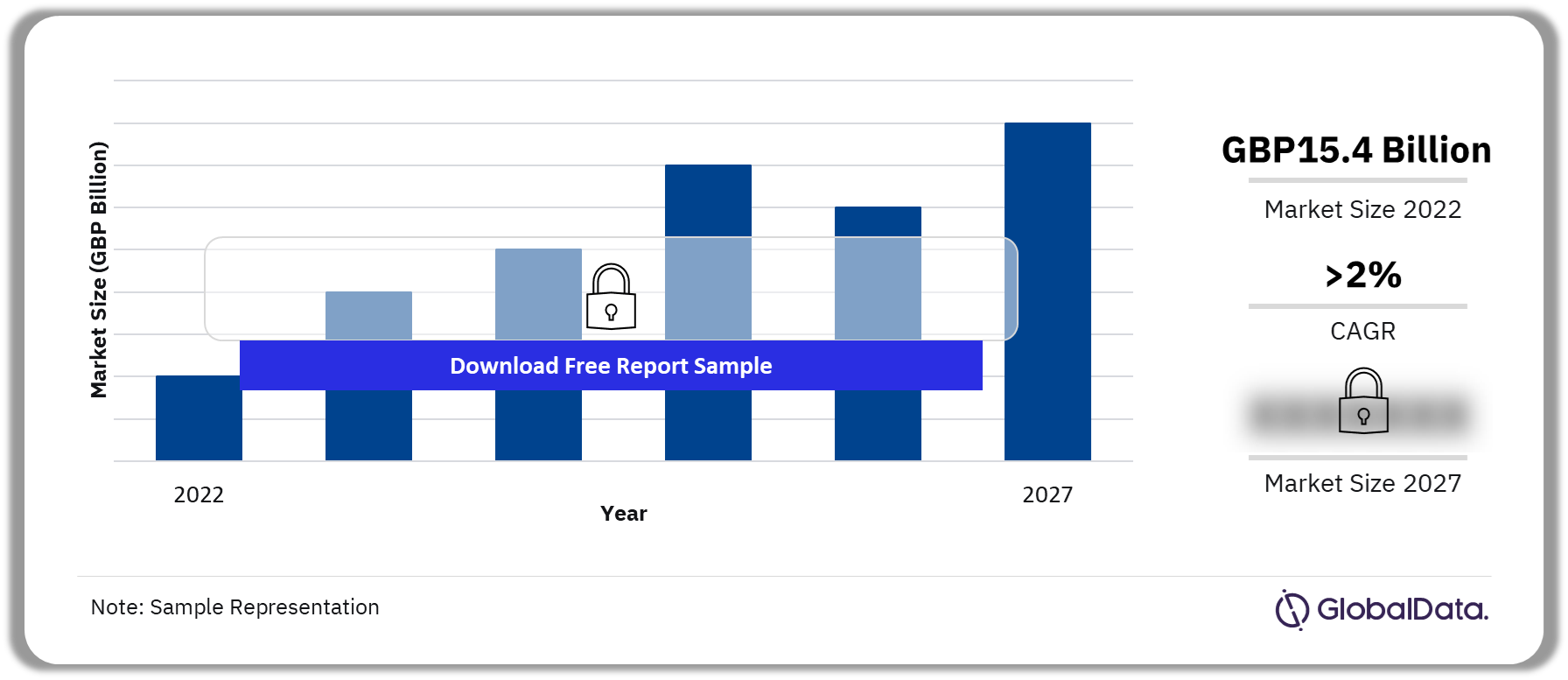
The UK pensions market size was GBP15.4 billion in terms of annual premium equivalent (APE) in 2022. The market is expected to achieve a CAGR of more than 2% during 2022-2027. The following are some of the key highlights of the UK pensions market:
- Due to a rise in workplace pension enrolment, the UK pensions market achieved a very strong growth rate in 2022 while all other pension types contracted.
- Most pension withdrawals are used to cover everyday expenses and a sizable portion is used to pay off mortgages.
- Annuities saw a dip in 2022, but income drawdowns increased.
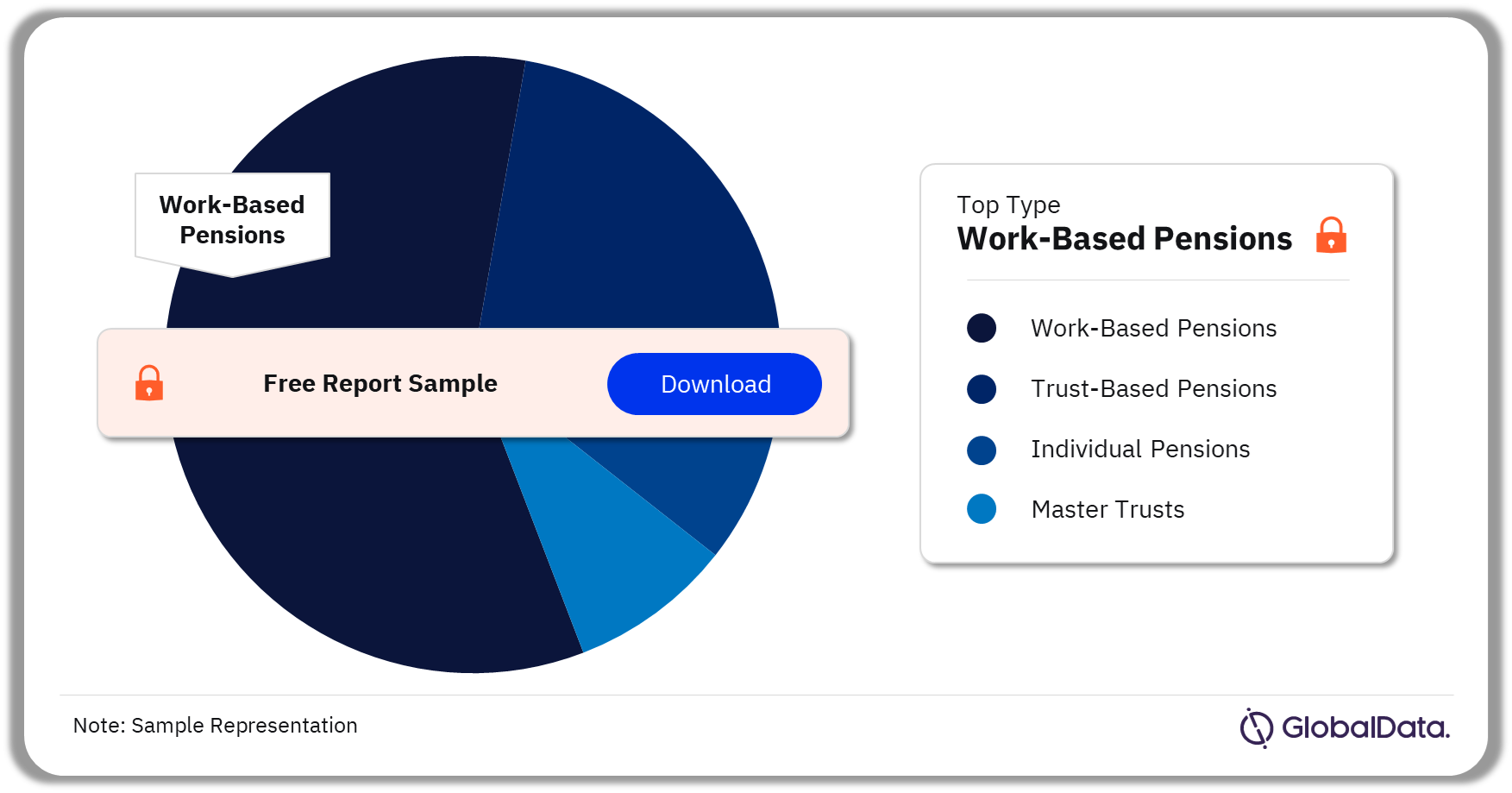
- Work-based pensions were the most popular pension type in the UK pensions market 2022.
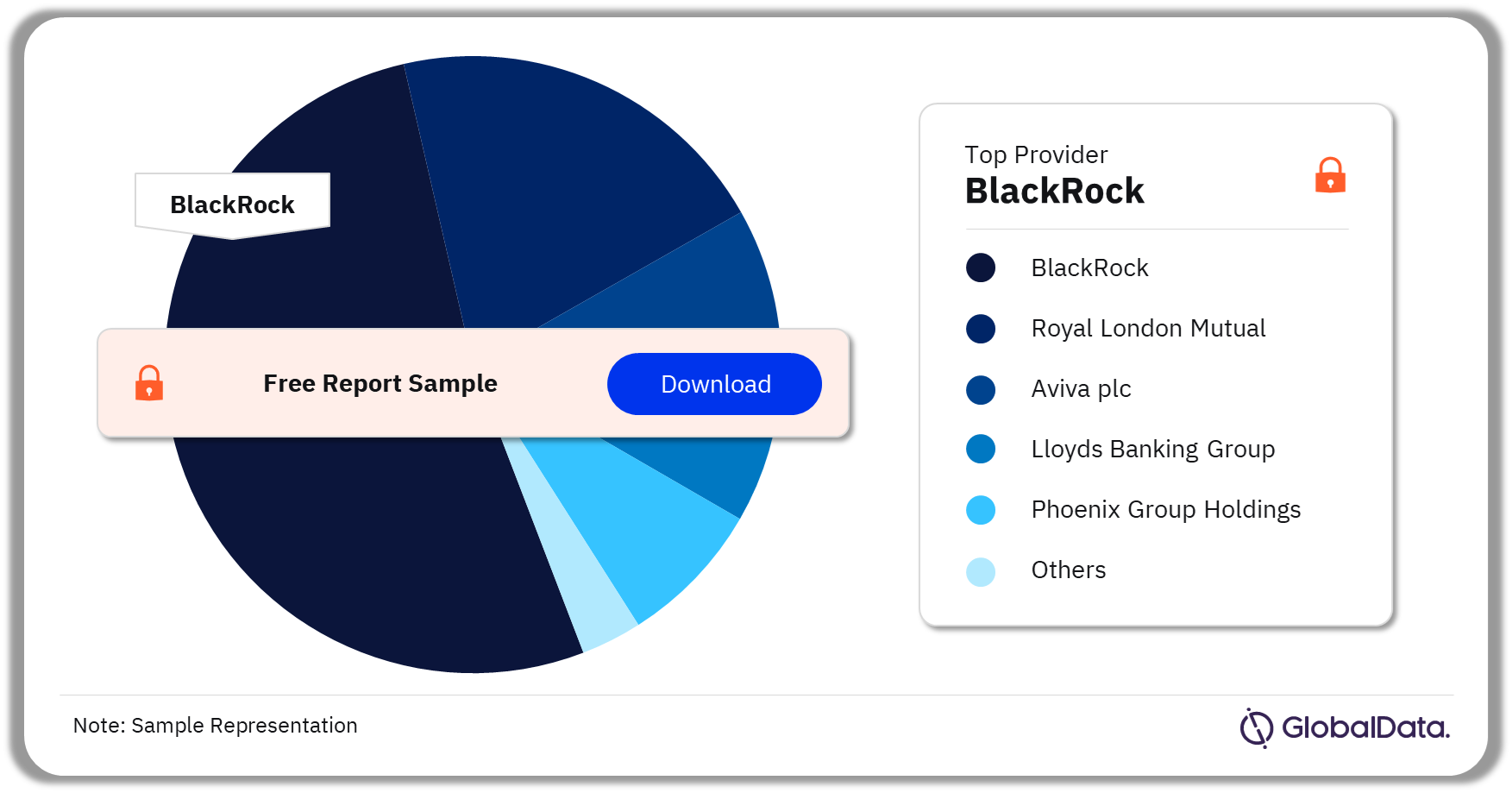
- BlackRock was the largest provider of individual and workplace pensions in 2021.
UK Pensions Market Outlook, 2022-2027 (GBP Billion)
Buy Full Report for More Insights into the UK Pensions Market Forecast
The United Kingdom (UK) Pensions market research report examines the changes in the pensions market. The report explores how consumers’ attitudes and behaviors towards long-term saving, planning for retirement, and accessing private pensions are changing. The report also provides current and historical data on the size of the market by product type covering individual pensions, workplace pensions, and trust-based pensions. Moreover, data on common retirement products and pension providers is also provided.
| Market Size (2022) | GBP15.4 Billion |
| CAGR (2022-2027) | >2% |
| Historical Period | 2018-2022 |
| Forecast Period | 2023-2027 |
| Pension Types | · Work-Based Pensions
· Trust-Based Pensions · Individual Pensions · Master Trusts |
| Leading Providers | · BlackRock
· Royal London Mutual · Aviva plc · Lloyds Banking Group |
| Enquire & Decide | Discover the perfect solution for your business needs. Enquire now and let us help you make an informed decision before making a purchase. |
UK Pensions Market Dynamics
Life expectancy has fallen in the UK because of the pandemic, changing the state pension landscape. This means the UK Government has delayed the plan for the state pension age (SPA) to increase to 68 by 2039. The high inflationary trend that has been present throughout 2022 and 2023 has influenced retirement trends, especially for people between the ages of 55 and 59. Notably, many individuals are concerned about their pension’s capacity to pay rising bills. Consequently, in reaction to the ongoing cost-of-living crisis, a trend towards later retirement is starting to emerge. This is further supported by an increase in the number of individuals who plan to retire after the state retirement age.
UK Pensions Market Segmentation by Types
In 2022, work-based pensions held the highest share of the pensions market.
The key pension types in the UK pensions market include work-based pensions, trust-based pensions, individual pensions, and master trusts. The main driver behind the comeback of the pensions market in 2022 after collapsing in 2020 due to the pandemic was the large expansion of work-based pensions. This increase is due to favorable legislative environments that support employer-based pension plans and growing acknowledgment of the significance of retirement planning. Workplace pensions have become more appealing and available due to employer contributions, employee payments, and potential government incentives under automatic enrolment (AE), which has increased participation. The minimum contribution amount required by the policy has helped increase pension savings.
UK Pensions Market Analysis by Types, 2022 (%)
Buy Full Report for More Type Insights into the UK Pensions Market
UK Pensions Market - Competitive Landscape
The leading UK pensions providers are:
- BlackRock
- Royal London Mutual
- Aviva plc
- Lloyds Banking Group
- Phoenix Group Holdings
- M&G Plc
- FIL Ltd
- Liverpool Victoria Financial Services
- Vitality Life Limited
- Wesleyan Assurance
UK Pensions Market Analysis by Providers, 2021 (%)
Buy Full Report for More Insights into the UK Pensions Market Providers
Segments Covered in the Report
UK Pensions Market Types Outlook (Value, GBP Billion, 2018-2027)
- Work-Based Pensions
- Trust-Based Pensions
- Individual Pensions
- Master Trusts
Scope of Report
• Single individuals (i.e., those not in a legally-recognized relationship) must supplement their state pension by over GBP14,000 per annum in order to achieve a moderate standard of living in retirement, given that the full state pension pays roughly GBP9,000.
• According to our 2023 UK Life and Pensions Survey, 61.9% of people contributed at least 6% of their salary towards their pension in 2023. 18.2% increased their pension contribution in 2023 despite the cost-of-living crisis.
• 56% of pension pots were completely withdrawn upon its first time accessed. 17.7% of over 55s decided to take money out of their pension plans. However, 62.8% of these people did not consult a financial expert, which may have led them to make financially reckless decisions.
Reasons to buy
- Examine the size of the pensions market
- Discover how individuals save toward retirement
- Learn how individuals access their private pensions for the first time
- Understand trends in the income drawdown and annuities segments
- Explore the gender gap in pensions
- Understand the impact of the cost-of-living crisis on the market, sentiment, and customer behavior
Key Stakeholders
Table of Contents
Tables
Table 1: Trust-based APE by product type (GBP million), 2018—22
Table 2: Individual APE by product type (GBP million), 2018—22
Table 3: New total premiums APE by advice type (GBP million), 2018—22
Table 4: Top 10 UK individual and workplace pension providers by GWP, 2021
Table 5: Top 10 UK trust-based pension providers by GWP, 2021
Table 6: Total minimum contribution rose to 8% of qualifying earnings in April 2019
Table 7: Example of average retirement income through annuities, January 2022 to November 2022
Graphs
Figure 1: The SPA is set to reach 68 between 2044 and 2046, under current legislation
Figure 2: The majority of individuals retire around the SPA
Figure 3: Under the new state pension scheme, the disparity between state pension pay is much less than pre-2016
Figure 4: Non-retired individuals are less confident that they will receive a full state pension
Figure 5: Both retirees and non-retired place the most importance on the state pension to fund their retirement
Figure 6: 34.9% of individuals stated that they desire a retirement income between GBP2,000 and GBP2,999 a month
Figure 7: Men desire higher retirement incomes than women
Figure 8: A minimum of GBP12,800 per annum is needed for a single individual to cover expenses in retirement
Figure 9: Women need greater pension pots than men due to having longer life expectancies
Figure 10: Non-retired individuals are less confident that their retirement income will cover living expenses
Figure 11: 35—39-year-olds are most concerned about their retirement incomes being sufficient
Figure 12: APE for work-based pensions solely contributed to the overall growth of the pensions market
Figure 13: 37.3% of self-employed individuals think their employment status will impact their retirement income
Figure 14: The majority of pensions distribution goes through the independent advice channel
Figure 15: The pensions market is predicted to continuously grow until 2027f
Figure 16: Younger place far greater emphasis on the importance of sustainable investing in their investment strategy
Figure 17: AS household income increases so does the intention to use the extra pension annual allowance
Figure 18: The proportion of employees with workplace pensions grows again in 2021
Figure 19: Younger consumers are more likely to have started a workplace pensions as a result of AE
Figure 20: Workplace pensions participation amongst 16-21-year-olds is low as a result of AE eligibility
Figure 21: 31.7% of individuals would never opt-out, emphasizing the desire to save for retirement
Figure 22: DC schemes continue to grow among non-retired, as employers continue to favor them
Figure 23: The total number of workplace pensions fall around SPA, as many consolidate their pensions
Figure 24: 61.9% of individuals contributing a minimum of 6% of their income towards their pension
Figure 25: The proportion of self-employed contributing nothing to their pension has fallen to 11.9% from 21.1%
Figure 26: Most employers match the contribution of their employees, whereas 15.6% go higher than the employees
Figure 27: Only 22.3% actively take part in the investment of their pension plan
Figure 28: Most individuals tend to know the size of their pension pot closer to retirement
Figure 29: 41.8% of individuals aged 65—69 have a pot of GBP10,000 – GBP30,000 compared to 21.8% of 60—64
Figure 30: There is a large disparity of pension pot size between men and women approaching the SPA
Figure 31: Over 55s have flexibility in terms of withdrawing pension income
Figure 32: The proportion of individuals using their pension fund for everyday expenses rose from 33.3% to 37.7%
Figure 33: Most individuals defer claiming a pension to work longer in order to gradually build up a larger fund
Figure 34: 56.0% of pension pots were completely withdrawn from upon its first time accessed
Figure 35: 85.2% of small pension pots (less than GBP10,000) are completely withdraw upon first access
Figure 36: New premiums for income drawdowns increase again in 2022
Figure 37: The value of taxable flexible payments from pensions significantly increased in Q2 2022
Figure 38: 88.9% of individuals state their lifestyle in retirement is better than or as expected in 2023
Figure 39: Roughly three quarters of retirees are confident their pension/savings are enough to last their entire life
Figure 40: Most retirees review their budget once a month








