
Empower your strategies with our Likelihood of Approval and Phase Transition Success Rate Model – Vismodegib in Refractory Multiple Myeloma report and make more profitable business decisions.
This report provides you with the data that allows you to track and predict the specific likelihood of approval (LOA) and phase transition success rate (PTSR) of a drug using GlobalData’s proprietary machine learning algorithms developed using over 10 years of historical data.
Vismodegib in Refractory Multiple Myeloma Drug Details:
Vismodegib (Erivedge) belongs to the class of anti-neoplastic agents. It is formulated as hard gelatin capsules for oral route of administration. Erivedge is indicated for the treatment of adults with metastatic basal cell carcinoma (basal cell epithelioma) or with locally advanced basal cell carcinoma that has recurred following surgery or who are not candidates for surgery, and who are not candidates for radiation and also for post-polycythemia vera myelofibrosis (PPV-MF), post-essential thrombocythemia myelofibrosis and idiopathic pulmonary fibrosis, for the treatment of adult patients with symptomatic metastatic basal cell carcinoma (BCC) or locally advanced BCC inappropriate for surgery or radiotherapy.The drug candidate is under development for the treatment of Gorlin syndrome (basal cell nevus syndrome), refractory multiple myeloma, recurrent or metastatic non-small cell lung cancer, meningioma. It was also under development for relapsed and refractory acute myelogenous leukemia (AML), hepatocellular carcinoma, metastatic colorectal cancer (first-line therapy) and ovarian cancer, and idiopathic pulmonary fibrosis, relapsed/refractory high-risk myelodysplastic syndrome (MDS), post-polycythemia vera myelofibrosis (PPV-MF), post-essential thrombocythemia myelofibrosis, refractory or relapsed B-cell lymphoma or chronic lymphocytic leukemia, epithelial ovarian cancer, peritoneal cancer and fallopian tube cancer, keratocystic odontogenic tumors, menangiomas and neoadjuvant triple-negative breast cancer.
Report Coverage
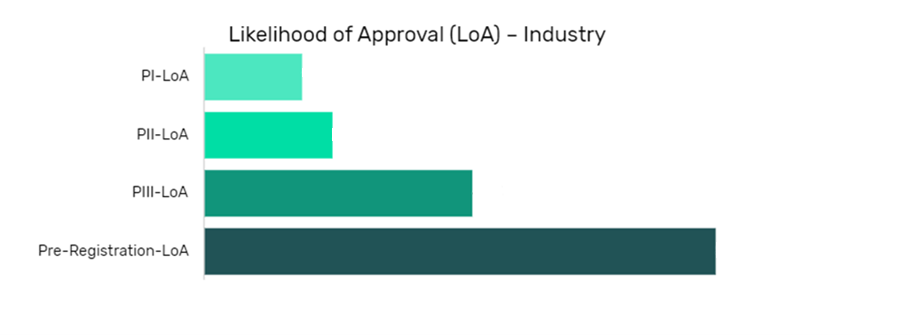
The data is segmented by drug name per indication and shows the current likelihood of approval for the drug compared to the indication benchmark and the industry benchmark.
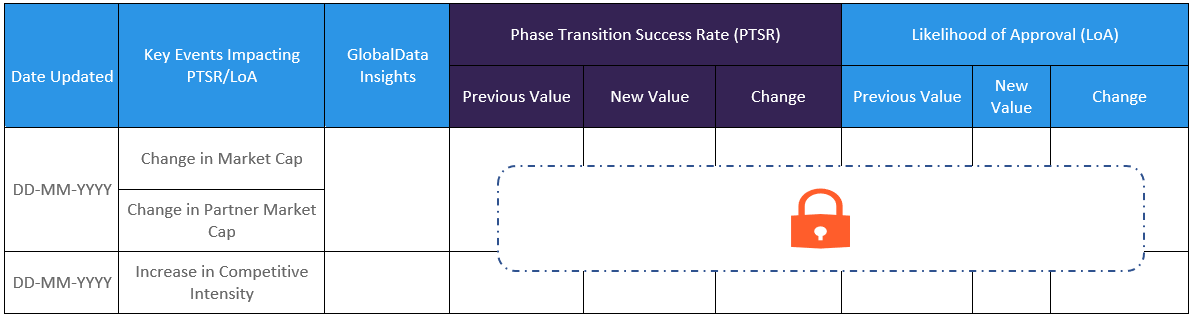
The Likelihood of Approval data is updated regularly based on events that take place which impact the clinical development process and regulatory considerations. GlobalData’s proprietary machine learning models consider these events in real time, to produce quantitative changes to the LOA and PTSR along with qualitative reasoning why the likelihood of approval has changed.
Scope of Report
- Drug Details: Drug name, Drug type, Intervention type
- Administration Pathway
- Therapeutic Areas
- Key Manufacturers
- Drug Development Status
Reasons to buy
- Precise Likelihood of Approval and Phase Transition Success Rates: Our machine learning and proprietary models provide accurate predictions, helping you gauge the potential success of a drug in the regulatory process.
- Competitive Strategy Planning: Access information on LOA and PTSR for competitors’ drugs, allowing you to plan your clinical development, commercialisation and marketing strategies
- Event-driven Updates: Track event-driven changes in LOA and PTSR benchmarked against indication LOA/PTSR. Get the latest insights to adapt your strategies promptly!
- Well-informed Investment Decisions: This data helps you navigate the dynamic landscape of drug development and regulatory considerations.







