

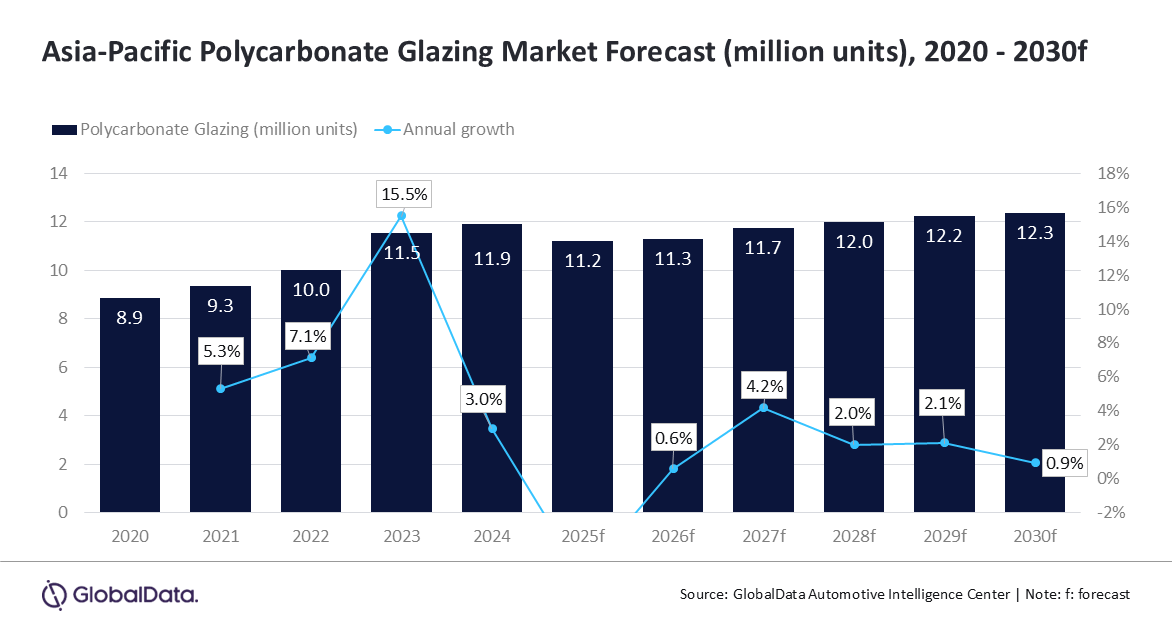
Polycarbonate glazing, being a lightweight and durable material, is revolutionizing vehicle design, enhancing safety, and improving fuel efficiency. As consumer preferences shift towards vehicles that combine aesthetic appeal with functionality, the demand for polycarbonate glazing is poised for stable growth in the APAC automotive market. Against this backdrop, the APAC automotive polycarbonate glazing market is forecast to record a compound annual growth rate (CAGR) of 2.0% over 2025-30, according to GlobalData, a leading data and analytics company.
GlobalData’s latest report, “Global Sector Overview & Forecast: Automotive Glazing Q2 2025,” reveals that the APAC automotive polycarbonate glazing market is poised to grow from an estimated volume of 11.2 million units in 2025 to 12.3 million units in 2030.
Madhuchhanda Palit, Automotive Analyst at GlobalData, comments: “A key factor propelling the growth of polycarbonate glazing in the APAC region is the rising consumer demand for enhanced aesthetic appearances in passenger vehicles. As automakers strive to meet these expectations, polycarbonate glazing offers a compelling solution. Its lightweight nature not only reduces the overall weight of vehicles but also enhances safety features. The material’s impact resistance minimizes the risk of shattering during accidents, aligning with the growing consumer awareness of safety standards. This dual advantage positions polycarbonate glazing as a vital component in the evolution of automotive design.”
The APAC region, characterized by rapid urbanization and a burgeoning middle class, presents a unique landscape for the automotive sector. Countries such as India and China are witnessing a surge in automotive production, driven by increasing disposable incomes and a growing appetite for personal vehicles. Consequently, the demand for innovative and cost-effective glazing solutions is expected to rise in tandem with this growth.
Furthermore, the shift towards electric vehicles (EVs) in the region underscores the importance of lightweight materials, such as polycarbonate glazing. As manufacturers focus on reducing vehicle weight to enhance battery efficiency, polycarbonate glazing emerges as a strategic solution. Collaboration between automotive original equipment manufacturers (OEMs) and polycarbonate producers will be crucial in developing customized solutions that cater to the specific needs of the APAC market.
Palit concludes: “As manufacturers adapt to evolving consumer preferences and stringent emission regulations, the integration of polycarbonate glazing will play a pivotal role in enhancing vehicle performance and safety. While challenges such as cost and environmental concerns persist, the opportunities for innovation and collaboration are considerable.”
