

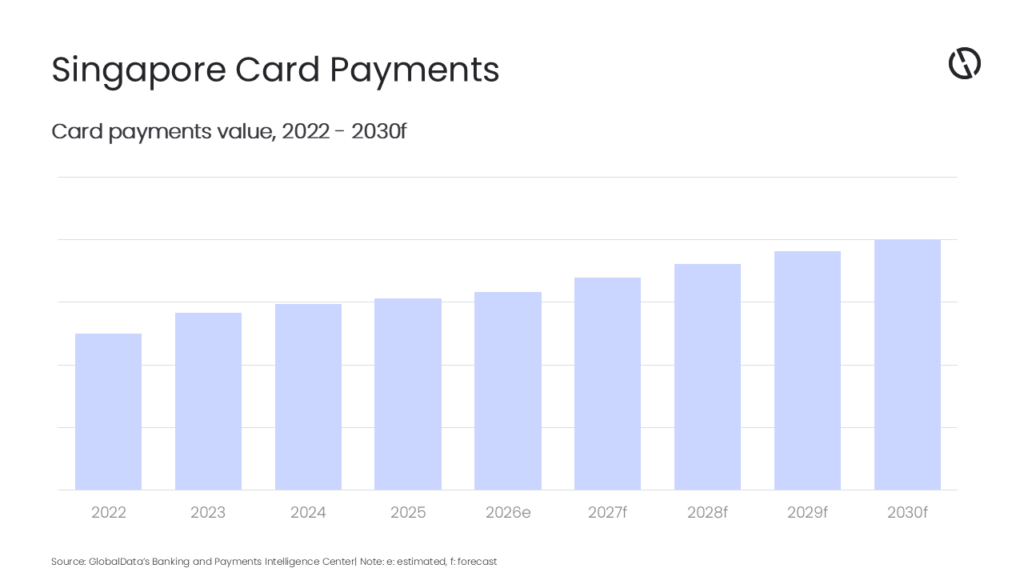
Singapore’s card payments market has witnessed strong growth over the past five years, supported by near-universal banking access, extensive card acceptance infrastructure, and the widespread adoption of electronic payment methods, according to GlobalData, a leading intelligence and productivity platform.
GlobalData’s Payment Cards Analytics reveals that cards are widely used for e-commerce and in-store purchases, underpinned by high consumer awareness, robust payments infrastructure, and broad merchant acceptance. The convenience of electronic transactions and consumers’ growing preference for contactless payments continue to support card usage.
Kartik Challa, Senior Banking and Payments Analyst at GlobalData, comments: “Government and industry initiatives, together with high consumer awareness, continue to shift everyday transactions away from cash toward cards. Contactless card payments are gaining further traction as merchants and hawkers expand digital acceptance. The growth of e-commerce and digital banking is also supporting the demand for convenient payment solutions.”
Singapore’s contactless payment market is expanding rapidly, supported by the country’s well-established cashless infrastructure and a digitally capable consumer base. As contactless transactions continue to increase, these payment methods are becoming a standard feature of everyday commerce.
Complementing the trend, Apple Pay rolled out Tap to Pay on iPhone in Singapore in December 2025. The service enables merchants to accept contactless payments directly through an iPhone, without requiring additional payment hardware. Businesses can process transactions made through Apple Pay, as well as via contactless debit and credit cards issued by major payment networks, including Mastercard, American Express, JCB, UnionPay, and Visa.
Challa adds: “Although credit and charge cards have a lower penetration rate than debit cards, they account for the largest share of card payment value in Singapore. Banks’ promotional campaigns have increased consumer awareness of card benefits, including cashback, merchant discounts, and rewards programs.”
Payment providers are also expanding their product offerings. In May 2025, DCS Card Centre partnered with Visa to launch DeCard, a microcredit card that allows users to top up their balances in Singapore dollars or digital assets, including Tether (USDT) and USD Coin (USDC), through MAS-licensed digital payment token service providers.
Meanwhile, Singapore’s instalment payment market is growing alongside credit card use. In November 2025, Trust Bank introduced an installment payment solution that enables credit cardholders to spread purchases over three, six, nine, or 12 months without interest at participating merchants.
Debit card adoption and usage continue to rise, supported by widespread ownership of savings and current accounts, a well-established card infrastructure, and broad access to banking services. Banks typically link debit cards directly to deposit accounts, while basic banking products provide consumers with affordable access to accounts, cards, and digital banking services. Digital-only banks, including Trust Bank, GXS Bank, and MariBank, are further expanding the market through mobile-first accounts, physical and virtual debit cards, rewards programs, and real-time transaction features.
Challa concludes: “Total card payments in Singapore are forecast to rise further over the next five years, driven by expanding merchant acceptance and continued improvements in digital payments infrastructure. Greater banking access and product innovation will further broaden card usage.”
