

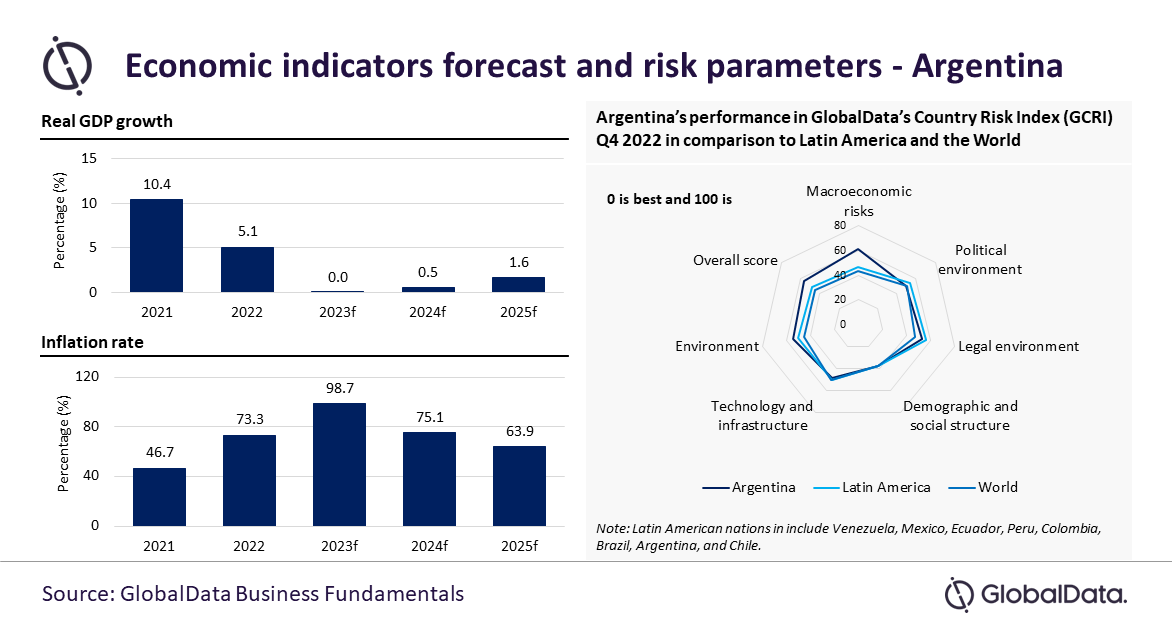
Argentina is facing the challenge of rising inflation and high interest rates, which are likely to decrease household disposable incomes and hinder private consumption. Moreover, the country’s economic activity may be limited due to high debt levels, strict import regulations, and low foreign reserves, as the Argentine peso is expected to depreciate significantly. As a result, the growth of Argentina’s real GDP in 2023 will remain stagnant, as compared to the robust 5.1% growth achieved in 2022, forecasts GlobalData, a leading data and analytics company.
GlobalData’s latest report, “Macroeconomic Outlook Report: Argentina,” reveals that the country’s economic growth slowed, and financial reserves eroded due to the continuous depreciation of the domestic currency in 2022. The Argentinean peso depreciated by 37.6% in 2022 and is forecast to depreciate at a faster pace of 76.4% in 2023.
Sadaf Ambari, Economic Research Analyst at GlobalData, comments: “Lower government spending due to accumulated debt burden, persistent inflation, low agricultural yield because of drought, poverty and financial instability chewed the economic boon generated from Football World Cup 2022 win and is expected to decelerate economic activity through lower investment and domestic demand. The household consumption expenditure growth is expected to slow down from 8.9% in 2022 to 1.2% in 2023.”
Mining, manufacturing, and utilities sector contributed 24.1% to the gross value added (GVA) in 2022, followed by the wholesale, retail, and hotel sector (21.4%), and financial intermediation, real estate, and business activities (14.2%).
GlobalData forecasts the three sectors to grow by 40.0%, 41.6% and 37.2%, respectively in nominal terms, in 2023. Due to high inflation, these sectors in value terms are projected to record high growth rate, which is however slower compared to the previous year.
Ambari adds: “Argentina’s inflation rate rose sharply from 46.7% in 2021 to 73.3% in 2022, largely due to the government’s printing of money to finance public spending and other ongoing crises. The inflation rate increased every month throughout 2022, peaking at a high of 98.8% in January 2023. Looking ahead, GlobalData forecasts the inflation rate to continue to rise, reaching 98.7% in 2023 before easing slightly to 75.1% in 2024.”
To tackle the inflation rate, Argentina introduced price limits for some foodstuffs and raised the minimum wage as soaring inflation is continuously deteriorating domestic purchasing power through eating away wages and social aids. The key policy rate has also been hiked by the Central Bank seven times during January 2022-February 2023 to control the money supply in the economy that will add more pressure on the investor’s lending activity.
Argentina is categorized as a high-risk nation and ranks 114th out of the 153 nations in GlobalData Country Risk Index (GCRI Q4 2022). The country’s risk score is higher in the parameters of macroeconomic risks; demographic, and social structure; and environmental risk when compared to the average of Latin America nations.
Ambari concludes: “The banking sector of the country may witness challenges due to high inflation and lending activity might slowdown since the country’s interest rate was recorded at 75% in February 2023. In addition, high government debt payments with depreciation of national currency may reduce the country’s revenue, which could have been used to support public policy and programs.”
