

The pharmaceutical industry is preparing for major disruptions following Trump’s tariff announcement—25% on imports from Canada and Mexico (both paused for 30 days) and 10% on China. These tariffs could worsen drug shortages, raise prices, and push manufacturers to reconsider their market strategies. Additionally, the proposed tariffs are expected to impact pharmaceutical foreign direct investment (FDI) by the US in those countries, including Europe, according to GlobalData, a leading data and analytics company.
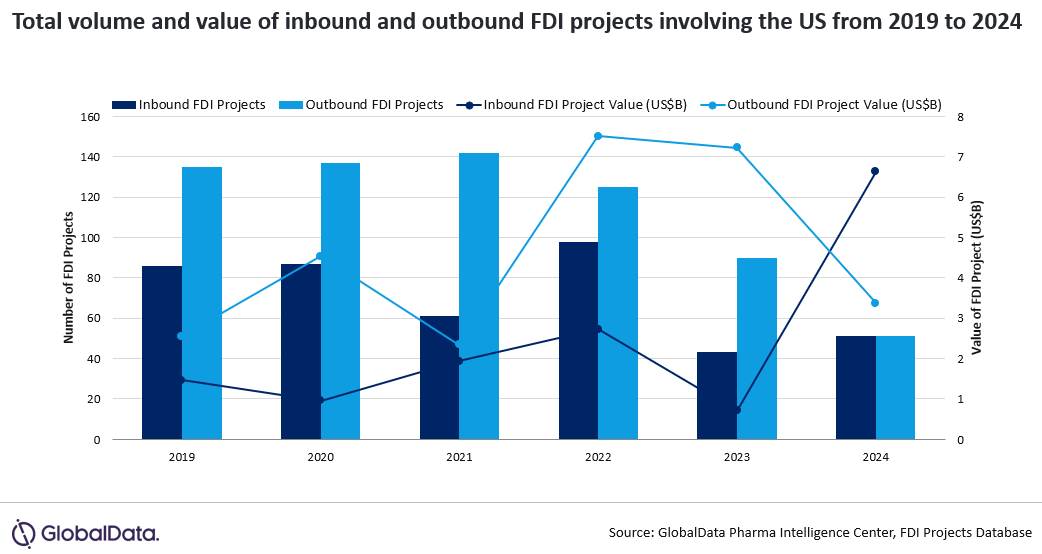
According to GlobalData’s FDI Database, US outbound pharmaceutical FDI fell by 53% ($3.4 billion) in 2024, while inbound FDI surged 837% ($6.6 billion), signaling reduced US biopharma companies’ investment in key manufacturing and clinical trial regions. Inbound FDI from Europe to the US surged by 787% to $5.4 billion (2023 to 2024), while US outbound FDI to Canada fell from $1.1 billion to zero.
Ophelia Chan, Senior Business Fundamentals Analyst at GlobalData, comments: “The tariffs could drive up drug prices for US patients, exacerbate drug supply shortages, and push manufacturers to seek alternative markets. With a fragile global supply chain, high costs, and China’s key role in the global supply network, the US healthcare system faces added strain. Additionally, generic and biosimilar drug manufacturers, which often operate on slim profit margins, may struggle with the additional costs. This also raises investor concerns over the broader impact on the industry and pharmaceutical supply chains.”
Despite trade tensions, the Trump administration seeks to encourage domestic investment by establishing manufacturing facilities within the US. However, tariffs on major trading partners like Canada, Mexico, and China could reduce the cost advantages of outsourcing, prompting US companies to reconsider their global strategies.
Chan continues: “Amid trade uncertainty, investors may delay new investments until policies are clearer and observe how other countries respond to Trump’s tariffs before making further decisions. While similar EU tariffs are possible, Trump has also suggested that a trade agreement with the UK could be in the works, though the UK risks being drawn into a broader trade conflict.”
Chan concludes: “The proposed tariffs could significantly impact the pharmaceutical industry, driving inflation, exacerbating drug shortages, and limiting patient access to treatments. Biopharmaceutical companies may respond by relocating manufacturing and trials to the US or other tariff-free countries, though the full effects are still uncertain.”
