

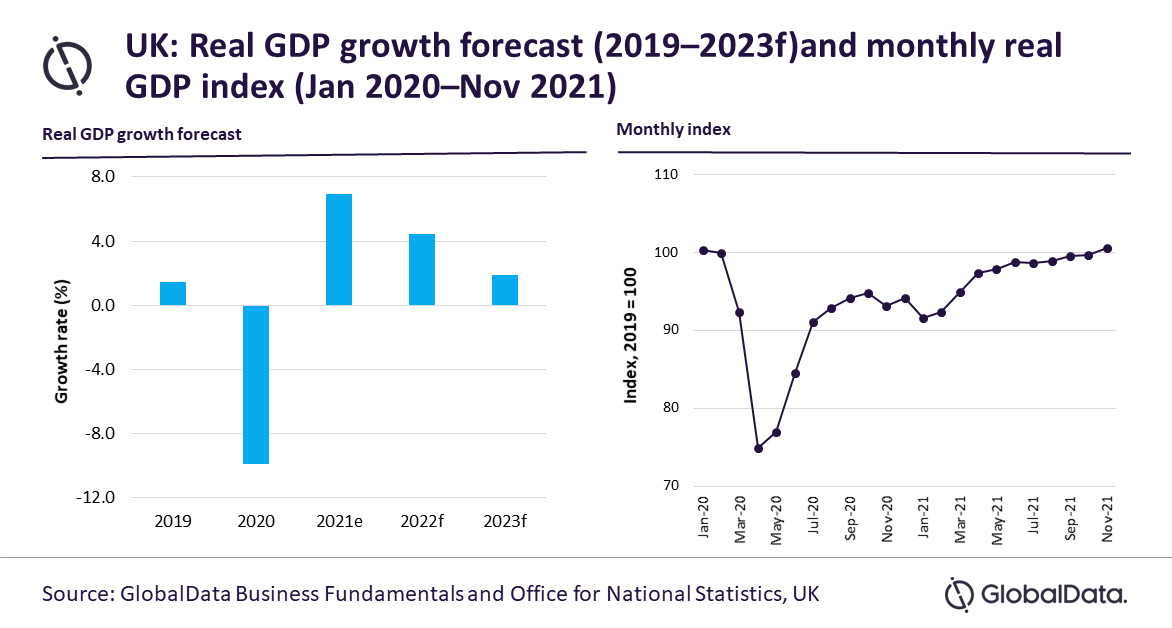
With receding cases of highly transmissible Omicron variant across the UK, rapid booster vaccination program along with easing of restrictions to aid economic recovery of the UK. GlobalData forecasts the UK economy to grow by 4.5% in 2022 following an estimated 6.9% growth recorded in 2021.
Plan B introduced in December 2021 which required compulsory face covering on all indoor public places; vaccine status or negative test result when entering nightclubs or any large-scale events, among others will be scrapped fully from Jan 26 in England. Wales and Scotland also eased most restrictions. In November 2021, the UK economy grew by 0.9% (M-o-M), surpassing its pre-pandemic level GDP for the first time. Meanwhile, inflation rate rose to a hit a 30 year high of 5.4% in December 2021 amid spike in prices of clothes, food and footwear along with staff shortages which pushed up wages.
Gargi Rao, Economic Research Analyst at GlobalData, comments: “With all restrictions coming to an end, business activity, hiring and travel and tourism industry to witness growth in coming months. However, consumer demand might slow down due to a spike in the cost of living. Supply constraints may continue to hurt business sentiments in the short-run amid rise in inflation rates.”
According to GlobalData, the PMI stood at 57.9 in December 2021, marginally down from November’s three-month high of 58.1. The manufacturing PMI remained above the 50-mark level since January 2021 indicating expansion in manufacturing and business activity. Increased intakes of new work, efforts to reduce backlogs of work and higher employment aided manufacturing growth in December. However, profitability of firms remained subdued due to supply chain constraints and weak export performance in year end of 2021.
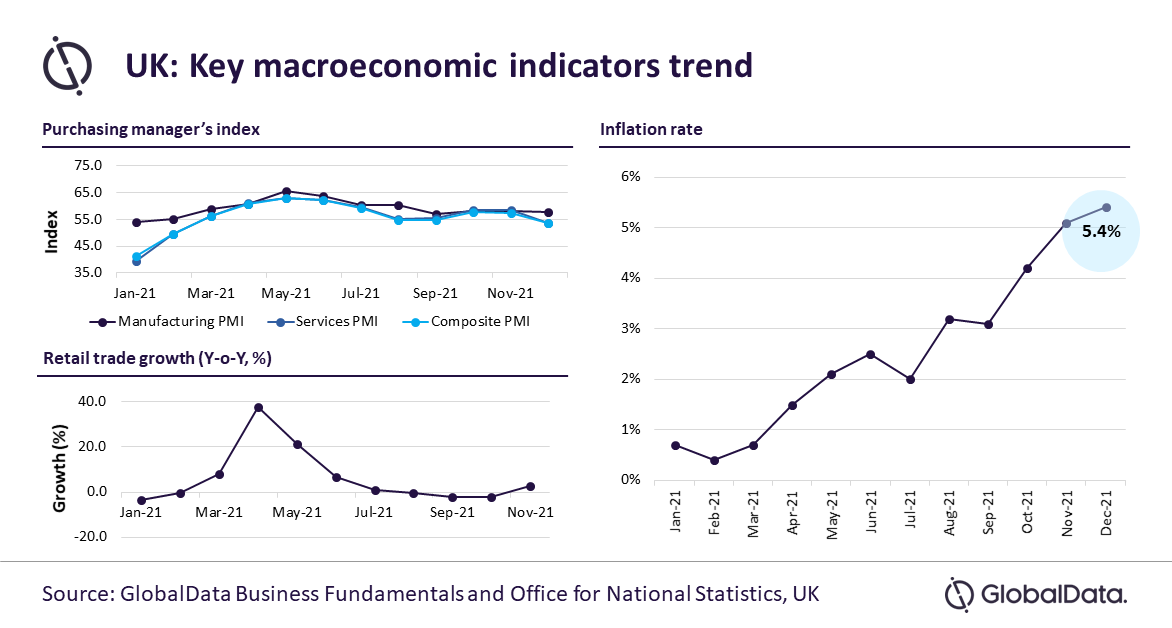
The retail trade growth rose from -2% in October 2021 to 2.7% in November 2021 due to spike in retail sales in festive season. Despite the recent Omicron outbreak, people chose to shop online which boosted overall retail sales throughout December. According to Office for National Statistics, the non-food stores saw monthly sales volumes rise by 2.0% in November 2021 and were 6.7% higher when compared with pre-pandemic period of February 2020.
The overall job market gained traction. During September-November 2021, unemployment rate decreased by 0.4 percentage point compared to previous three-month period (June to August 2021) to reach 4.1%. The number of job vacancies in October to December 2021 rose to a new record of 1.2 million, compared to pre-pandemic level, with most industries displaying record numbers of vacancies.
However, households and firms are being hit by high inflationary pressures stemming out of disruptions to global supply chains and rise in cost of raw materials. To keep inflation in check, the Bank of England hiked its key policy rates to 0.25% from 0.1% in December 2021.
Rao concludes: “The country appears to have passed the peak of Omicron variant where weekly nationwide infections have dropped by almost one million. It is expected that higher inflation rates may not derail the economic recovery which remains supported by pent-up demand, strong wage growth, and a large pool of household
savings. Many business activities started to pick up since December end. Furthermore, ahead of summer 2022, tourism industry likely to witness growth. As long as the Bank of England hikes the policy rate in a limited range to tame inflation, UK’s economy will likely be on a steady growth path.”
