

UK-based PerfectTed has expanded its matcha sourcing network to China and South Korea, as exponentially increasing demand has over-stretched Japan’s production capabilities. This supply-chain expansion, a result of the booming demand for matcha-based drinks, highlights the growing western appetite for traditional Asian products, which are now becoming superfood trends in the rest of the world, says GlobalData Plc, a leading intelligence and productivity platform.
Eve Forshaw, Consumer Analyst at GlobalData, explains: “Western adoption of Asian “superfoods” is a rapidly growing trend, as traditional ingredients including matcha, fermented foods, and various spices, that target immunity, digestion, and holistic wellness align with the growing trends of healthy and functional eating.”
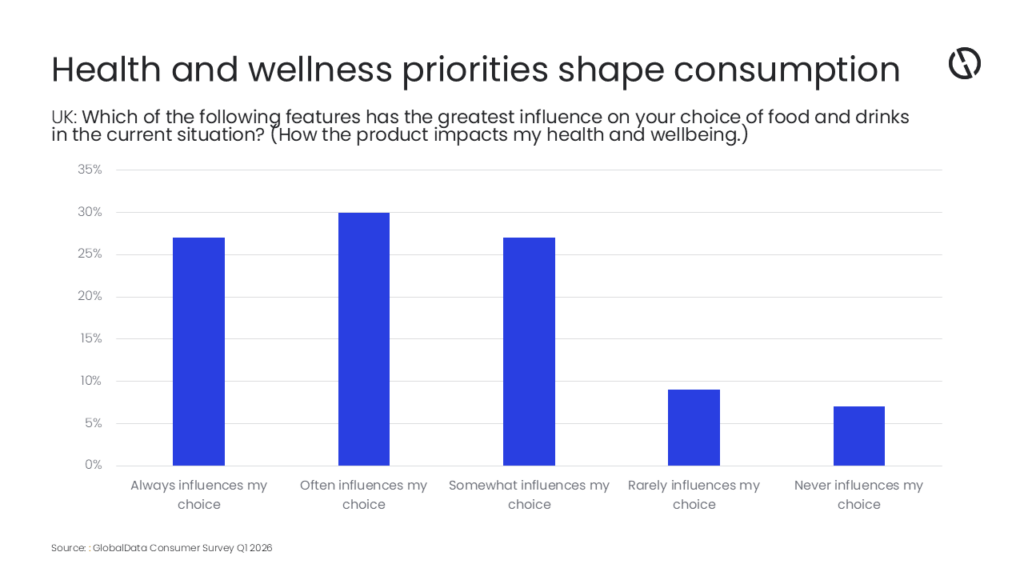
Health and wellness priorities shape consumption
GlobalData’s Q1 2026 survey* found that for 57% of UK respondents, the effect that a product has on their health and wellbeing always or often influences their food and drinks choices. According to GlobalData’s Q1 2025 survey*, UK consumers are most prominently trying to improve gut health (33%), mind health (30%), and energy levels (36%).
UK crowded for ginger, turmeric and matcha
For some ingredients, the UK market is now crowded. GlobalData’s Q1 2025 survey found that 68% and 69% of UK consumers believe turmeric and ginger, respectively, to have positive health effects, signaling a mature market where many brands are competing for the same wellness cues.
Moju’s ginger and turmeric shots highlight the success of convenient formats which have helped popularize these ingredients, but shelves have also witnessed a wave of similar launches, making it harder for new entrants to stand out without a clear point of difference beyond “functional.”
Matcha is following a similar trajectory. GlobalData’s Q1 2025 survey shows that 64% of UK consumers believe matcha offers positive health benefits and only 8% are not familiar with the ingredient, positioning it as a mainstream offering. In parallel, brands continue to release matcha-based products across multiple formats, from lattes and RTDs to snacks and desserts, creating a highly competitive and “noisy” landscape.
What should brands do next?
Despite the popularity of some Asian ingredients in the Western health and wellness market, there are many ingredients which are yet to be explored in mainstream channels. GlobalData’s Q1 2025 consumer survey found that in the UK, over half of consumers are not familiar with certain Asian ingredients, including butterfly pea flower (54%), yuzu (58%), moringa (60%), and rambutan (62%), which offer antioxidant, anti-inflammatory, and digestive benefits. Brands that incorporate these relatively unexplored ingredients into food and drink offerings and invest in effective marketing to educate consumers on products’ benefits, will be well positioned to make strong gains in the health and wellness space.
Forshaw concludes: “Ingredients including matcha, ginger, and turmeric have gained popularity in the West due to their associations with holistic wellbeing. Yet with these ingredients becoming mainstream in the health and wellness market, brands will need to look beyond the current leaders to sustain growth. With low consumer familiarity for ingredients like yuzu, butterfly pea flower, moringa, and rambutan, the next wave of opportunity lies in introducing lesser-known Asian superfoods—backed by clear health positioning and consumer education—to meet rising demand for naturally functional foods and drinks.”
*GlobalData Q1 2025 and Q1 2026 global consumer surveys, 21,000 respondents across 42 countries.
