

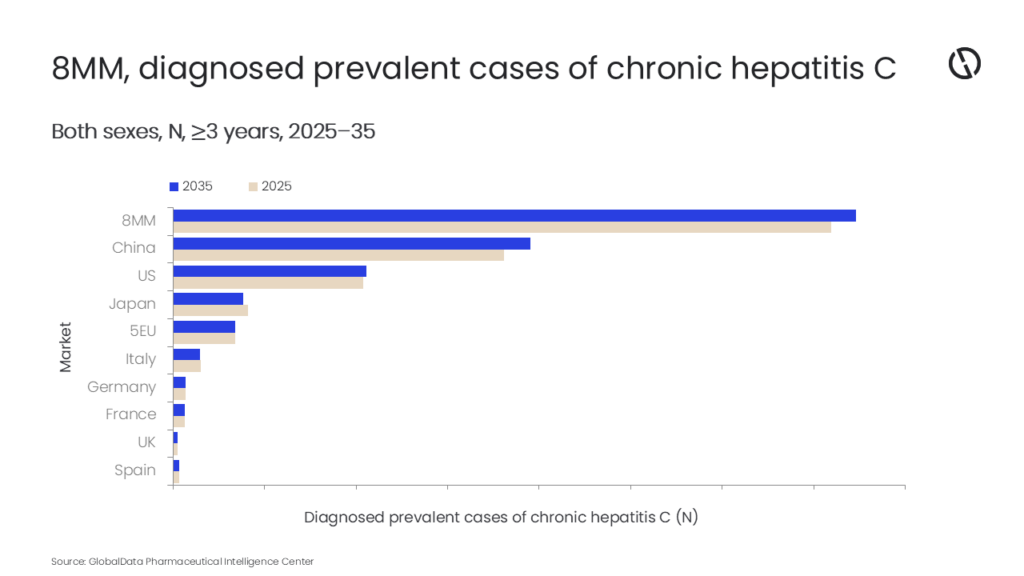
The burden of diagnosed prevalent cases of chronic hepatitis C in the 8MM* is expected to increase at an annual growth rate (AGR) of 0.40 from 7.19 million in 2025 to 7.46 million cases in 2035, forecasts GlobalData, a leading intelligence and productivity platform.
GlobalData’s latest report, “Hepatitis C Virus: Epidemiology Forecast to 2035,” estimates that China will have the highest number of diagnosed prevalent cases of chronic hepatitis C across the 8MM with just over 3.9 million cases in 2035. The US, Japan and 5EU** are estimated to have approximately 2.11 million, 767,000, and 679,000 diagnosed prevalent cases of chronic hepatitis C in 2035, respectively.
Hepatitis C infection begins with acute infection, which refers to infections lasting for six months after infection, with the remaining 70% of infections lasting over six months developing into chronic hepatitis C. According to GlobalData epidemiologists, both Japan and Italy were observed to have some of the lowest incidence rates of acute hepatitis C but had some of the highest rates of chronic hepatitis C.
Alia Rafiq, Senior Epidemiologist at GlobalData, comments: “The discrepancy between low incidence rates of acute hepatitis C and high prevalence rates of chronic hepatitis C in Japan and Italy may be explained by both markets having large aging populations, which have had higher exposure to hepatitis C–related risk factors compared to new generations.
“For example, blood donor recipients were at a greater risk of post-transfusion hepatitis, but due to the introduction of screening for all donors for hepatitis C, the risk of post-transfusion hepatitis decreased. Over the recent years both markets have prioritized surveillance and treatment of hepatitis C in recent years, which may have helped decrease the spread of hepatitis C, further reducing its incidence.”
GlobalData epidemiologists also observed that, though genotype proportions varied across the markets, genotype 1 made up the majority of diagnosed prevalent cases of chronic hepatitis C, with the highest proportions of genotype 1 being observed in the US.
Rafiq concludes: “Genotype 1 is a common genotype worldwide, as it was spread rapidly via contaminated blood transfusions and unsafe drug practices. It has also been cited to be the most common genotype in people who inject drugs (PWID), who are a major at-risk group of hepatitis C. PWID make up a high burden of individuals with hepatitis C in the US, which may explain the its high prevalence of genotype 1.”
*8MM: The US, France, Germany, Italy, Spain, the UK, Japan, and China.
**5EU: France, Germany, Italy, Spain, the UK.
