

Diagnosed cases of age-related macular degeneration (AMD) are accelerating across the seven major markets (7MM*), with Italy emerging as the fastest-growing hotspot as prevalence is set to rise more than 44% by 2034. This sharp uptick underscores how aging demographics, lifestyle risks, and chronic comorbidities are converging to intensify long-term pressure on ophthalmology care pathways and health system planning%, according to latest analysis from GlobalData, a leading intelligence and productivity platform.
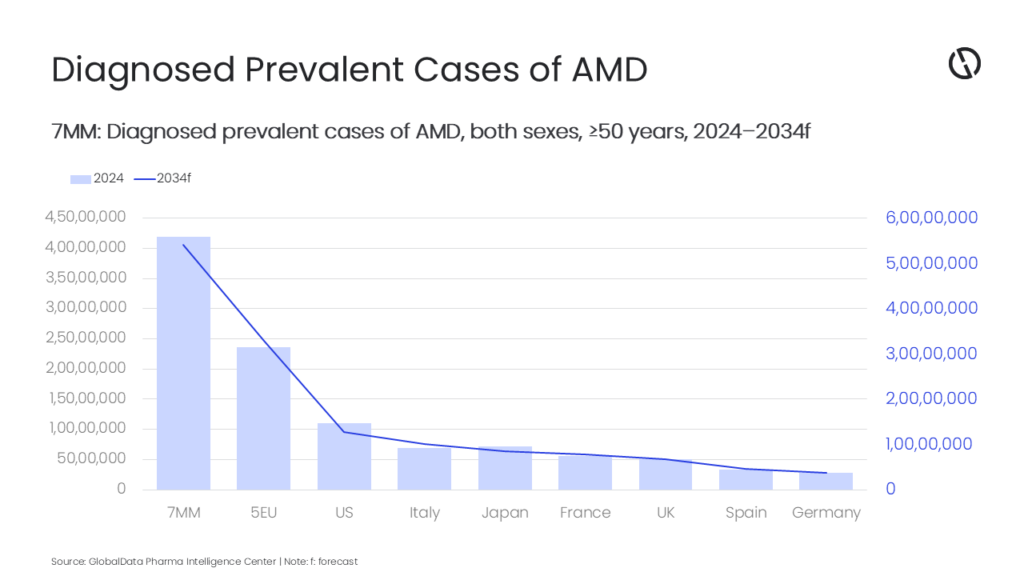
GlobalData’s report, “Age-Related Macular Degeneration Epidemiology Analysis and Forecast to 2034,” reveals that the combined diagnosed prevalent cases of AMD across 7MM is projected to reach 54.13 million cases by 2034, up from 41.93 million in 2024. This growth represents a steady annual growth rate (AGR) of 2.91.
Italy is forecast to expand at an AGR of 4.41% (2024-2034). Other leading markets include Spain, with an anticipated growth of 3.95%, and France at 3.93%.
Suneedh Manthri, Project Manager, Epidemiology at GlobalData, comments: “Italy’s sharp rise in AMD diagnoses is driven by a convergence of demographic reality and lifestyle choices. Aging populations provide the baseline risk, while smoking remains the most impactful modifiable factor, drastically accelerating disease onset. Comorbidities like diabetes are increasingly implicated in vascular damage leading to AMD, alongside strong genetic links and a noted correlation with previous cataract procedures.”
Patients diagnosed with AMD frequently exhibit multimorbidity, living with numerous co-occurring ocular and systemic health conditions that complicate clinical management and significantly impact their overall quality of life.
Manthri concludes: “As patients increasingly present with multimorbidity, effective AMD management will depend on earlier diagnosis, integrated care models, and sustained investment in therapies that can slow progression while preserving quality of life in aging populations.”
*7MM: The US, 5EU (France, Germany, Italy, Spain, the UK), and Japan.
