

The diagnosed prevalent cases of primary myelofibrosis (PMF) in China are expected to increase by 34.8% between 2021 and 2031, according to GlobalData, a leading data and analytics company.
GlobalData’s latest report, ‘Myelofibrosis Epidemiology Analysis and Forecast, 2021-2031’, notes that the major drivers for the spike in the diagnosed prevalent cases of PMF in China are age, sex, another blood cell disorder, and mutations. Most often diagnosed in people older than ages 50 years, this disease is more prevalent in males, a small portion of people with myelofibrosis develop the condition as a complication of essential thrombocythemia or polycythemia vera, and several specific gene mutations (JAK2V617F and CALR/ASXL1) have been identified in people with myelofibrosis.
Suneedh Manthri, Project Manager of Epidemiology at GlobalData, comments: “PMF is a serious bone marrow disorder that disrupts the body’s normal production of blood cells. PMF not only shortens survival but also severely compromises quality of life due to marked splenomegaly. The causes of PMF are largely unknown.”
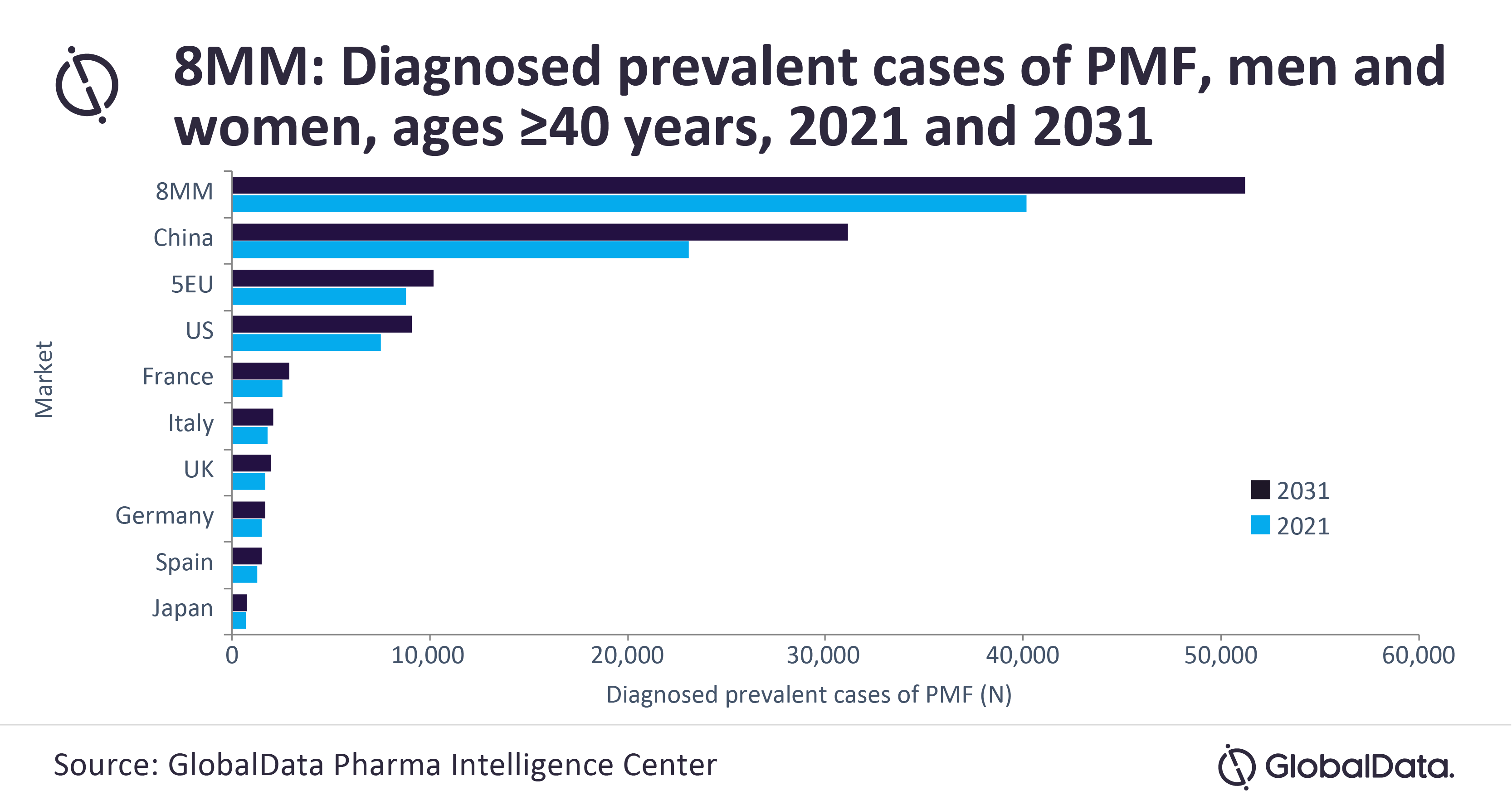
GlobalData epidemiologists forecast that the diagnosed prevalent cases of PMF in the eight major markets (8MM*) combined are expected to increase from 0.04 million in 2021 to 0.05 million in 2031.
Of the 8MM, the growth rate of China will be followed by Spain (20.4%), and the US (20.0%).
Manthri concludes: “PMF has a poor prognosis, with a median survival of 4.6–6.5 years. In addition to accurately diagnosing and treating PMF, understanding the risk factors and comorbidities of the disease can help to improve the quality of life of a person with the disease.”
*8MM: The US, 5EU (France, Germany, Italy, Spain, the UK), Japan, and China
