

The peanut allergy segment is expected to be the most valuable within the food allergy market due to sales of Aimmune Therapeutics’ Palforzia, which was approved in January 2020, and DBV Technologies’ pipeline desensitization patch, Viaskin Peanut, says GlobalData. According to the leading data and analytics company, Viaskin Peanut is expected to be the most profitable drug for food allergies with sales of $1.5 billion by 2030.
According to GlobalData’s report, ‘Food Allergy Market Size and Trend Report including Marketed and Pipeline Drug Analysis, Competitor Assessment, Unmet Needs, Clinical Trial Strategies and Forecast, 2020-2030’, the food allergy market was valued at $213.9 million in 2020 globally and is forecast to reach $2.7 billion by 2030, growing at an impressive compound annual growth rate (CAGR) of 28.8%.
A food allergy is defined as an adverse immunologic response to food. While any food can cause an adverse reaction, eight types of food allergens including eggs, milk, peanuts, tree nuts, fish, shellfish, wheat, and soybeans account for around 90% of all allergic reactions. Food-induced allergic disorders are broadly classified into immunoglobulin E (IgE)-mediated, cell-mediated (non-IgE-mediated), or both IgE- and cell-mediated mechanisms (mixed IgE- and non-IgE-mediated). IgE-mediated allergic responses are the most common type of food allergy, with a rapid onset of symptoms after ingestion.
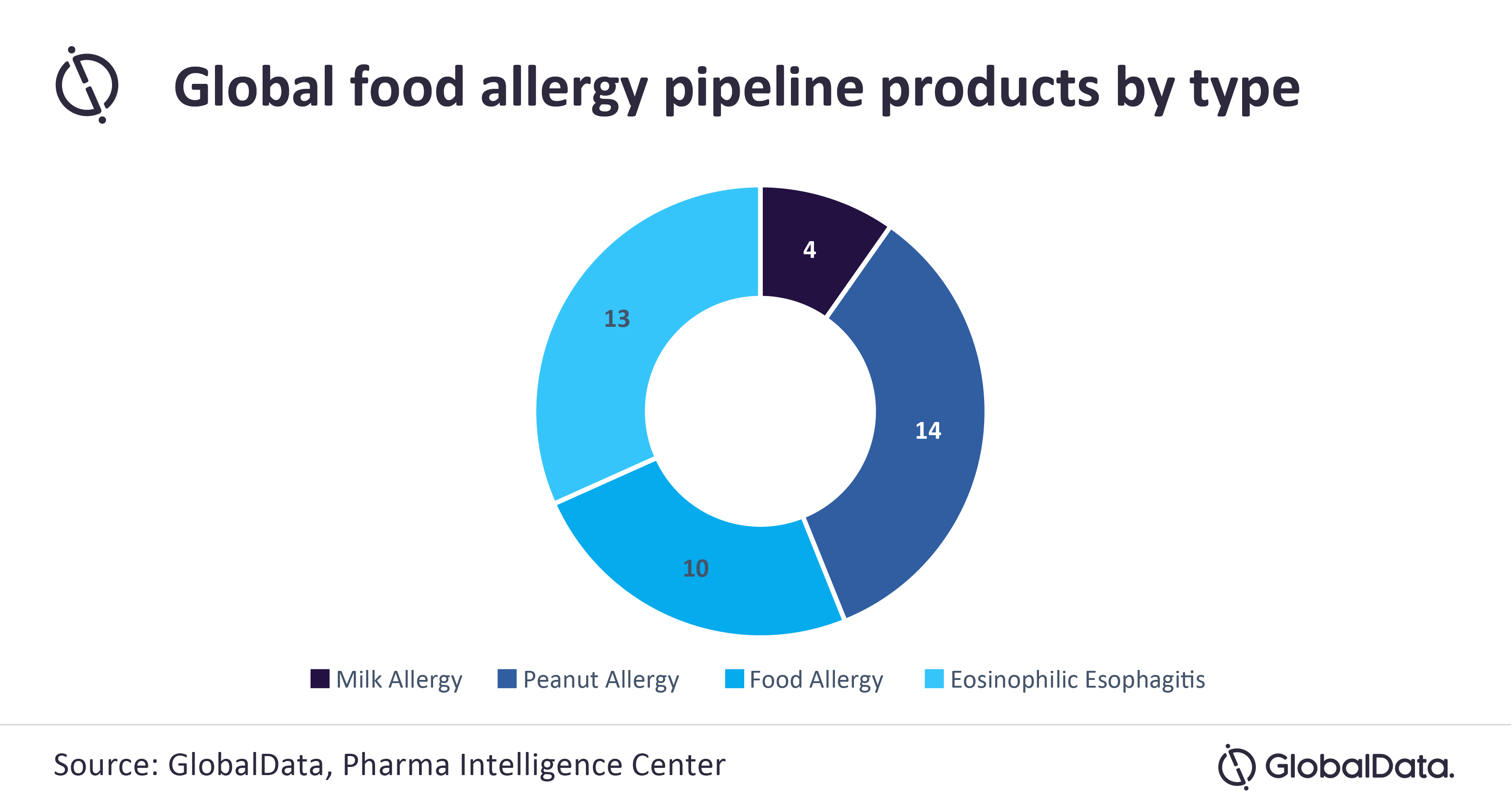
Peanut allergy is the most investigated allergen, with 14 drugs being investigated across stages of development compared to 13 for eosinophilic esophagitis, 10 for food allergy and four for milk allergy.
Mandana Emamzadeh, PhD, Healthcare Analyst at GlobalData, comments: “The food allergy market lacks a curative agent, with the only available treatments being antihistamines or epinephrine usage for accidental exposure. Historically, the food allergy market has seen a lack of research and development (R&D). The market was focused on providing symptomatic relief, resulting in the use of off-label drugs such as antihistamines and epinephrine.
“Additionally, oral immunotherapy (OIT) is the most commonly used treatment to raise the threshold dose for a food allergen and protect allergy patients against accidental ingestion of the allergen. OIT protocols will be typically conducted in an allergist’s office, where patients receive an increasing amount of an allergen for months. OIT is not a curative therapy and is not expected to result in the unlimited ingestion of the allergen. Therefore, patients will continue to carry epinephrine.”
Among the drugs in development are first-in-class agents introducing novel mechanisms of action to food allergy, including IgE inhibitors, desensitization immunotherapy (allergen), interleukin inhibitors, anti-inflammatory agents, a Bruton tyrosine kinase (BTK) inhibitor, sphingosine 1-phosphate receptor agonist, lanthionine synthetase component c-like protein 2 (LANCL2) agonist, mast cell stabilizer, and a glucocorticoid receptor agonist.
Emamzadeh concludes: “The greatest unmet needs within the food allergy market are more treatment options, better medications with less side effects, lack of data, limited access, and better education. Despite having 31 pipeline agents, significant unmet needs are expected to remain, representing an opportunity for developers in the food allergy market.”
