

Proposed cuts to the US childhood immunization schedule and weakening state-level vaccine mandates threaten to erode domestic vaccine demand, placing pressure on the country’s manufacturing base. As the industry already adjusts to the post-COVID-19 normalization of vaccine demand, declining vaccination rates and policy shifts risk undermining production volumes, sales prospects, and long-term investment incentives for US vaccine manufacturers, says GlobalData, a leading intelligence and productivity platform.
Katia Djebbar, Pharma Analyst at GlobalData, comments: “With the recently announced bill and ongoing MAHA campaigns, we can only expect vaccination rates, and with it, vaccine production demand, to continue to fall.”
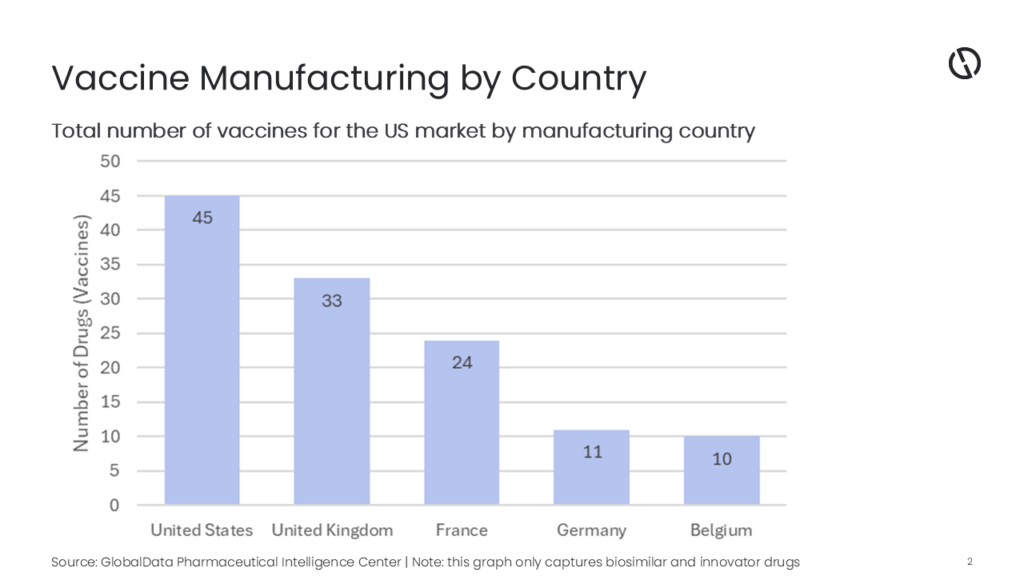
The US currently reigns as the world’s leading manufacturer of FDA-approved vaccines by approximately 36%, with 45 vaccines manufactured in 32 facilities nationwide.
According to GlobalData’s Drug By Manufacturer database, US-based vaccine production is just over five times the global average, highlighting how concentrated the US’s domestic supply is and the heavy reliance US vaccine manufacturers have on the constant and predictable domestic immunization demand.
Djebbar continues: “With 7 out of 11 vaccines planned for removal from the childhood schedule, production demand is at risk of significantly falling, a risk reinforced at the state level. Florida moved forward with a bill in January to weaken childhood vaccine requirements. Other states are expected to follow, as Kennedy’s allied ‘Make America Healthy Again’ (MAHA) groups leverage rising vaccine skepticism to push for weaker mandates, and in turn, reduced production demand.”
GlobalData’s Region-Based forecast revealed that 2025 US-manufactured vaccine sales hit the lowest since the pandemic. Between 2022 and 2025, the 75% downward compound annual growth rate (CAGR) has primarily been driven by the transition from emergency COVID-19 vaccine demand to seasonal, however, it is also attributed to the declining vaccination rates across the US.
According to the CDC, last year only 92.5% of children were reported to be vaccinated for measles, mumps, and rubella (MMR), compared with approximately 95% pre-COVID. Florida reported a staggeringly low 88% childhood MMR vaccination coverage, with weakened mandates yet to take effect.
Djebbar concludes: “Ironically, this comes after last year’s and recent executive orders from the White House to raise tariffs, claimed to strengthen domestic pharmaceutical manufacturing. Cutting the childhood schedule, however, may offset the reshoring of pharmaceutical production these tariffs aim to support. With vaccination rates continuing to fall, these changes in public health policies are a nail in the coffin for the aspirations to grow the domestic manufacturing industry, by ultimately weakening production demand, sales, and development incentives.”
