

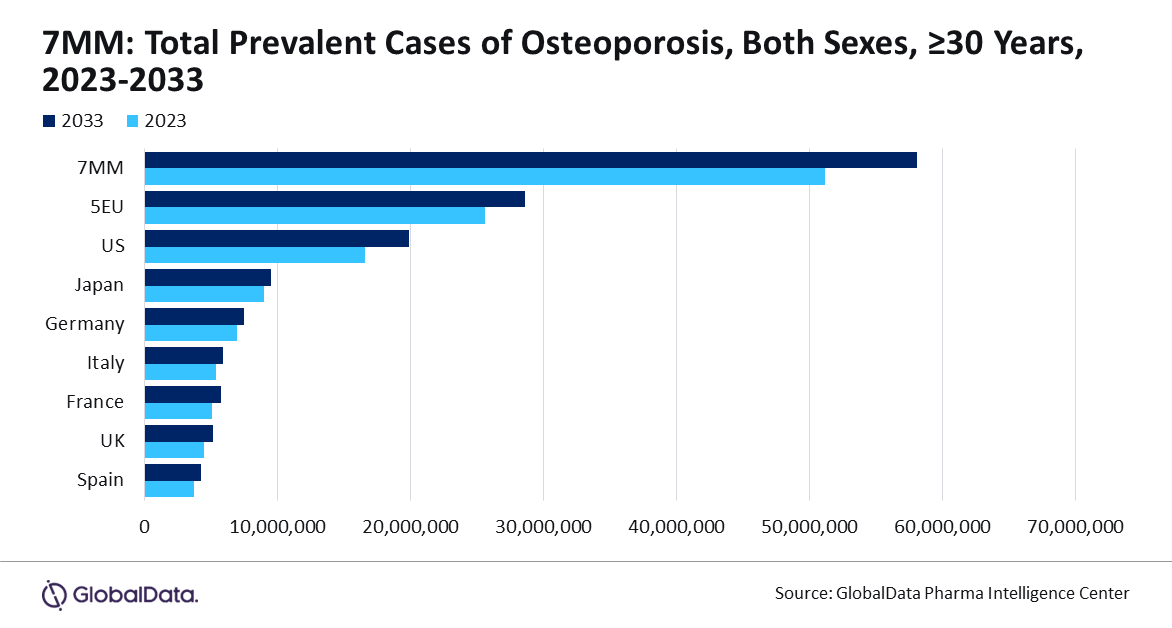
The total prevalent cases of osteoporosis in the seven major markets (7MM*) are projected to increase from 51.17 million in 2023 to 58.05 million in 2033, with an annual growth rate (AGR) of 1.34%, forecasts GlobalData, a leading data and analytics company.
GlobalData’s latest report, “Osteoporosis – Epidemiology Analysis and Forecast to 2033,” reveals that in 2033, the US is predicted to have the highest number of total prevalent cases of osteoporosis in the 7MM at 19.91 million, whereas Spain, with nearly 4.24 million cases, will have the lowest number.
Osteoporosis is a systemic bone disease characterized by low bone mass, deterioration of bone tissue, and disruption of bone microarchitecture; it can lead to compromised bone strength and an increase in the risk of fractures. It can be further characterized as either primary or secondary. Primary osteoporosis can occur in both sexes at all ages, but often follows menopause in women and occurs later in life in men. In contrast, secondary osteoporosis is a result of medications such as glucocorticoids, other conditions such as hypogonadism, or diseases such as celiac disease.
Rahul Ravi, MPH, Senior Epidemiologist at GlobalData, comments: “Adults ages ≥60 years accounted for 75.15% of the total prevalent cases of osteoporosis in the 7MM. There is a predominance of sex-specific total prevalent cases favoring women. The demographic shift towards aging populations underscores the urgency of addressing this condition, as osteoporotic fractures can lead to diminished quality of life, increased healthcare costs, and even mortality, especially in older adults.”
Treatment and prevention strategies for osteoporosis typically involve a combination of medication, dietary changes (increasing calcium and vitamin D intake), weight-bearing exercises, and lifestyle modifications to reduce risk factors. Regular bone density scans can help monitor bone health and assess the effectiveness of treatment.
Ravi concludes: “Early detection and management are crucial in minimizing the impact of osteoporosis and reducing the risk of fractures. Overall, osteoporosis is a significant global health issue that requires comprehensive strategies at both the individual and societal levels to reduce its impact and improve bone health worldwide.”
*7MM: The US, 5EU (France, Germany, Italy, Spain, the UK), and Japan
