Artificial Intelligence (AI) in Clinical Practice – Physician Perspective
Powered by 
All the vital news, analysis, and commentary curated by our industry experts.

Reasons to buy the ‘Artificial Intelligence (AI) in Clinical Practice’ thematic report:
This report combines information obtained from secondary sources and primary research conducted by 531 healthcare professionals from different therapy areas such as neurology, dermatology, immunology, and rheumatology. The surveys were conducted during August-November 2024. Study objectives include:
- Assess the current use of AI in clinical practice.
- Capture physicians’ opinions on the use of AI.
- Identify the processes within clinical practice that AI can improve the most.
- Explore future opportunities with AI.
- Investigate how AI is being used outside clinical practice.
- Compare results with last year’s (2023) data.
How is our ‘AI in Clinical Practice’ report unique from other reports in the market?
- Evaluates the current application of AI in clinical practice and its future potential.
- Highlights the clinical processes where AI offers the greatest improvements, as identified by physicians.
- Examines patient comfort levels with AI-based healthcare practices.
- Features case studies demonstrating AI in action.
We recommend this valuable source of information to anyone involved in:
- Healthcare Professionals
- Hospital Management/ Healthcare Organizations
- AI-based healthcare practitioners – Leaders and Startups
- Business Development and Market Intelligence
- Investment Analysts and Portfolio Managers
- Professional Services – Investment Banks, PE/VC Firms
- M&A/Investment, Management Consultants, and Consulting Firms
To Get a Snapshot of the AI in Clinical Practice Report
Download a Free Sample Report
Artificial Intelligence (AI) in Clinical Practice Report Overview
Artificial intelligence (AI) is gradually being integrated into healthcare, although its adoption remains steady. More than 48% of healthcare professionals (HCPs) reported having experience using AI in their clinical practice. Among those HCPs who used AI in clinical practices, the technology was most commonly employed to alleviate treatment-related tasks such as supporting diagnostics, treatment decisions, and patient referrals. Furthermore, Spain is establishing itself as a leader in AI adoption within healthcare.
The AI in clinical practices report combines information obtained from secondary sources and primary research with 531 healthcare professionals from different therapy areas such as neurology, dermatology, immunology, and rheumatology. The surveys were conducted between August–November 2024.
| Enquire & Decide | Discover the perfect solution for your business needs. Enquire now and let us help you make an informed decision before making a purchase. |
AI Use in Clinical Practice
A significant percentage of physicians do not incorporate AI into activities like diagnostics, treatment decisions, treatment plans, referrals, or administrative plans. However, among physicians using AI tools in clinical practice, the most popular use case was diagnostics support. AI was also frequently used to support treatment decisions and patient referrals. This suggests that physicians leverage AI to aid in clinical decision-making and in determining appropriate referrals, possibly aiming to improve patient outcomes and streamline care pathways.
Spain had the highest percentage of physicians who had used AI in their practice. In contrast, the percentage of HCPs who have never used AI is highest in Japan, followed by the US and Germany. The reluctance may stem from barriers such as insufficient training, perceived risks, associated costs with the adoption of technology, and skepticism about AI’s clinical value. However, the extent to which HCPs use AI for different tasks varies across countries. In Spain, for example, more than 38% of physicians reported leveraging AI tools to support treatment decisions, compared to only a minute proportion in Japan.
AI Use in Clinical Practice by Geography

Buy the Full Report for More Insights into the Use of AI in Clinical Practice, Download a Free Report Sample
AI Impact on Clinical Practice
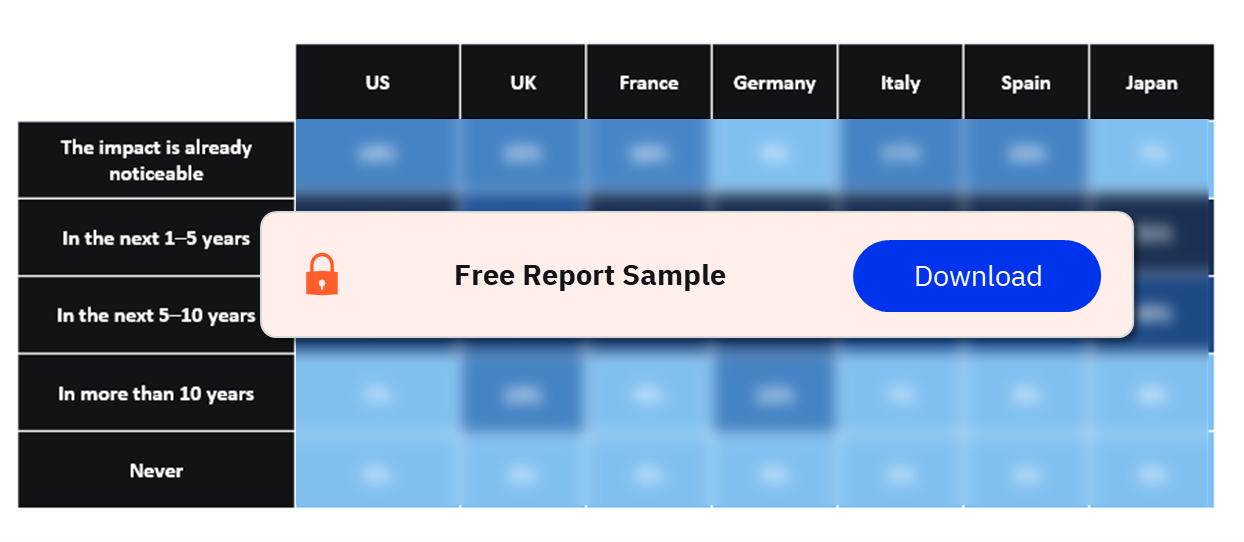
Italy had the highest share of physicians who confirmed that AI has a noticeable impact on their clinical practice, while Germany and Japan have the lowest, respectively. This may be attributed to the fact that these two markets had the lowest percentage of HCPs who had experience with using AI in clinical practices. While the impact of AI is still in the early stages across most healthcare markets, it is poised to redefine healthcare provision significantly. The growing prominence of big data, the increasing importance of real-world evidence (RWE), increased usage of cloud computing and smart devices, the shift in tech-savvy consumer behavior, and the growing use of technologies will contribute to a further increase in AI use.
In addition, factors such as the aging population, increasing prevalence of chronic diseases, and rising patient volume will continue to be the key drivers of growing demand for healthcare, making the integration of technology like AI essential.
AI Impact Timeline on Clinical Practice by Geography
Buy the Full Report for More Insights into the Impact of AI in Clinical Practice, Download a Free Report Sample
Key Highlights
- Artificial intelligence (AI) is becoming embedded in the provision of healthcare.
- China has emerged as one of the leading markets for AI adoption in healthcare.
- Physicians who had previous experience with AI were more supportive of the use of the technology in clinical practice.
- Most physicians felt more comfortable using AI to automate administrative tasks compared to directing patient care.
- HCPs who had previous experience using AI in their practices were more comfortable with sales representatives using AI to personalize their messaging.
- Respondents who had previous AI experience were more positive about patients being comfortable with the use of AI to support clinical decisions.
- AI will require time and careful consideration before its benefits can be fully exploited.
- AI could be among the technologies with the potential to curb inflation in healthcare.
- AI is set to power the future of healthcare provision.
- AI appreciation comes with hands-on experience and understanding of the technology.
- While AI has enormous potential to improve healthcare, it needs to be implemented with responsibility and foresight.
World Health Organization (WHO)
US Food and Drug Administration (US FDA)
Qure.ai Technologies Inc
AstraZeneca
Deloitte
ODAIA
HEVI AI
International Organization for Standardization (ISO)
Hippocratic AI
Table of Contents
Frequently asked questions
-
Which country had the highest percentage of physicians who had used AI in their practice?
Spain had the highest percentage of physicians who had used AI in their practice.
-
Why do countries like Japan, Germany, and the US have a high percentage of physicians who never used AI?
The reluctance to implement AI in healthcare in countries like Japan, the US and Germany may stem from barriers such as insufficient training, perceived risks, associated costs with the adoption of technology, and skepticism about AI’s clinical value.
-
Which are the key drivers of AI in the healthcare market?
Factors, such as the ageing population, increasing prevalence of chronic diseases, and rising patient volume will continue to be the key drivers for the growing demand for healthcare, making the integration of technology like AI essential.

Get in touch to find out about multi-purchase discounts
reportstore@globaldata.com
Tel +44 20 7947 2745
Sample Report
Artificial Intelligence (AI) in Clinical Practice – Physician Perspective was curated by the best experts in the industry and we are confident about its unique quality. However, we want you to make the most beneficial decision for your business, so we offer free sample pages to help you:
- Assess the relevance of the report
- Evaluate the quality of the report
- Justify the cost
Download your copy of the sample report and make an informed decision about whether the full report will provide you with the insights and information you need.


