
“C4ISR capabilities provide situational awareness to defense forces, shortening communication and response delays. It acts as the nervous system of the military, providing it with components to work in tandem. With an upsurge in the data deluge, the analysis of information has become a challenge. That is why highly automated and scalable methods are required for superfast analysis and decision-making.”
As a part of this bundle, you will gain access to in-depth insights available in the following reports:
- Artificial Intelligence, 2020 Update
- Internet of Military Things
- Augmented Reality in Defense
- Big Data in Defense
- Cloud Computing in Defense
- Cybersecurity in Defense
- Electronic Warfare Market
Report 1: Artificial Intelligence, 2020 Update
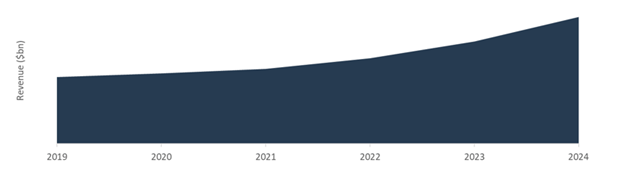
The Artificial Intelligence (AI) platform market value was worth $28 billion in 2019 and is expected to achieve a CAGR of more than 13% during 2019-2024. AI allows businesses to accelerate digital innovation and development, resulting in increased efficiency, lower operational costs, higher revenues, and improved customer experience. AI is increasingly involved in life-changing decisions, like welfare payments, mortgage approvals, and medical diagnoses. Controversies surrounding bias in AI models have received a lot of attention, prompting companies to update their internal AI development guidelines to build trust.
AI Platform Revenue, 2019-2024
To gain more information on the artificial intelligence platform revenue, download a free report sample
Report 2: Internet of Military Things
The IoT market is expected to grow to $807 billion by 2025 from $486 billion in 2020, at a CAGR of 11% over the forecast period, according to GlobalData forecasts. Modern warfare is increasingly information-based, and soldiers and decision-makers need a continual flow of up-to-date information to quickly make the best decisions possible. Internet of Military Things (IoMT) can speed up and increase the efficiency of the observe, orient, decide, act (OODA) loop. Real-time information sharing between military sectors is one of the most important aspects involved in managing wars. This is especially true when the information type is critical and when timely knowledge will resolve critical situations. IoMT networks can increase situational awareness, response time, and risk assessment. Connecting assets and making them work together act as a force multiplier, helping forces maintain a strategic advantage in the age of data-driven conflict.
IoMT across Defense Value Chain

For more insights on the internet of military things value chains, download a free report sample
Report 3: Augmented Reality in Defense
According to GlobalData estimates, AR will generate revenues of $152 billion globally by 2030, and the defense sector is leading the charge. Augmented Reality (AR) is increasingly being integrated into battlefield applications for pilots and infantry for enhancing a soldier’s situational awareness and reaction time. AR training provides a wider range of simulated environments, circumstances, and variables while also being safer than learning battlefield skills on the battlefield. This reduces the risk of soldiers being injured and expensive military equipment being damaged by trainees. The US has issued most of the tenders in AR in the defense sector over the last three years. Moreover, the UK, Canada, Australia, and India provide tenders in fields like surveillance, operations, engineering, and training.
Augmented Reality Value Chain Analysis
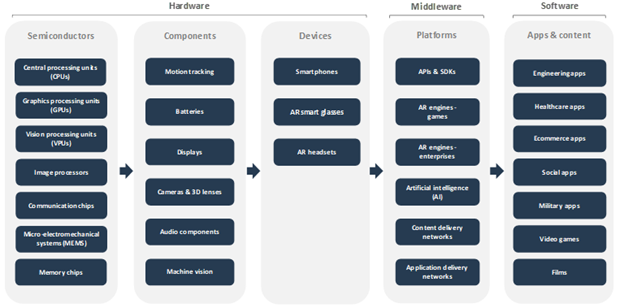
To know more about the value chains of augmented reality in defense, download a free report sample
Report 4: Big Data in Defense
Modern-day warfare is powered by data. It is produced in abundance by intelligence and surveillance devices and processed instantly by centralized systems. The challenge for armed forces is not collecting data but deriving actionable intelligence from the wealth of information that they accumulate daily. Militaries must develop the ability to analyze and create actionable information from big data. This will remain to be a problem even once storage and hardware issues have been addressed. This is where big data technologies come in, with their ability to handle extremely large, diverse data sets that, when analyzed, can reveal patterns, trends, and associations, especially relating to human behavior and interactions. Big data has applications across all domains of warfare, from providing detailed threat analysis in a hostile environment to improving the capabilities of autonomous systems. The opportunities available to defense vendors that can harness the power of big data are clear and wide-ranging, but it is not a one-size-fits-all solution and businesses need to tailor their approach to their own specific requirements and use cases.
The Four Dimensions of Big Data
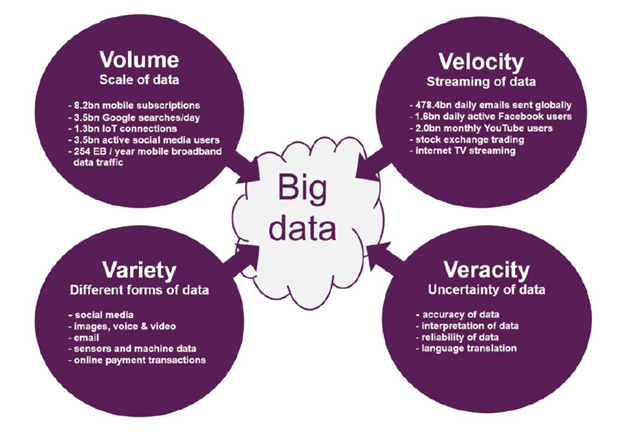
For more insights into the four dimensions of big data in defense, download a free report sample
Report 5: Cloud Computing in Defense
Superiority in the modern battlefield relies on the exchange of data from a wide range of sensors. Previously every Armed Service was creating stovepipes where information was exchanged vertically. The challenge now is to exchange data horizontally creating a true joint environment. Data would be processed at the edge, that is onboard the sensors or their platforms, being readily available for exploitation. Cloud allows sensors, services, and agencies to interconnect, giving forces the necessary superiority to overwhelm enemies that lags in such force multipliers. The defense sector started building its cloud computing infrastructure almost a decade ago, with the US Armed Forces being at the forefront of the modernization effort. Data would be available both to the combat and non-combat organizations within a military structure. The private sector has paved the way in Cloud computing and the Ministries of Defense have benefited from the available solutions.
The Enterprise Cloud Spending Value Chain
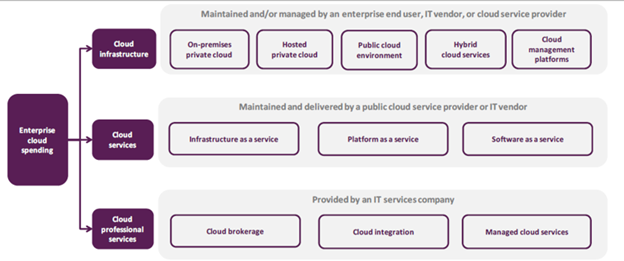
For more insights into the value chains of cloud computing in defense, download a free report sample
Report 6: Cybersecurity in Defense
Cybersecurity is a key concern for businesses of all sizes. Smaller or more niche companies along the supply chain that are connected to the largest defense contractors are often targeted. This is because threat actors identify them as more accessible gateways to obtaining defense information. In response to the growing threat to cybersecurity; companies, nations, and militaries are increasingly adopting a collaborative approach. This involves sharing information with their allies on threats and reporting attempted breaches to collectively improve their cybersecurity posture. The strongest growth in the global security market will be in software. Social media has also become an increasingly important factor to consider for militaries and their cybersecurity strategy. Social media often tracks users’ locations and profiles are frequently filled with material that can indicate a user’s position. In the ongoing invasion of Ukraine, social media has been a key theme to spread misinformation and is also being used to gain military intel on soldiers’ positions and assets.
Defense Ecosystem

For more insights on cybersecurity in defense ecosystem, download a free report sample
Report 7: Electronic Warfare Market
The electronic warfare (EW) market size was valued at $12.80 billion in 2020 and is expected to achieve a CAGR of more than 1% during 2020-2030. The EW market is seeing increased demand from airborne platforms, which is driving continued investment in the airborne EW segment. The growing concern for electronic protection capabilities continued focus on directed energy weapons, and rapid changes in technological advancement domains are expected to drive global demand in the electronic warfare market. Furthermore, the pivot to peer or near peer conflict is driving advanced technology in EW and will continue to do so for decades to come.
The Electronic Warfare Value Chain

For more insights on electronic warfare market value chains, download a free report sample







