Net Zero Strategies in the Consumer Industry – Strategic Intelligence
Powered by 
All the vital news, analysis, and commentary curated by our industry experts.

Net Zero Strategies in Consumer Strategic Report Overview
Companies achieve net zero emissions by cutting greenhouse gas (GHG) emissions to as close to zero as possible, with any remaining emissions then “offset”. Consumer company supply chains are exposed to a growing scope of regulations, such as emissions pricing and fossil fuel phase-outs.
The “Net Zero Strategies in Consumer Industry” strategic intelligence report provides an in-depth insight into the net zero targets and performance of consumer companies. The report discusses the progress made by the leading companies to achieve the emission target. These detailed analyses are critical in developing effective business plans to gain a competitive edge.
A Typical Net Zero Strategy

Buy the Full Report to Know More about the Net Zero Strategies in Consumer
| Net Zero Strategies | · The Circular Economy in Packaging
· Regenerative Agriculture · Sustainable Manufacturing |
| Leading Companies | · Unilever
· Pepsi · P&G · Loreal · Mondelez International |
| Enquire & Decide | Discover the perfect solution for your business needs. Enquire now and let us help you make an informed decision before making a purchase. |
Net Zero Strategy - Circular Economy in Packaging
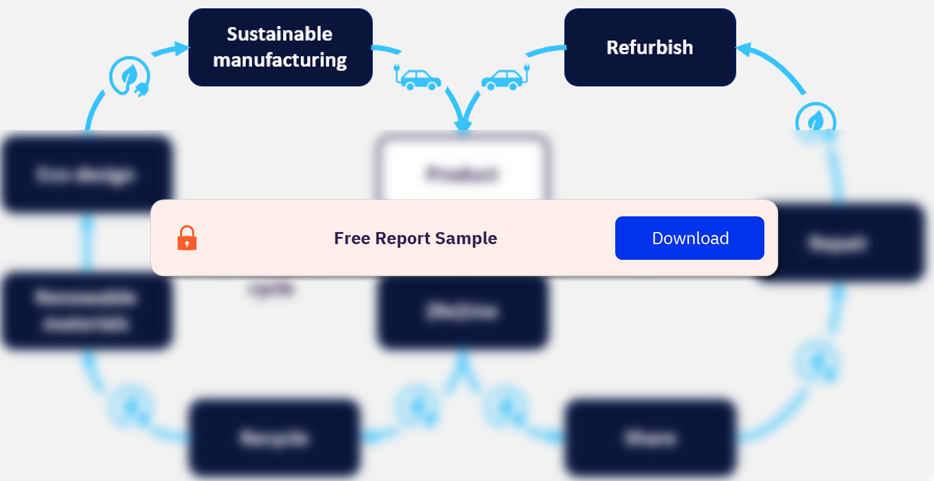
The main advantage of circular production models is reducing emissions across the value chain. The circular economy lifecycle represents a transformative approach to production and consumption, focusing on sustainability by keeping resources in use for as long as possible. It is about reusing or reducing the consumption or size of products, minimizing waste, and aiming to eliminate single-use materials and products from the market as much as possible. The four most important components of a circular packaging economy include eco-design, recycling, renewable materials, and reusable packaging.
Globaldata’s Circular Economy Framework
Buy the Full Report for More Insights on Circular Economy in Packaging
Net Zero Strategy – Regenerative Agriculture
Regenerative agriculture is a series of farming practices that improve long-term soil health and boost yields. It also benefits pollinators, increases biodiversity, helps keep carbon locked up in soils, and limits nitrogen released by fertilizers. Regenerative agriculture prevents the release of nitrous oxide by reducing the need for nitrogen-based fertilizers. The procedure also keeps sequestered carbon in the soil. By reducing soil exposure, it prevents microbial respiration from releasing carbon. Moreover, regenerative agriculture improves soil quality and biodiversity and diversifies farming income streams through the promotion of crop diversification and species integration.
Buy the Full Report to Know More about Regenerative Agriculture
Net Zero Strategy - Sustainable Manufacturing
Sustainable manufacturing encompasses various practices and strategies to minimize environmental impact. Hydrogen is viewed as a potential replacement in several applications where high temperatures are required. Heat pumps can generate heat or recover heat from heat-intensive processes. A variety of heat pumps are available to suit different applications, however, retrofitting them to existing facilities can be challenging. They should be considered especially when planning new plants. Additionally, biogas has similar properties to natural gas but is made from the breakdown of biomass. Renewable energy can be installed on-site or accessed through purchase power agreements.
Buy the Full Report to Know More about Sustainable Manufacturing
Consumer Sector - Net Zero Strategies of Leading Companies
A few consumer industry leaders practicing net zero strategies are Unilever, Pepsi, P&G, Loreal, and Mondelez International, among others. Unilever has one of the most comprehensive climate action plans within the consumer goods sector. Its strategy covers logistics, chemical ingredients, regenerative agriculture, packaging, logistics, ice cream cabinets, and aerosol propellants. The company plans to reduce Scope 1 and 2 emissions by 2030 and achieve net zero emissions covering Scope 1, 2, and 3 emissions by 2039.
Net Zero Strategies in the Consumer Industry Analysis by Companies

Buy the Full Report for More Company-Wise Net Zero Strategy Analysis in the Consumer Market
Key Highlights
- The circular economy is the main way consumer companies are reducing emissions from packaging.
- Regenerative agriculture is helping to mitigate emissions from ingredients.
- Sustainable heat sources are being adopted to decarbonize manufacturing.
Reasons to Buy
- Understand what three strategies consumer companies need to achieve net zero emissions.
- Understand which consumer companies have set net zero targets, and which companies are leading.
Unilever
Pepsi
P&G
Crown Holdings
Colgate-Palmolive
Domino's Pizza
Nestlē
Berry Global
Mondelēz
Sodexo
Avery Dennison
Yum!Brands
Coca-Cola
Kraft Heinz
McDonalds
Tetrapak
Stora Enso
John West
Absolut
Bayer
PAPACKS
J&J Green Paper
Verallia
Bout' à Bout'
&Repeat
Pressbyran
Ocado
Kurayray
Toppan
Novamont
International Paper
DS Smith
Sonaco
Eviosys
Graphic Packaging
AR Packaging
Plastic Energy
TemperPack
TIPA Corp
Cirkul
Asda
Chanel
Heineken
John Lewis
Hershey
Danone
Tesco
Dr. Martens
McCain Foods
Chipotle
Marks & Spencer
MegaFood
Tyson Foods
Diageo
Pernod Ricard
AB InBev
Mars
General Mills
Carlsberg
Estée Lauder
Table of Contents
Frequently asked questions
-
What are the net zero strategies implemented in the consumer sector?
The circular economy in packaging, regenerative agriculture, and sustainable manufacturing are the net zero strategies implemented in the consumer sector.
-
What does the circular economy lifecycle represent?
The circular economy lifecycle represents a transformative approach to production and consumption, focusing on sustainability by keeping resources in use for as long as possible. It is about reusing or reducing the consumption or size of products, minimizing waste, and aiming to eliminate single-use materials and products from the market as much as possible.
-
What is regenerative agriculture?
Regenerative agriculture is a series of farming practices that improve long-term soil health and boost yields. It also benefits pollinators, increases biodiversity, helps keep carbon locked up in soils, and limits nitrogen released by fertilizers.
-
Which are the consumer industry leaders practicing net zero strategies?
A few consumer industry leaders practicing net zero strategies are Unilever, Pepsi, P&G, Loreal, and Mondelez International, among others.

Get in touch to find out about multi-purchase discounts
reportstore@globaldata.com
Tel +44 20 7947 2745
Sample Report
Net Zero Strategies in the Consumer Industry – Strategic Intelligence was curated by the best experts in the industry and we are confident about its unique quality. However, we want you to make the most beneficial decision for your business, so we offer free sample pages to help you:
- Assess the relevance of the report
- Evaluate the quality of the report
- Justify the cost
Download your copy of the sample report and make an informed decision about whether the full report will provide you with the insights and information you need.