Robotics in Consumer Goods, Packaging and Foodservice – Thematic Intelligence
Powered by 
All the vital news, analysis, and commentary curated by our industry experts.

Robotics in Consumer Goods Thematic Overview
Robots are well-established in consumer goods and packaging. Both sectors have used caged industrial robots, industrial cobots, and logistics robots to automate production lines and logistics operations for some time now. Robotics do not fit as easily into the food service business model. Currently, simple food preparation tasks (such as burger flipping and wing frying) and meal delivery are the areas being explored by tech vendors.
The robotics in consumer goods report is a thematic brief, which investigates how robotics are improving the business operations of consumer goods, packaging, and foodservice companies.
| Pages Covered | 78 |
| Regions Covered | Global |
| Key Value Chain Components | · Hardware Components
· Software Components · Robot Manufacturing · Robotics as a Service |
| Leading Robotics Adopters in Consumer Goods
|
· AB InBev
· Coca Cola · Procter & Gamble · Tyson Foods |
| Leading Robotics Adopters in Packaging | · Crown Holdings
· Elopak · Pactiv Evergreen · Stora Enso · Tetra Laval |
| Leading Robotics Adopters In Foodservice | · Chipotle Mexican Grill
· Mcdonald’s · Seven & I Holdings · Yum Brands |
| Leading Robotics Vendors | · Cognex
· Cyberdyne · Estun Automation · FANUC · iRobot |
| Specialist Robotics Vendors in Consumer Goods, Packaging, and Foodservice | · Demiatic
· Gecko Robotics · Miso Robotics · Seegrid · Swisslog |
| Enquire & Decide | Discover the perfect solution for your business needs. Enquire now and let us help you make an informed decision before making a purchase. |
Robotics in Consumer Goods - Value Chain Analysis
The robotics in consumer goods value chain comprises different components such as hardware components, software components, robot manufacturing, and robotics as a service. Depending on the application, level of sophistication, and reliability requirements, robotics generally involves several levels of control and processing, including onboard hardware and software, and increasingly, cloud processing and the pooling of knowledge from multiple robots.
Robotics as a service: Cloud robotics is one of its components. While the first robot age focused on advances in electro-mechanics, the second robot age is a by-product of a string of advanced technologies, such as cloud computing, machine learning, and high-speed communications. The advent of cloud robotics enables robots to communicate with each other, which means robots can share data among themselves. For example, Kiva Systems, acquired by Amazon in 2012, developed robots that could coordinate with each other and move around the warehouse to locate items. They used cloud services to improve their performance collectively.
The emerging area of cloud robotics is still not fully defined, but it allows the sum of all knowledge gained by a robot connected to a cloud platform can be passed on to every other robot on the same platform. It also means that data collected from individual robots can be aggregated easily and processed using advanced algorithms and hardware not available on the robots themselves. While this trend is still at an early stage of development, the emergence of cloud platforms and infrastructure as a reliable, scalable, and easily deployed computing source suggests that robotics could easily benefit from these developments in the future.
Robotics in Consumer Goods, Value Chain Analysis

Buy the Full Report for More Insights on the Robotics Value Chain Analysis,
Robotics in Consumer Goods - Industry Analysis
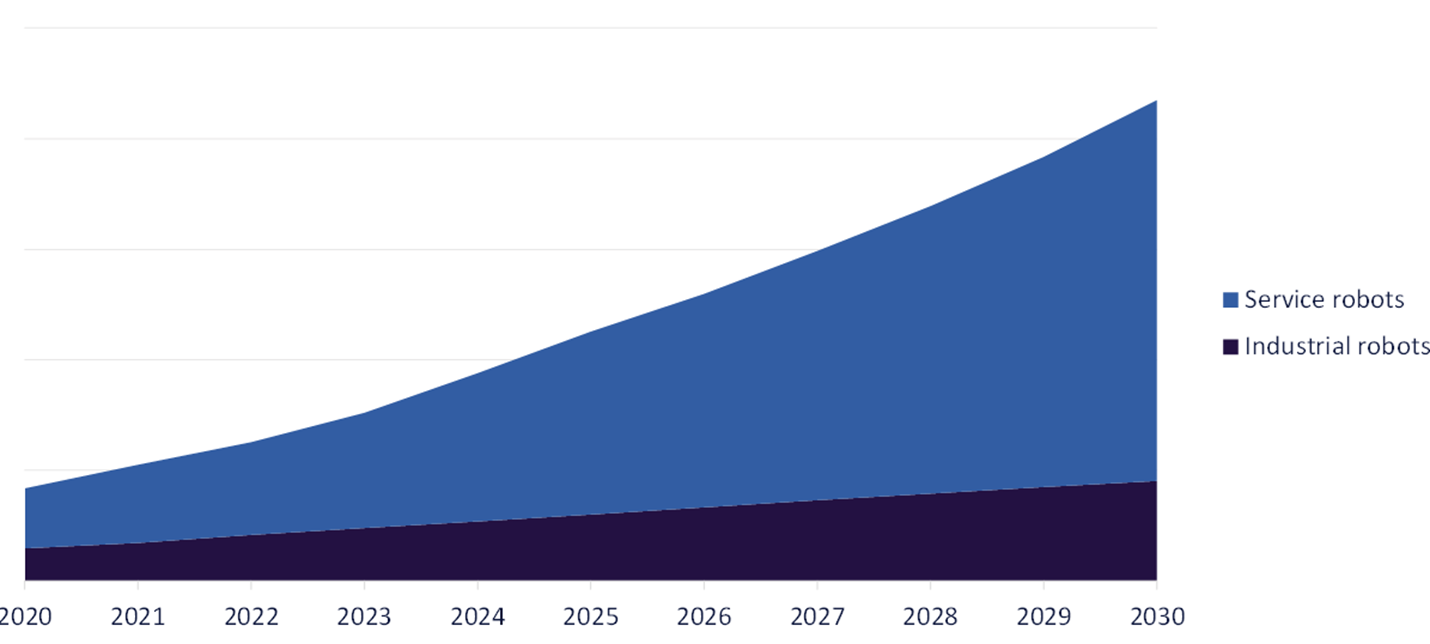
The robotics industry was worth $62.7 billion in 2022 and is expected to grow at a CAGR of more than 16% during 2022-2030. The robotics industry can be split into two main areas: industrial robots and service robots. Each can be subdivided into additional categories, with service robots being a particularly fragmented category. The service robots category led the market in 2022. Robots that are more efficient and have more lightweight designs will increasingly persuade consumers and services sectors that adoption is worth it.
The robotics in consumer goods industry analysis also covers:
- Timeline
- Signals
- M&A trends
- Patent trends
- Company filing trends
- Hiring trends
- Social media trends
Service and Industrial Robots Revenue, 2022-2030
Buy the Full Report for More Insights on The Robotics Industry Forecast,
Download a Free Report Sample
Robotics in Consumer Goods – Competitive Landscape
Leading robotics adopters in consumer goods
- AB InBev
- Coca Cola
- Procter & Gamble
- Tyson Foods
Leading robotics adopters in packaging
- Crown Holdings
- Elopak
- Pactiv Evergreen
- Stora Enso
- Tetra Laval
Leading robotics adopters in foodservice
- Chipotle Mexican Grill
- McDonald’s
- Seven & I Holdings
- Yum Brands
Leading robotics vendors
- Cognex
- Cyberdyne
- Estun Automation
- FANUC
- iRobot
Specialist robotics vendors in consumer goods, packaging, and foodservice
- Demiatic
- Gecko Robotics
- Miso Robotics
- Seegrid
- Swisslog
To Know More About the Leading Companies in the Robotics in Consumer Goods Theme, Download a Free Report Sample
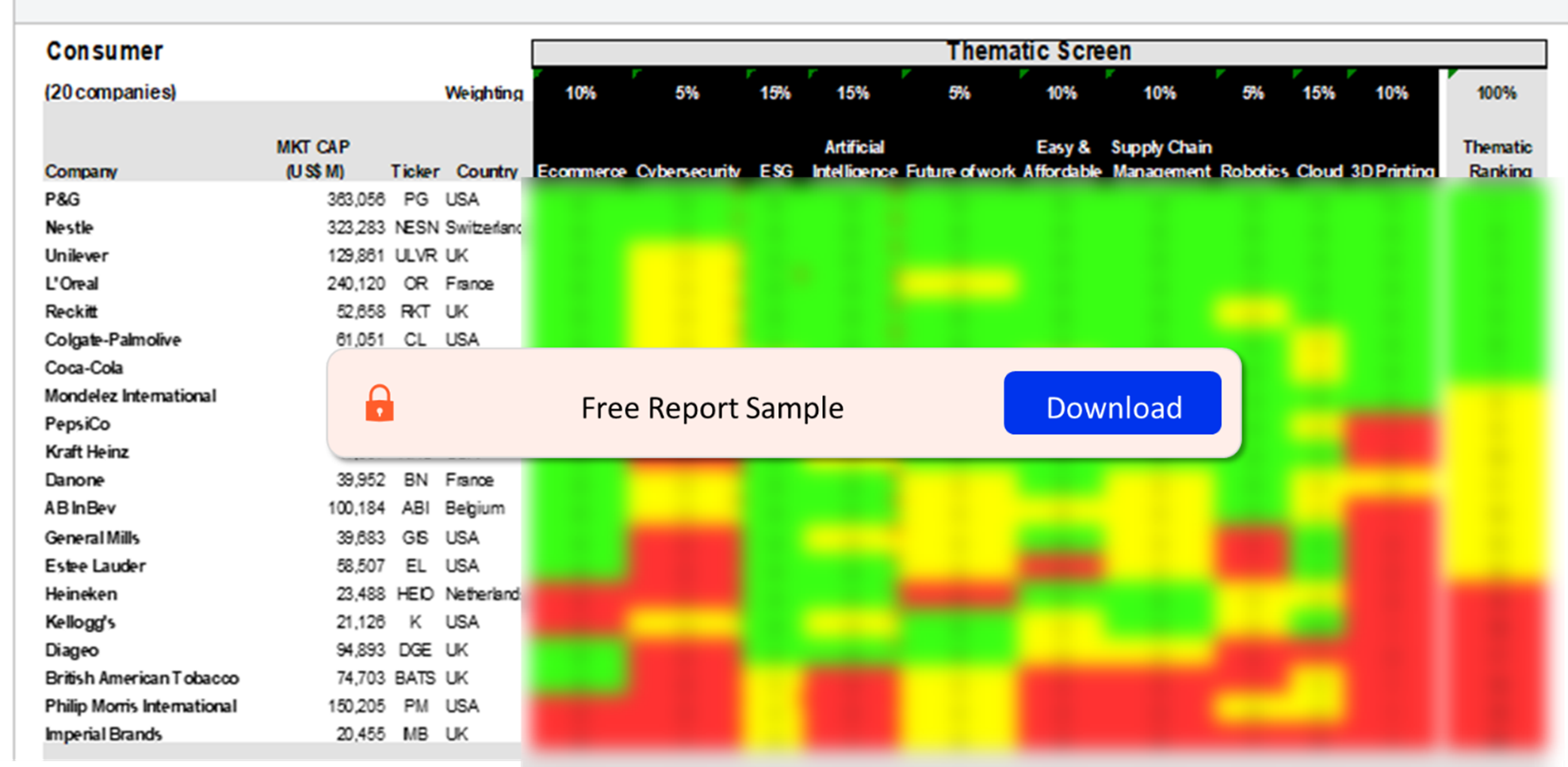
Consumer Goods sector scorecard
At GlobalData, we use a scorecard approach to predict tomorrow’s leading companies within each sector. Our sector scorecard has three screens: a thematic screen, a valuation screen, and a risk screen.
- The thematic screen ranks companies based on overall leadership in the 10 themes that matter most to their industry, generating a leading indicator of future performance.
- The valuation screen ranks our universe of companies within a sector based on selected valuation metrics.
- The risk screen ranks companies within a particular sector based on overall investment risk.
Consumer Goods Sector Scorecard
Buy the Full Report to Know More About Sector Scorecards, Download a Free Report Sample
The robotics in consumer goods report also provides:
Scope
Current robotics can add greater value to the consumer goods and packaging industries than they can to the foodservice industry. Developments in AI and cloud computing will enable robots to perform more complicated tasks (or the same tasks with greater precision).
Reasons to Buy
Understand which types of robots can add value to which areas of the consumer goods, packaging, and foodservice value chains. Identify the key tech vendors and the leading adopters of robotics within these sectors.
AB InBev
Tyson Foods
Coca Cola
Procter & Gamble
Tetra Laval
Crown Holdings
Elopak
Stora Enso
Pactiv Evergreen. Seven & I Holdings
Chiptole Mexican Grill
Sodexo
Yum! Brands
Demiatic
Swisslog
Seegrid
VisionNav
Rocla
Gecko Robotics
Shenzu Pudu Technology
Miso Robotics
Coesia
Kardex
Signode
Sidel
KUKA
FANUC.
Table of Contents
Frequently asked questions
-
What was the robotics industry size in 2022?
The robotics industry was worth $62.7 billion in 2022.
-
What is the robotics industry growth rate?
The robotics industry is expected to grow at a CAGR of more than 16% during 2022-2030.
-
Which are the key components of robotics in the consumer goods value chain?
The robotics in consumer goods value chain comprises different components such as hardware components, software components, robot manufacturing, and robotics as a service.
-
Which are the specialist robotics vendors in consumer goods, packaging, and foodservice?
The specialist robotics vendors in consumer goods, packaging, and foodservice are Demiatic, Gecko Robotics, and Miso Robotics among others.

Get in touch to find out about multi-purchase discounts
reportstore@globaldata.com
Tel +44 20 7947 2745
Sample Report
Robotics in Consumer Goods, Packaging and Foodservice – Thematic Intelligence was curated by the best experts in the industry and we are confident about its unique quality. However, we want you to make the most beneficial decision for your business, so we offer free sample pages to help you:
- Assess the relevance of the report
- Evaluate the quality of the report
- Justify the cost
Download your copy of the sample report and make an informed decision about whether the full report will provide you with the insights and information you need.


